


Oil gains as investors cautious over Iran-Oman talks
- Brent crude futures gain 83 cents, or 1.04%, to $80.28 a barrel
Oil prices fell as progress in US-Iran talks, mediated by Oman, hinted at a potential peace deal and the reopening of the Strait of Hormuz, despite US denials of Iranian control.
- Impact of US-Iran talks on global oil prices.
- Proposed deal for Iran to control the Strait of Hormuz.
- Iran's threats against regional energy infrastructure.
- Rising US crude oil inventories.
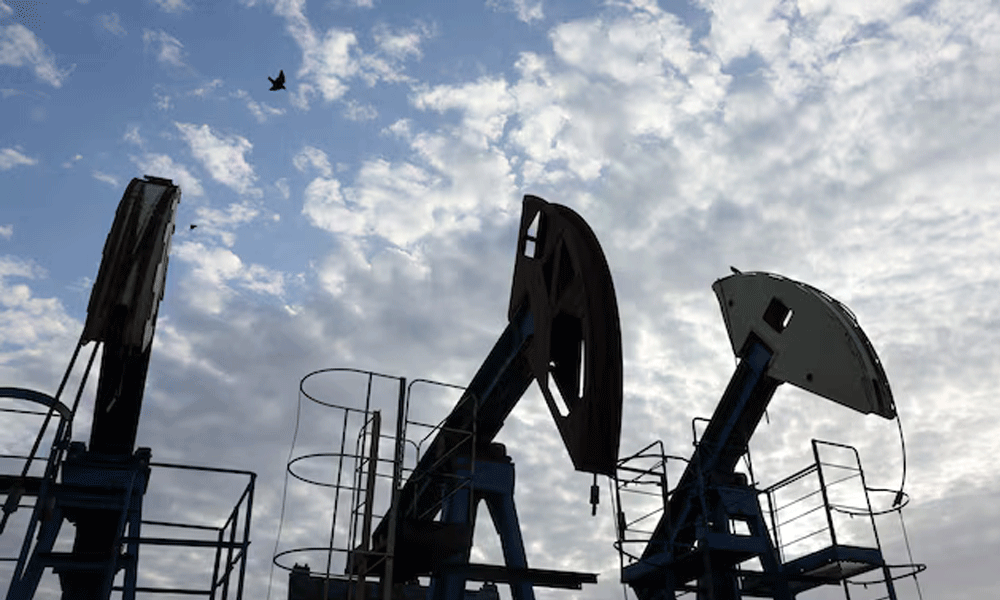

Oil prices rose on Thursday as investors remained cautious on the outcome of Iran-Oman talks and whether they will restore flows via the Strait of Hormuz, while reports of attacks on Saudi tankers in the Red Sea and Gulf of Aden renewed supply tensions.
Brent crude futures gained 83 cents, or 1.04%, to $80.28 a barrel by 1158 GMT. U.S. West Texas Intermediate futures added 61 cents, or 0.81%, to $75.83.
“Traders still remember the short-lived Memorandum of Understanding signed in June, so there is understandable anxiety that any new deal could prove equally fragile,” said Tim Waterer, chief market analyst at KCM Trade.
Iran and Oman have reached an understanding on the geographic coordinates for a shipping route through the Strait of Hormuz, and a joint announcement is being finalised, provided certain third parties do not interfere, Iran’s Foreign Ministry spokesperson Esmaeil Baghaei said on Wednesday.
A proposed deal between Iran and Oman to help end the U.S.-Iran conflict would give Tehran control over ships entering the Gulf through the Strait of Hormuz, a senior Iranian source and two regional officials told Reuters on Wednesday, one of the biggest concessions yet to Iran.
Before the conflict began in late February, the Strait of Hormuz handled about one-fifth of global daily oil and liquefied natural gas supplies.
Geopolitical risks persist
“Until we see sustained, verifiable increases in volumes, the market will continue to price in a degree of supply risk,” Waterer added.
Gulf countries’ crude oil and condensate exports were largely steady in July and remained about 40% below pre-war levels, shipping data showed.
Iran has warned Gulf states that any new U.S. attack on its territory would trigger retaliation against critical energy infrastructure across the region, according to five sources, as Tehran seeks to raise the cost of military action by threatening Washington’s closest regional allies.
Yemen’s Houthis said on Wednesday they had launched a missile attack on a Saudi oil tanker off the coast of the kingdom’s Red Sea port city of Yanbu and another missile attack on a Saudi oil tanker in the nearby Gulf of Aden. There was no confirmation from Saudi Arabia on either incident.
“Houthi attacks so far have not significantly disrupted oil and gas supply but this might change if attacks escalate further,” said Roberto Cominotto, equity research analyst at Julius Baer.
Meanwhile, Saudi Arabia has slightly lowered the official selling price for its flagship Arab Light crude oil to Asia in September, a pricing document reviewed by Reuters showed.
And elsewhere, a major oil refinery in Russia’s Yaroslavl region is on fire after a big Ukrainian drone attack and emergencyservices are working to put out the blaze, Mikhail Evrayev, the regional governor, said on Thursday.





















Comments