


Biden on mission to woo next China leader

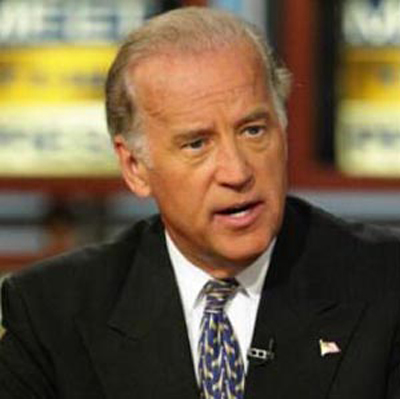 WASHINGTON: Vice President Joe Biden heads Tuesday to China in hopes of winning favor with the rising power's next leader, seeking a smoother relationship after Beijing's sharp criticism of US fiscal policy.
Biden will spend five days in China, an unusually long trip that comes at the invitation of Vice President Xi Jinping who is tipped to become China's leader next year and is little known by US policy circles.
"Simply put, we're investing in the future of the US-China relationship," said Tony Blinken, the vice president's national security adviser.
The number-two US leader will also visit close ally Japan, where he will visit an area hit by the March 11 mega-earthquake to encourage a quick recovery, and Mongolia, which has won US praise for its embrace of democracy.
In China, Biden will meet President Hu Jintao in Beijing and travel the country alongside Xi. In the southwestern boomtown of Chengdu, the vice presidents will dine at an informal restaurant and Biden will deliver a speech, Blinken said.
Biden's visit comes after stinging criticism in China's state-run media of US "addiction to debt." US leaders on August 2 reached a deal hours before the world's largest economy would have defaulted on its debt, of which China is the largest foreign holder.
Lael Brainard, the undersecretary of the Treasury for international affairs, defended the last-minute deal as "very strong" and, in a preview of Biden's message, said that China must now also undertake reforms.
Biden will tell China that its yuan remains "substantially undervalued" and urge the world's second largest economy to move from manufacturing inexpensive exports to encouraging its own growing middle class to consume, she said.
"Chinese policymakers know that they can no longer count on the US consumer to provide that demand to the global economy. They've got tremendous capacity to help bolster global growth by switching to a domestic demand-led growth strategy," Brainard told reporters on a conference call.
The United States accuses China of selling its products on the cheap through an artificially weak currency. During the debt showdown, Chinese media scolded the United States as irresponsible and urged it to "live within its means."
Brainard insisted that the United States remained "the most flexible, the most innovative" economy and called the debt deal "a major step" in putting US finances in order.
The debt deal has been deeply controversial at home, with many lawmakers in President Barack Obama's Democratic Party saying its up to $2.5 trillion in spending cuts are irresponsible without greater revenue and some members of the right-wing populist Tea Party movement pressing for deeper reductions.
Biden spent 36 years in the Senate, where he rose to be chairman of the Foreign Relations Committee. He took part in the first US congressional delegation to China after the nations established relations in 1979.
The United States at the time ended recognition of Taiwan, home to China's nationalists who lost the civil war, but Congress required administrations to provide the island with weapons for self-defense.
US magazine Defense News reported Sunday that the Obama administration has rejected Taiwan's request for advanced F-16 fighter-jets, which the island believes it needs to balance China's rising military edge.
US officials insisted no decision has been made and said that Biden would not discuss the issue in Beijing -- which would be a violation of the 1979 law which says the administration will not consult China on Taiwan's defense.
An official said Biden would not shy away from issues of concern to the United States including human rights. Activists say that China is holding an array of prisoners for political reasons, including Nobel Prize winning writer Liu Xiaobo, and has stepped up its controls on perceived dissent.
"The protection of human rights globally is a central part of President Obama's foreign policy in China, as it is elsewhere," said Danny Russell, the senior White House adviser on Asia.
"As we do consistently, we will raise our concerns about the human rights situation throughout China," he said.
Xi visited Tibet last month and vowed to crush "separatist activities" by the region's exiled spiritual leader the Dalai Lama. His address came one day after Obama received the Dalai Lama, who is widely respected around the world.
Copyright AFP (Agence France-Presse), 2011
















Comments
Comments are closed for this article.