


Egypt's fallen dictator Mubarak back in the dock

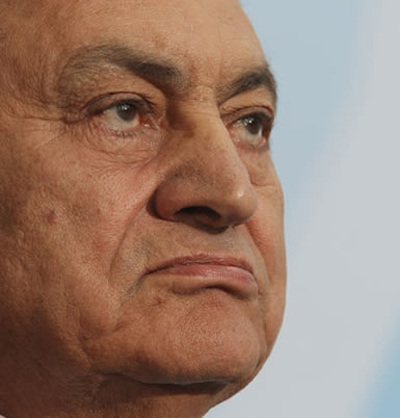 CAIRO: The murder and corruption trial of Egypt's fallen dictator Hosni Mubarak resumes on Monday in what lawyers say will be a lengthy process that he may successfully appeal.
Mubarak, 83, is accused of involvement in the killings of anti-regime activists during a January and February revolt that ended his three decades in power.
He also faces corruption charges with his two sons, Gamal and Alaa, and shares the murder charges with his former interior minister Habib al-Adly and six former police commanders, who are being tried by the same judge in separate hearings.
Mubarak is being held in a military hospital on the outskirts of Cairo.
In the first session on August 3, Mubarak was wheeled in on a stretcher after being flown by military plane from a hospital in the Red Sea resort town of Sharm el-Sheikh, where he was receiving treatment for a heart condition.
His appearance in court, penned in a black metal cage, came as a shock to Egyptians who watched the proceedings on live television. Few believed he would ever be seen in court.
But as the first hearing progressed, the difficult task facing judge Ahmed Refaat became clear, as dozens of lawyers representing victims' families jostled to make their demands of the court.
Mubarak's lawyer Farid al-Deeb, who told an Egyptian newspaper that Mubarak will be present for the second hearing, asked the judge to call 1,600 witnesses, including top military officials.
The military was called out on January 28, after protesters torched police stations across the country, and took charge on February 11 when Mubarak resigned.
Ahmed Mekki, a recently retired deputy head of Cairo's appeals court, said the trial will now move to investigating the evidence and calling witnesses, first for the prosecution and then for the defence.
But the court will probably cull the list of witnesses demanded by Deeb, which would provide him with solid ground for appealing a possible guilty verdict, said one of the lawyers representing victims in civil suits.
"If the court does not listen to all the witnesses, it will give grounds for appeal," said Taher Abu Nasr, whose Front for the Defence of Egyptian Protesters represents 35 plaintiffs.
"There will be an appeal, and the appeal will be successful," Abu Nasr said.
Most of the lawyers have yet to review the thousands of documents of evidence that have been provided by the court, some say belatedly.
But judging by the cases of dozens of police commanders who face charges or are on trial over alleged crimes during the revolt, they fear the evidence against Mubarak to be patchy and ill-prepared.
Legal experts say that a thorough investigation into Mubarak's alleged crimes should have taken several more months, but the military and the government expedited the process to mollify protesters.
"The prosecution (filed the case) perhaps before questioning people they should have questioned," said Abu Nasr.
"The case was filed under street pressure," said Mekki, adding that he believed the court would still conduct the trial fairly.
"The prosecution may be amenable to pressure, but the court will not rule unjustly," he said.
More than 850 people were killed in the 18 days that led to Mubarak's ouster, and thousands more were wounded.
Copyright AFP (Agence France-Presse), 2011




















Comments
Comments are closed for this article.