



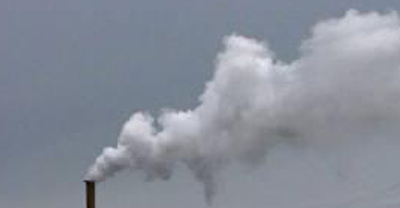
 ISLAMABAD: Annual rate of deforestation in Pakistan ranges from 4-6 percent, while carbon dioxide emissions are increasing annually at the rate of 8-10 percent which is an alarming trend.
The annual cost of restoring environment degraded as a result of this is up to US$ 5.2 billion.
Ministry of Science and Technology will support the programmes and projects identified by experts for meeting the challenges of climate change through applications of science and technology,an official said on Sunday.
He said developing countries are the least responsible for climate change, contributing only 10 percent of annual global carbon dioxide emissions but they are the ones which are the most vulnerable to the environmental, social and economic impacts of climate change.
Pakistan, being a developing country is in a similar situation. It has the least contribution to global warming and is ranked at 135th position in carbon dioxide emissions, he said.
"Yet, it is faced with severe climate changes and has been ranked 3rd in the list of most vulnerable countries to climate change".
A recent report from World Bank has warned Pakistan of the existence of five major risks related to climate change including rise in sea level, glacial retreats, floods, higher average temperature and higher frequency of droughts.
Climate Change Division is responsible for formulating national policies, plans, strategies and programmes with regard to disaster management including environmental protection, preservation, pollution, ecology, forestry, wildlife, biodiversity, climate change and desertification.
Deterioration of climate is irreversibly harming Pakistan, as the glacier melt in the Himalayas is projected to increase flooding and affect water resources within the next two to three decades.
This will be followed by decreased river flows over time as glaciers recede. The glacial melt will affect fresh water flows with dramatic adverse effects on biodiversity and livelihood with possible long-term implications on regional food security.
Scientific studies showed that average global temperature has risen by about 1 degree Centigrade during the past century.
This increase was mostly due to fossil fuel burning and deforestation.
Global temperatures are projected to increase further between 1.4 degree Centigrade and 5.8 degree Centigrade by 2100 and to continue to rise long after.

























Comments
Comments are closed for this article.