



 SYDNEY: Australia's upcoming budget will forecast 500,000 jobs to be created in two years as the country rides a mining boom, bringing unemployment down to 4.5 percent, Treasurer Wayne Swan said Sunday.
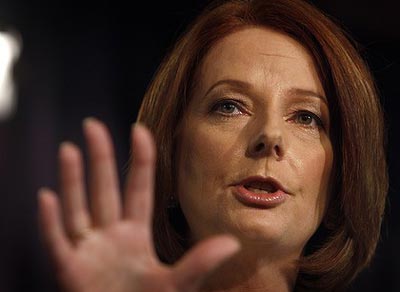
Swan said secure employment was the first responsibility of the Labor government of Prime Minister Julia Gillard and the budget to be delivered on May 10 would have that as its central emphasis.
"What I can say about the budget is that we will see the creation of an additional 500,000 jobs in the next couple of years, with an unemployment rate coming down to 4.5 percent" from 4.9 percent, Swan told channel Ten's "Meet the Press".
"We are going to. get more Australians into work and we are going to spread the opportunities of the boom."
Swan gave no details on how this would be achieved, but he added: "We are looking at a range of initiatives to lift workforce participation. With an unemployment rate coming down at 4.5 percent we do not have a person to waste."
The Treasurer acknowledged that despite the mining boom, joblessness was unacceptably high in some parts of the country and the government was looking at a range of incentives for employers to bring people into the workforce.
The government has warned that the upcoming budget will be tough as it attempts to bring it back into surplus by the 2012-2013 financial year.
Swan said cuts were necessary, particularly because of a short-term weakness in the economy caused mostly by natural disasters such as the devastating floods and destructive cyclone Yasi which struck earlier this year.
In his weekly economic note, he said the government had funded a stimulus package during the global financial crisis but now it was time to restrain spending.
"Just as we had to increase spending to support the economy when the private sector was in retreat, we now have to step back as the private sector recovers," he said.
"This means we need to restrain budget spending and build surpluses as the economy strengthens."
Swan said the budget would attempt to balance the short-term challenge of the loss of tax revenue due to natural disasters as well as other weak areas in the economy against the rising price pressures caused by the mining boom.
Last week, the Australian Bureau of Statistics reported a higher than expected annual inflation rate of 3.3 percent, fuelling speculation the central bank may hike interest rates above the current 4.75 percent on Tuesday.
Australia, the first major western economy to raise interest rates after the global slump, has raised the cash rate by 175 basis points since October 2009 after avoiding recession thanks in part to the Asia-driven mining boom.






















Comments
Comments are closed for this article.