


The Blue Economy beckons
- With enhanced port efficiency and a rising Liner Shipping Connectivity Index, Pakistan is strengthening its integration into global supply chains.
Pakistan's Planning Commission aims to boost its maritime sector through a Blue Economy blueprint, focusing on port efficiency, coastal tourism, and connectivity, leveraging the successful landlord port model.
- Pakistan's underutilized Blue Economy potential.
- The successful landlord port model implementation.
- Boosting port efficiency and coastal tourism infrastructure.
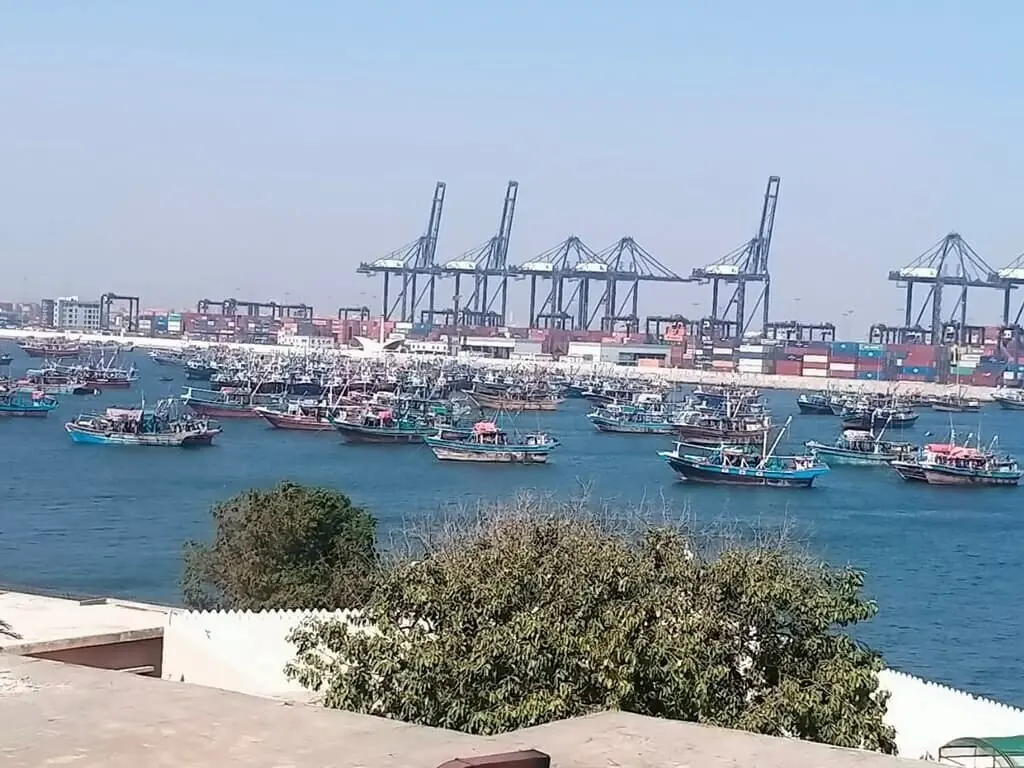

The Planning Commission has published a useful blueprint to galvanise Pakistan’s maritime sector under the Blue Economy concept which encompasses various aspects. This article will focus on Objectives 2 (Enhance Pakistani Ports Efficiency including Infrastructure), 3 (Develop Coastal Infrastructure to Promote Tourism) and 5 (Promote Regional and National Multimodal Connectivity), which are areas in which the author has extensive experience.
The Blue Economy has emerged as a global concept that promotes the sustainable utilisation of marine and coastal resources to generate economic growth, employment, trade and investment while ensuring the long-term protection of the marine environment. For a country like Pakistan, blessed with a coastline extending over 1,000 kilometres and strategically located at the crossroads of the Middle East, Central Asia and South Asia, the Blue Economy presents an enormous opportunity that has remained largely underutilised for decades.
Pakistan’s maritime sector extends far beyond ports and shipping. It encompasses fisheries, coastal tourism, offshore energy, shipbuilding, logistics, maritime services and numerous ancillary industries. Collectively, these sectors possess the potential to make a significant contribution towards GDP, employment generation and foreign exchange earnings. The Planning Commission deserves appreciation for recognizing that the maritime economy must become one of the future drivers of Pakistan’s economic growth, and that its development requires coordinated policy support, institutional reforms and greater private sector participation.
Pakistan’s maritime sector has experienced healthy growth, particularly since implementation of the landlord port model in the late 1990s whereby most cargo handling activities have been outsourced to the private sector on a long-term concession basis whilst the port authorities receive rents and royalties.
The adoption of the landlord port model proved to be a landmark reform for Pakistan’s ports. Under this model, the port authorities retained ownership of strategic assets such as land banks, navigation channels and common infrastructure while inviting private investors to finance, develop and operate specialized terminals through long-term concession agreements. This arrangement enabled the government to attract substantial private investment without imposing additional financial burdens on the public sector. It also introduced modern cargo handling equipment, improved operational efficiency and significantly reduced vessel turnaround times.
Today, Pakistan’s cargo terminals compare favorably with many ports in the region in terms of productivity and operational standards. Modern cargo handling equipment, computerised terminal operating systems, qualified human resources and continuous investments by terminal operators have substantially enhanced the country’s ability to handle increasing trade volumes. More importantly, the concession model has provided the port authorities with stable and predictable revenue streams through concession fees, land rentals and royalties while transferring commercial and operational risks to private investors.
Our port authorities have ample earnings and reserves and are able to self-fund their development budgets without relying upon PSDP allocations. One can therefore conclude the landlord port policy should be broadened to unlock greater value from Pakistan’s maritime assets. The outcomes of the landlord port policy are described in the tables below:
PQA:
Terminals | Investment |
QICT 1 | US$150 million |
QICT 2 | US$300 million |
FOTCO Oil Terminal | US$100 million |
EVTL - EngroVoPak Liquid Chemicals Terminals | US$100 million |
LCT-Liquid Cargo Terminal | US$50 million |
FAP Grain & Fertilizer Terminal | US$135 million |
SSGC LPG Terminal | US$50 million |
PIBT COAL, CLINKER & CEMENT TERMINAL | US$285 million |
EETL LNG TERMINAL | US$120 million |
PGPCL LNG TERMINAL | US$135 million |
TOTAL | US$1,425 million |
KPT:
Terminals | Investment |
KICT | US$120 million |
KGTL | US$100 million |
KGTML | US$150 million |
SAPTL | US$1 billion |
TOTAL | US$1.37 billion |
At present, the private sector is mostly engaged in cargo and terminal operations. However, there remain numerous areas of port operations where private investment and expertise can make a significant contribution. Services such as tug operations, pilotage support, dredging, repair and maintenance, safety and security, marine engineering, waste management and port support services can all benefit from greater private sector participation. International experience has repeatedly demonstrated that competition encourages efficiency, innovation and higher service standards while reducing the financial burden on government institutions.
Rather than concentrating exclusively on terminal concessions, future policy should encourage specialized operators with proven international expertise to participate in these complementary services with transparent regulatory oversight. This would not only improve operational performance but would also stimulate employment, technology transfer and local capacity building. The role of the government should increasingly evolve from being an operator to becoming an effective regulator and facilitator that ensures fair competition, safety standards and environmental compliance.
Another huge area of opportunity lies in the vast land banks owned by Pakistan’s port authorities. These valuable waterfront assets represent one of the country’s most underutilised economic resources. Instead of remaining idle or being used for low-value activities, these lands can be transformed into integrated commercial, residential, operational and recreational developments through carefully structured public-private partnerships.
The development of these land banks should not merely focus on real estate but should be integrated into the overall maritime ecosystem. International examples such as Singapore, Dubai, Rotterdam and Hamburg demonstrate how waterfront developments have become major economic assets by combining logistics, commerce, tourism and recreation within the port environment. Pakistan possesses similar opportunities, particularly at Karachi Port, Port Qasim and Gwadar, where substantial waterfront land remains available for future development.
The port authorities may contribute the land as equity whilst the private sector undertakes planning, investment, construction, operation and management of these facilities. Such a model would allow the ports to unlock the true commercial value of their assets without significant capital expenditure, whilst simultaneously generating recurring income through profit-sharing arrangements, leases and concession fees. This approach would also stimulate local and foreign direct investment and create thousands of direct and indirect employment opportunities.
Potential developments may include modern logistics parks, bonded warehousing complexes, distribution centres, office buildings, maritime business districts, hotels, conference facilities, crew accommodation, marine training institutes, ship handling centers and commercial retail developments. These facilities would not only enhance the attractiveness of Pakistani ports but would also strengthen their competitiveness against regional ports that already provide such comprehensive value-added services.
On the recreational side, there exists considerable scope for developing cruise tourism and waterfront entertainment facilities. Pakistan’s coastline offers immense natural beauty yet remains largely untapped from a tourism perspective. Cruise terminals catering to both domestic and international passengers, complemented by boardwalks, restaurants, cafés, shopping areas, cultural centres and public recreational spaces, could transform selected waterfront areas into attractive tourist destinations.
Many successful ports around the world have demonstrated that commercial ports and recreational waterfronts can coexist successfully. Developments such as Dubai Marina, Clarke Quay in Singapore and the waterfront districts of Sydney and Vancouver have generated significant economic activity whilst simultaneously improving the quality of urban life. Pakistan can adopt similar concepts whilst respecting local social and cultural values.
One may even suggest that designated and properly regulated hospitality facilities, including alcohol bars catering specifically to international cruise passengers and foreign tourists, could be considered within controlled port zones. Such facilities would be governed by existing laws and international hospitality standards, thereby enhancing Pakistan’s attractiveness as a regional cruise destination without compromising national regulations.
The recent geopolitical developments in the Middle East have unexpectedly highlighted Pakistan’s strategic maritime importance. Following the conflict involving the United States and Iran and the consequent uncertainty surrounding the Strait of Hormuz, shipping lines began evaluating alternative routing options to minimize operational risk and avoid potential disruptions.
The Strait of Hormuz remains one of the world’s most critical maritime chokepoints through which a substantial percentage of global oil exports and containerized trade passes every day. Any disruption, whether temporary or prolonged, has immediate implications for global shipping schedules, insurance premiums and freight costs. Consequently, shipping companies constantly seek reliable alternative ports capable of accommodating transshipment cargo whenever regional instability arises.
Pakistan’s ports benefited from this situation. The country witnessed a noticeable increase in transit and transshipment cargo, whilst vessel calls also increased compared with previous years. Even Gwadar Port experienced higher activity than witnessed in recent years, reflecting the growing international interest in Pakistan’s strategic location. Although these developments were primarily driven by extraordinary geopolitical circumstances, they nevertheless demonstrated the latent potential of Pakistan’s ports to serve as regional logistics hubs.
Most of the additional container traffic, however, was handled by Karachi Port due to the availability of Pakistan’s first state-of-art,modern deep-water container terminal, viz. South Asia Pakistan Terminals Limited (SAPTL). The facility possesses sufficient draft, modern ship-to-shore cranes and operational capacity to accommodate large mother vessels engaged in regional and international transshipment operations. This represents one of Pakistan’s most valuable competitive advantages, particularly as shipping lines increasingly deploy larger vessels in pursuit of economies of scale.
The ability to receive large container vessels has become increasingly important in global liner shipping. Modern container ships carrying more than 18,000 TEUs require deeper channels, stronger quay infrastructure, larger cranes and highly efficient terminal operations. Ports unable to meet these technical requirements risk being bypassed in favour of regional competitors. Pakistan has already made important investments in this direction; however, continuous dredging, infrastructure modernization and operational improvements remain essential if the country is to establish itself as a preferred transshipment destination in the region.
The opportunity created by the Strait of Hormuz crisis did not go unnoticed by Pakistan’s shipping community. Recognizing the possibility of attracting additional transshipment cargo, the Pakistan Ship’s Agents Association (PSAA) promptly submitted practical recommendations to the Government aimed at enabling Pakistan to capitalize upon the prevailing circumstances.
The association recommended permitting the storage of transshipment cargo at off-dock terminals by suitably amending the existing Customs rules and operational procedures and thereby significantly enhancing the flexibility of Pakistan’s logistics chain by reducing congestion inside the port, improving cargo handling efficiency and enabling terminals to accommodate higher cargo volumes during periods of increased demand. Off-dock facilities have become an integral component of modern port logistics throughout the world, allowing ports to optimize scarce waterfront space whilst maintaining efficient cargo flows between terminals, warehouses and inland destinations.
The Association also recommended permitting the handling of Less than Container Load (LCL) cargo for transshipment purposes. Although LCL cargo represents relatively smaller consignments belonging to multiple shippers, it constitutes a substantial segment of international trade (circa 25 percent). Many regional logistics hubs have successfully developed specialized consolidation and deconsolidation services for LCL cargo, thereby generating additional revenue, employment and value-added logistics activities. Allowing Pakistan to participate in this segment would further strengthen its position as a regional distribution and consolidation centre.
It is heartening to note that the Government responded positively to these recommendations and issued the necessary Statutory Regulatory Orders (SROs) within a relatively short period. Meanwhile, the port authorities reduced various charges applicable to transshipment cargo in order to improve Pakistan’s competitiveness. Such timely coordination between government agencies, regulators, port authorities and the private sector demonstrate what can be achieved when policy decisions are aligned with emerging commercial realities.
However, temporary policy measures alone will not be sufficient to establish Pakistan as a permanent regional transshipment hub. The real challenge now lies in converting this short-term opportunity into a sustainable long-term business model capable of attracting shipping lines even after regional geopolitical conditions return to normal. Shipping companies make investment decisions based upon reliability, efficiency, cost competitiveness and long-term policy stability rather than temporary incentives.
Accordingly, Pakistan now requires a comprehensive commercial and marketing strategy jointly developed by the Ministry of Maritime Affairs, port authorities, terminal operators, Customs authorities and the private sector. Such a strategy should actively promote Pakistan’s ports to international shipping lines, global logistics companies and cargo owners by highlighting the country’s strategic geographical location, modern terminal infrastructure, competitive costs and improving connectivity. Marketing our ports internationally should become a continuous exercise rather than an occasional response to extraordinary events.
Equally important is the need to simplify procedures, accelerate Customs clearances, improve digitalization, reduce documentation requirements and ensure predictable regulatory processes. Global shipping lines place immense value on certainty and efficiency. Even marginal improvements in turnaround time, documentation and cargo clearance can significantly influence routing decisions, creating millions of dollars of additional revenue.
The regional transshipment market is estimated at approximately 25 million TEUs annually. Even securing a modest share of this market would represent a transformational achievement for Pakistan’s maritime sector. Increased transshipment activity generates additional revenue not only for ports and terminal operators but also for shipping agents, freight forwarders, transport companies, warehousing operators, customs brokers, banks, insurance companies and numerous ancillary service providers. The resulting multiplier effect extends throughout the national economy, creating employment opportunities and strengthening Pakistan’s position within regional and global supply chains.
According to the Container Port Performance Index (CPPI) 2025, jointly published by the World Bank Group and S&P Global Market Intelligence, PQA’s score climbed to 60.1 in 2025 from a baseline of 8 in 2020, a 52-point gain thereby ranking fifth amongst the world’s 20 fastest-improving container ports over the 2020–2025 period. Meanwhile, KPT climbed thirty places, moving from 99th to 69th position.
Another recent encouraging development is the improvement in Pakistan’s Liner Shipping Connectivity Index (LSCI), which increased from 150.90 to 161.55. The LSCI was developed by the United Nations Conference on Trade and Development (UNCTAD) in 2004, and Pakistan is now ranked among the top 5 percent of countries globally in liner shipping connectivity. Although this may appear to be a statistical indicator, it is, in reality, an internationally recognized measure of a country’s integration into global liner shipping networks. A higher connectivity index reflects better shipping services, increased vessel calls, improved network coverage and greater choices (i.e. competition) for importers and exporters. Ultimately, stronger connectivity contributes towards lower logistics costs, improved supply chain resilience and enhanced competitiveness of the country’s international trade.
The recent improvement in Pakistan’s connectivity index should therefore be viewed not as an end in itself but as an encouraging indication that the reforms undertaken over the past several years are beginning to yield positive results. Sustaining this momentum will require continued investment in port infrastructure, channel deepening, digital transformation, regulatory modernization and close collaboration between government institutions and private stakeholders.
The Blue Economy framework provides Pakistan with an opportunity to rethink the role of its maritime sector within the national economy. Rather than viewing ports solely as gateways for imports and exports, they should increasingly be regarded as engines of economic development capable of attracting investment, supporting industry, strengthening regional trade connectivity, generating employment and promoting tourism. Success will depend not only upon infrastructure investment but equally upon sound governance, commercial thinking and a willingness to embrace international best practices.
Pakistan possesses the geographical advantage, the basic infrastructure and the private sector capability necessary to become a significant maritime and logistics hub in the region. The challenge before policymakers is to build upon the progress already achieved, capitalize upon emerging opportunities and formulate long-term policies that inspire confidence among investors and the international shipping community. If this vision is pursued with consistency and determination, the Blue Economy can evolve from a policy document into a powerful engine of sustainable economic growth, making Pakistan’s maritime sector one of the country’s most valuable strategic assets in the decades ahead.
The foundations have already been laid. What Pakistan now requires is continuity of policy, sustained investment and a shared commitment by both the public and private sectors to realise the full potential of the country’s Blue Economy.
The writer is chairman of Pakistan Ship’s Agents Association and managing director of General Shipping Agencies Pvt. (Ltd.)



























Comments