


India staged false-flag operation: DG ISPR presents ‘killed’ Pakistani soldier alive
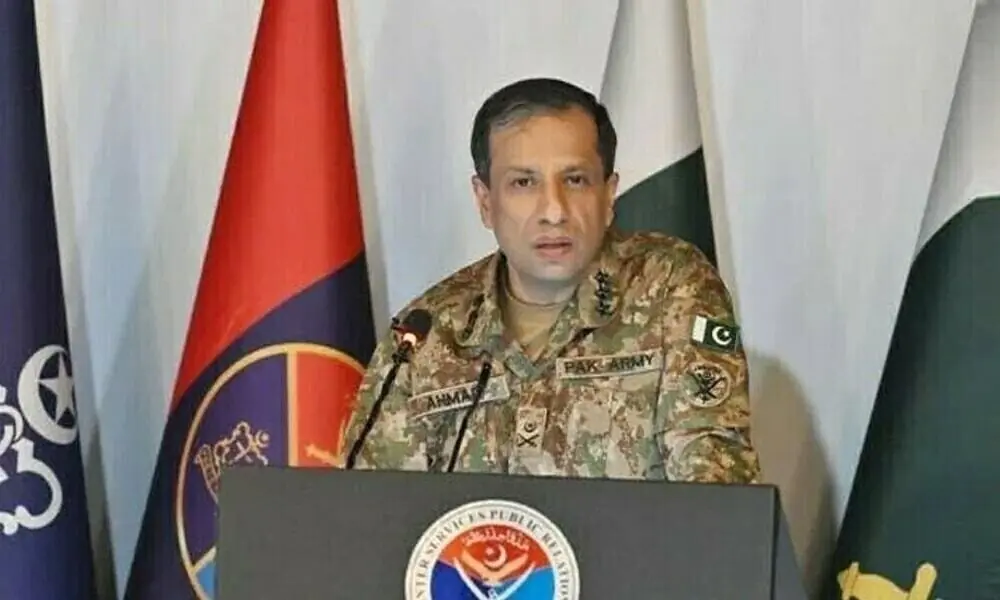

ISLAMABAD: Director General, Inter-Services Public Relations (ISPR), Lt Gen Ahmed Sharif Chaudhry on Thursday presented before the media retired Special Services Group (SSG) Havildar Mohammad Asif, whom Indian authorities and media had claimed was killed as a Lashkar-e-Taiba operative in Indian Illegally Occupied Jammu and Kashmir (IIOJK), terming the episode another “false flag operation” by India.
The DG ISPR said the episode began on September 29, when the Indian military announced an operation in Indian Illegally Occupied Jammu and Kashmir and subsequently claimed that a “Pakistan-based Lashkar-e-Taiba terrorist” identified as Mohammad Asif alias Musa had been killed.
Indian reports later linked the individual with the Pakistan Army and SSG, while Indian official platforms also circulated details portraying him as a senior militant allegedly involved in several attacks.
Rejecting the Indian narrative, Lt Gen Chaudhry brought the retired Pakistani soldier before journalists during the press conference.
Mohammad Asif told the media that he was alive and living with his family, directly contradicting the identification circulated by Indian authorities and media.
The DG ISPR said the appearance of Asif had exposed what he described as a fabricated Indian encounter narrative and caused serious embarrassment for New Delhi internationally. He said India’s repeated false claims had severely damaged its credibility and standing at the international level.
“Their credibility is gone,” the military spokesperson said while criticising what he described as a pattern of unsubstantiated allegations against Pakistan.
Lt Gen Chaudhry also accused the Indian military of losing its professional credibility by following the political agenda of its leadership. He alleged that the Indian Army had become increasingly politicised and was focused on pleasing what he called its “political masters” rather than maintaining professional military standards.
According to the DG ISPR, the latest episode also reflected what he described as the declining professional standards of the Indian military and a recurring tendency to build narratives against Pakistan without credible evidence. He said New Delhi repeatedly invoked Lashkar-e-Taiba in encounter-related claims in an attempt to link security incidents in occupied Kashmir with Pakistan. The DG ISPR argued that such narratives had increasingly lost credibility.
Referring to what he described as India’s culture of staged encounters, Lt Gen Chaudhry said India had effectively become an “Encounteristan”. He alleged that the story surrounding Mohammad Asif had followed the same pattern — an encounter, an alleged Pakistani connection, association with the SSG and then widespread repetition of the claims through official and media platforms.
“Facts are not important to them; the story is important,” the DG ISPR said, accusing Indian authorities of constructing sensational narratives.
He further alleged that India was one of the largest sponsors of terrorism in the region and accused New Delhi of supporting terrorist organisations involved in attacks inside Pakistan.
The DG ISPR said Pakistan had repeatedly presented what it described as evidence of Indian involvement in terrorism and targeted killings beyond Indian territory.
He also referred to the situation in occupied Kashmir, saying Indian actions there reflected what he termed New Delhi’s broader security mindset. Lt Gen Chaudhry alleged that widespread deployment of Indian security forces, detentions and other coercive measures in occupied Kashmir had failed to suppress the political grievances of Kashmiris.
He said that India was attempting to externalise its internal problems by blaming Pakistan instead of addressing the causes of unrest inside the disputed territory. “You cannot externalise your internal issues. You cannot put this blame on Mohammad Asif,” he said.
The DG ISPR also strongly criticised Indian media outlets for repeating the official version of the incident without adequate verification. According to the military spokesperson, the identification of Asif was circulated across Indian media before Pakistani authorities publicly demonstrated that the person being described as killed was alive.
Asif, speaking at the press conference, said he was surprised when friends contacted him after seeing reports that he had been killed in Kashmir. He said he subsequently received calls from Indian numbers seeking information about his identity and personal details.
Asif said he joined the Pakistan Army in 2000, later served with the SSG, and retired in 2023 after 18 years of service. He rejected the allegations against him and said he was living with his family after retirement.
The DG ISPR said the episode demonstrated why Indian security-related claims against Pakistan required independent scrutiny.
He reiterated Pakistan’s position that India should present any evidence regarding alleged Pakistani involvement in terrorism either to Islamabad or to an independent third party.
The military spokesperson also accused India of using terrorism-related allegations as part of a broader information campaign against Pakistan. He maintained that repeated references to Pakistan, Lashkar-e-Taiba and former Pakistani military personnel in Indian security narratives had become a familiar pattern.
Lt Gen Chaudhry said the latest incident had exposed that pattern at an early stage because the individual portrayed as dead had appeared alive before the media. The DG ISPR further accused India of sponsoring terrorist groups involved in attacks inside Pakistan.
He alleged that India had supported organisations operating against Pakistan and had used terrorism as an instrument of state policy — allegations repeatedly made by Pakistani authorities and denied by New Delhi.
Turning to the possibility of renewed military tensions, Lt Gen Chaudhry said Pakistan’s armed forces remained fully prepared to respond to any Indian aggression. He warned that if India attempted to use what Pakistan considered a fabricated incident as a pretext for military action, Islamabad’s response would be severe. “We are ready at all times to give a befitting response to any kind of aggression by India,” the DG ISPR said.
He added that any fresh military move would invite a “very painful” response from Pakistan. The warning came amid continuing tensions between the two neighbours following their military confrontation in May 2025.
Concluding his remarks on the Indian claims, the DG ISPR said the Mohammad Asif episode had raised fundamental questions about the credibility of Indian military reporting and the manner in which security-related narratives were circulated by official institutions and media.
He said India should focus on verifiable facts rather than what Pakistan described as politically driven narratives against Islamabad.
The appearance of Mohammad Asif before journalists remained the central element of Pakistan’s rebuttal, directly contradicting the identity attached by Indian reports to the man allegedly killed in the Kashmir operation.
Copyright Business Recorder, 2026


























Comments