


Four bodies located after 10 climbers go missing on Pakistani mountain, sources say
- Two Pakistan Army Aviation rescue helicopters have been dispatched, ACP says
Pakistan Army Aviation has dispatched helicopters to Broad Peak for search and rescue after an avalanche left 10 climbers, including Nirmal Purja, missing. Efforts are underway to locate the mountaineers.
- Pakistan Army Aviation's rescue efforts on Broad Peak.
- The identities of the 10 missing international climbers.
- Coordination of rescue operations by the Alpine Club of Pakistan.
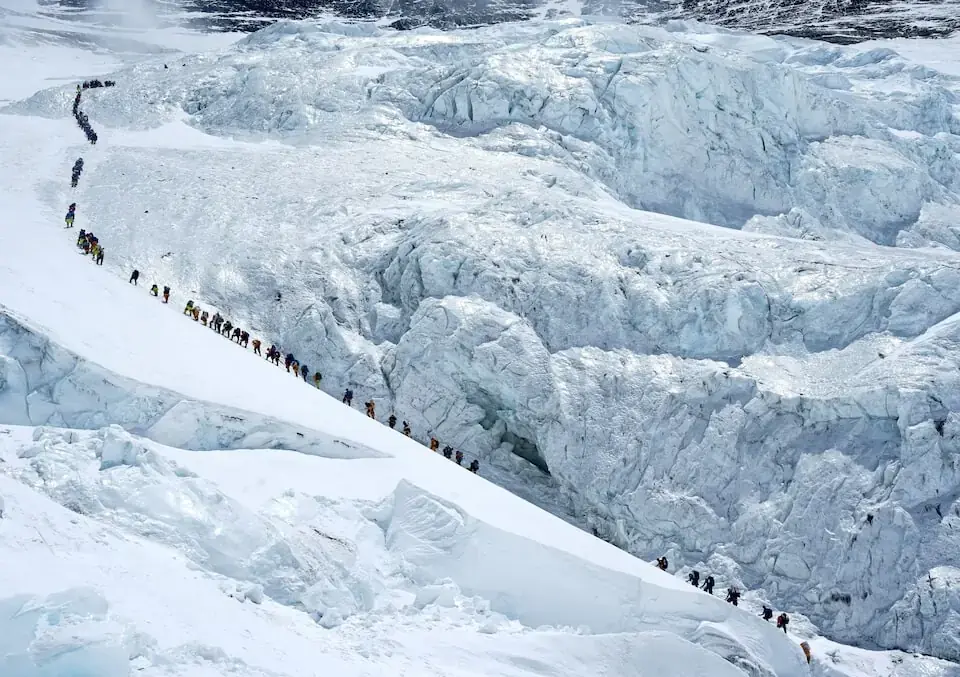

PESHAWAR/KATHMANDU: The bodies of four climbers were located by Pakistani search crews on Friday after at least 10 mountaineers went missing in a suspected avalanche on Broad Peak a day earlier, Pakistani sources said.
Among those missing is Nepali mountaineer Nirmal Purja, 43, who holds the record for the fastest ascent of the world’s 14 highest mountains, said the Alpine Club of Pakistan.
The climbers are believed to have been swept away by an avalanche on the 8,051-metre (26,414-foot) peak, the world’s 12th-highest mountain, around midday on Thursday.
Search and rescue operations were continuing on Friday, Sajid Hussain, deputy director of the tourism department in Pakistan’s Gilgit-Baltistan region, told Reuters.
The search was focusing on a “remote and difficult area“, said Hussain.
The four bodies found had not yet been recovered, according to Pakistani security sources, who did not give details of where they were found.
Two Pakistan Army Aviation rescue helicopters have been dispatched, said the ACP.
“We remain hopeful for the safe recovery of the missing climbers,” said the club. “The entire team has reportedly been out of communication since the avalanche.”
The expedition included Purja and nine other climbers from Nepal, Pakistan, Oman, the U.S. and China, the ACP said.
Chinese foreign ministry spokesperson Mao Ning said at a news briefing on Friday that Chinese authorities were “urgently verifying the situation and gathering information” and “are willing to offer help based on the requirements of the Pakistan side.”
The Nepalese Ministry of Foreign Affairs said six of the 10 climbers missing in the avalanche were Nepalis. Nepal had “received assurances from the Pakistani authorities that they would mobilize all available resources for timely search and rescue operations”, it said in a statement.
Trekking company Seven Summit Treks had three sherpa guides among the missing climbers, Chhang Dawa Sherpa, a board director, told Reuters.
Chhang said team members’ last tracked location at the time of the suspected avalanche was at 6,600 metres (21,653 ft) and “fell down straight from there”.
Broad Peak, located in Gilgit-Baltistan region, is considered one of Pakistan’s most challenging climbs.
Purja first climbed Annapurna, the 10th-highest mountain in the world, on April 23, 2019, and then began taking on other “8,000ers.”
He became more widely known internationally after a Netflix documentary chronicling his journey was released two years later.
Of the world’s 14 highest peaks, eight are in Nepal, five in Pakistan and one in Tibet.
Climbing experts say barely more than three dozen mountaineers have climbed all 14 peaks to date.


























Comments