


Iran's Gulf islands: targets in latest fight over Hormuz
- The islands have been hit multiple times as the two sides fight over the strategic waterway
A US missile struck Iran's Larak island, highlighting ongoing conflict over strategic islands in the Strait of Hormuz, crucial for oil exports and military control.
- Larak's strategic location and role as "Tehran's tollbooth."
- Kharg Island's significance as Iran's primary oil export terminal.
- Qeshm's dual role as a tourist spot and militarized zone.
- Fortification and disputed claims of other Gulf islands.
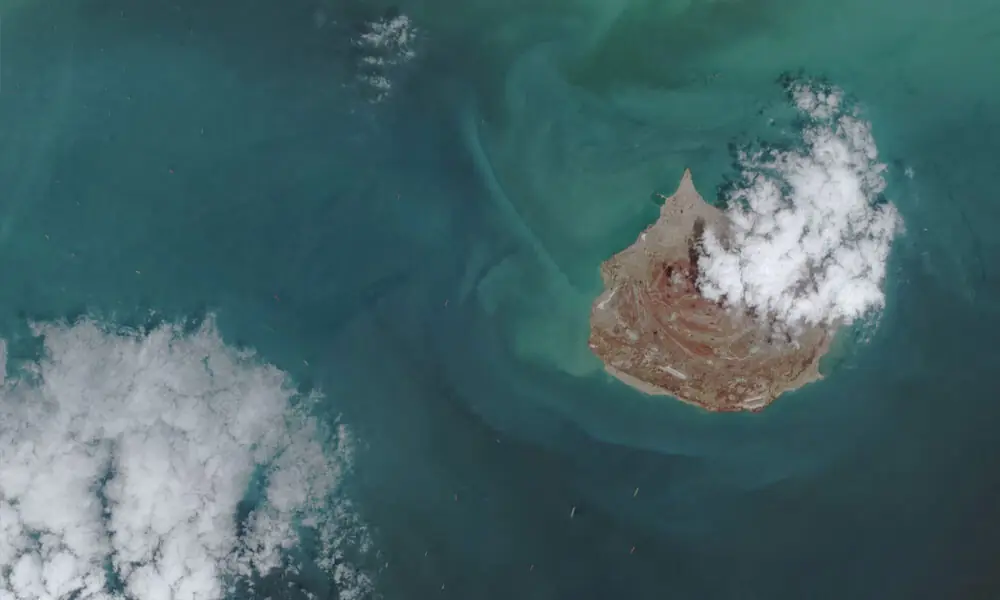

PARIS: A US missile struck the Iranian island of Larak on Wednesday, the Tasnim news agency reported, in the latest attack to target the Islamic republic’s islands in and around the Strait of Hormuz.
The islands have been hit multiple times as the two sides fight over the strategic waterway, which Iran has sealed following the collapse of a preliminary deal aimed at ending the war.
Here AFP looks at the significance of the Iranian islands in the strait and the nearby Gulf.
Larak
This small island occupies a particularly strategic position at the narrowest point of the Strait of Hormuz, the key shipping route that Iran has choked shut.
A site for Iranian oil exports since 1987, it also hosts a military base.
It came to prominence recently as “Tehran’s tollbooth” – a stopping-off point for the handful of vessels that Iran approved to exit or enter the Gulf during its initial blockade earlier in the war.
Ships that used this route had to pay a substantial fee, according to maritime data company Lloyd’s List Intelligence, which came up with the nickname.
The US vehemently opposes Iran’s plans to charge tolls in the Hormuz.
Kharg
A strip of scrubland located in the northern Gulf, about 30 kilometres (20 miles) from the coast, Kharg is home to Iran’s largest oil terminal, which accounts for around 90 percent of its crude exports, according to a recent note from the American bank JP Morgan.
In mid-March it was targeted by US airstrikes.
US President Donald Trump described it as a “crown jewel” for Iran and maintained that every military target on the island had been “totally obliterated”, but energy infrastructure was left unharmed.
Kharg experienced major development during Iran’s oil boom in the 1960s and 1970s because much of the coastline on the mainland was too shallow to accommodate supertankers.
Tehran has since looked to diversify its export capabilities, including by opening the Jask terminal on its southwestern coast in the Gulf of Oman in 2021, but Kharg remains “a critical vulnerability” for Iran, JP Morgan said, calling it “a cornerstone of Iran’s economy”.
The White House had previously hinted it was considering seizing the island, but expert Farzin Nadimi of the Washington Institute think tank said such a military operation would be “very difficult” on an island almost entirely covered with oil infrastructure.
Qeshm
The largest island in the Gulf, Qeshm stretches for around 100 kilometres across the Strait of Hormuz, dominating the entrance to the Gulf.
It is a popular tourist destination for Iranians thanks to its rare UNESCO-listed rock formations, turquoise waters, mangroves and relaxed atmosphere.
“Qeshm used to be a very poor island, and it’s only in the past few years, thanks to tourism, that the economy here has started to come alive,” a resident there told AFP in a recent interview.
But it is also heavily militarised, analysts say, including strike capabilities that could be used against shipping in the Gulf or invading US troops.
The US struck the island as recently as last week, according to Iranian state media.
Disputed islands
Iran claims three disputed islets – Lesser Tunb, Greater Tunb and Abu Musa – in the middle of the Gulf, which are also claimed by the United Arab Emirates.
Along with another islet, Siri, “these islands have been fortified, turned into mini-fortresses with anti-ship missiles”, Pierre Razoux from the France-based Mediterranean Foundation for Strategic Studies told AFP.
Tehran has stationed contingents of the Revolutionary Guards’ naval forces there, which in 2025 deployed new missile systems capable of targeting nearby “enemy bases, ships and equipment”, Iranian media reported at the time.



























Comments