


Water collection globally: Women, girls spend 250m hours every day
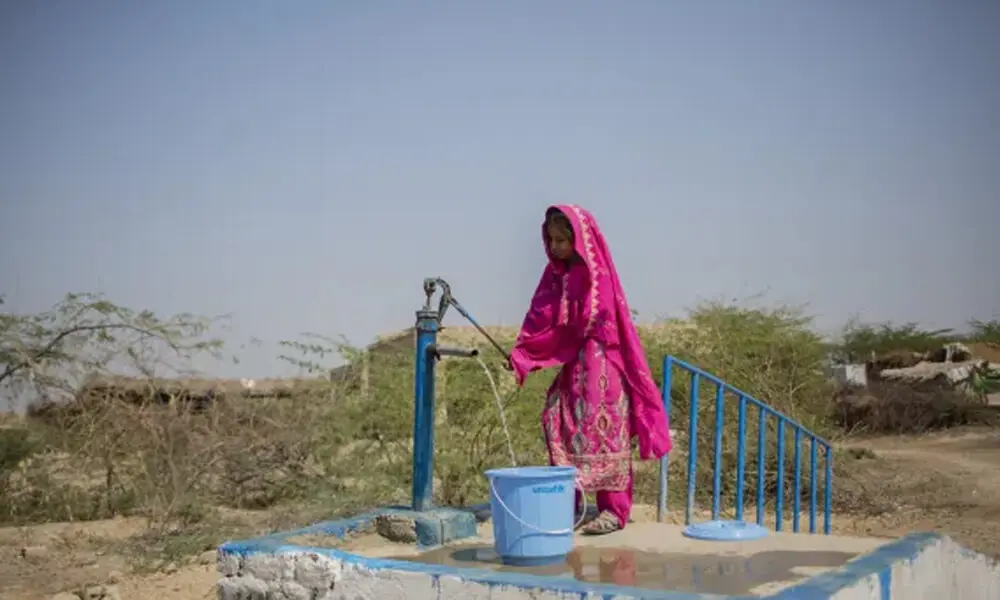

ISLAMABAD: Women and girls spend 250 million hours every day on water collection globally, over three times more than men and boys. This disparity affects their education, health, and income generation.
This is one of the key findings of the three water-related publications that were jointly launched on Tuesday in Islamabad – as part of the extended celebrations of World Water Day – by the United Nations Educational, Scientific and Cultural Organization (UNESCO), the World Health Organization (WHO), the United Nations Children’s Fund (UNICEF), and the United Nations Development Programme (UNDP). The event also counted on the collaboration of the Pakistan Council of Research in Water Resources (PCRWR), the Global Climate Change Impact Studies Centre (GCISC), the Economic Cooperation Organization Science Foundation (ECOSF), and the UNESCO Water Chair on Knowledge Systems for IWRM at COMSATS University Islamabad.
The UN World Water Development Report 2026, presented today in Pakistan, reports that 2.1 billion people still lack safely managed drinking water, 3.4 billion people do not have access to safely managed sanitation services, and 1.7 billion people do not have basic hygiene services at home.
In Pakistan, according to WHO and UNICEF estimates, around 55 percent of the population lacks access to safely managed drinking water, and over 58 percent of the population, living in rural areas, does not have safely managed sanitation services.
“At the time of independence, each Pakistani had access to over 5,000 cubic meters of fresh water annually, now Pakistan is below 1,000,” said Pakistan’s Federal Minister for Water Resources Mian Muhammad Mueen Wattoo, during the event.
“Water solutions should be inclusive, practical, and embedded in local knowledge,” said Mohamed Yahya, United Nations Resident Coordinator in Pakistan.
As water availability shrinks, the Water, Sanitation and Hygiene (WASH) investment gap for urban areas has increased in Pakistan, while the deficit in rural areas has decreased, compared to the 2021/2022 period, according to the UN-Water Global Analysis and Assessment of Sanitation and Drinking-Water (GLAAS) 2025 Report – also launched today.
According to the GLASS report, in Pakistan, the combined Water, Sanitation and Hygiene (WASH) budgets of the four provincial governments and the Islamabad Capital Territory increased from 225 billion to 265 billion Pakistani rupees (US$ 808 million to US$ 952 million) from 2022 to 2024 – an 18 percent nominal increase. However, due to high inflation over the same period, this represents a 20% decrease in real terms.
The “Guidelines for Science Policy Practice Interface (SSPI) for Achieving Water Security in Pakistan” –presented by UNESCO and Pakistan’s Council of Research in Water Resources during the event – provide guidance to bridging the gap between scientists, policymakers and practitioners for these challenges.
Under the global theme “Water and Gender”, the United Nations entities underlined that the global water crisis affects everyone – but not equally. Where people lack safe drinking water and sanitation close to home, inequalities flourish, with women and girls bearing the brunt.
The event brought together government officials, United Nations agencies, researchers, development partners, academia, civil society organizations, and water sector experts to discuss pathways towards climate-resilient and gender-responsive water governance.
A high-level round table chaired by Fuad Pashayev, Representative of UNESCO in Pakistan, focused on the key findings and recommendations emerging from the three publications. The session highlighted the growing urgency of addressing the interconnected challenges of water security, climate change, and social inclusion.
The round table featured contributions from Pernille Ironside, Representative of UNICEF Pakistan; Fahim Ahmed, Technical Specialist, UNDP Pakistan; and Ms. Ellen Thom, Deputy Representative, WHO Pakistan. Discussions explored global and national trends in water security, sanitation, public health, climate adaptation, and the importance of strengthening the science–policy–practice interface to accelerate progress towards Sustainable Development Goal 6.
Discussions were followed by a panel that brought together leading experts from research, policy, climate science, and regional cooperation institutions. They analyzed practical pathways for translating scientific evidence into policies and actions. Experts underscored the need for stronger science-informed policymaking, climate-resilient water management, improved water governance, enhanced cooperation among institutions, and greater participation of women in water-related decision-making processes to leave no one behind.
Copyright Business Recorder, 2026


























Comments