


KSE-100 loses over 1% as US-Iran tensions escalate
- Benchmark index settles at 171,115.82
The Pakistan Stock Exchange's KSE-100 Index dropped significantly due to renewed US-Iran hostilities, causing selling pressure across key sectors, despite international markets showing mixed reactions.
- Impact of US-Iran hostilities on global markets.
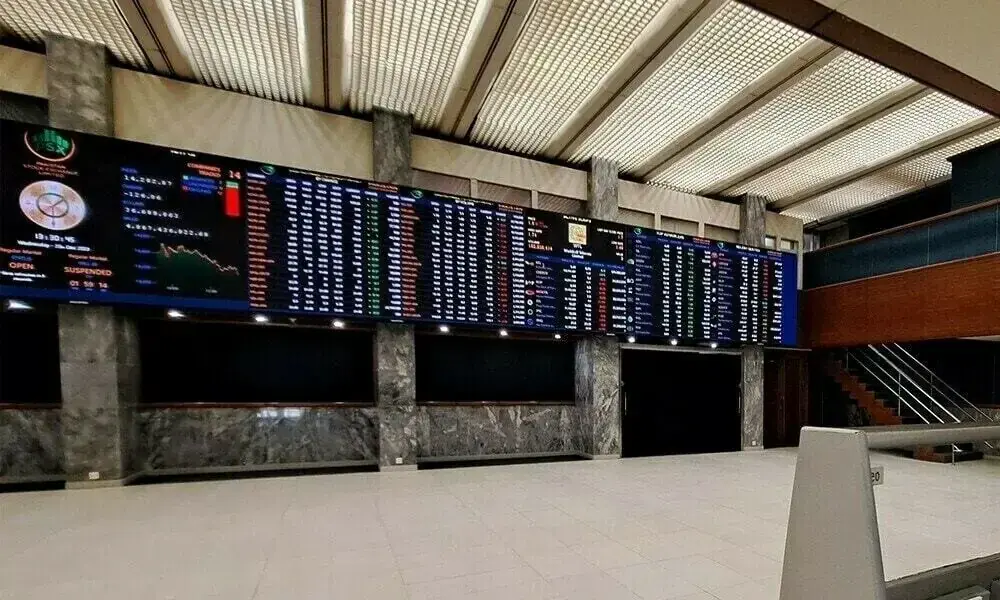
Selling pressure returned to the Pakistan Stock Exchange (PSX) after renewed hostilities broke out between the US and Iran, with the benchmark KSE-100 Index shedding over 1% on Friday.
The market witnessed heightened volatility throughout the day.
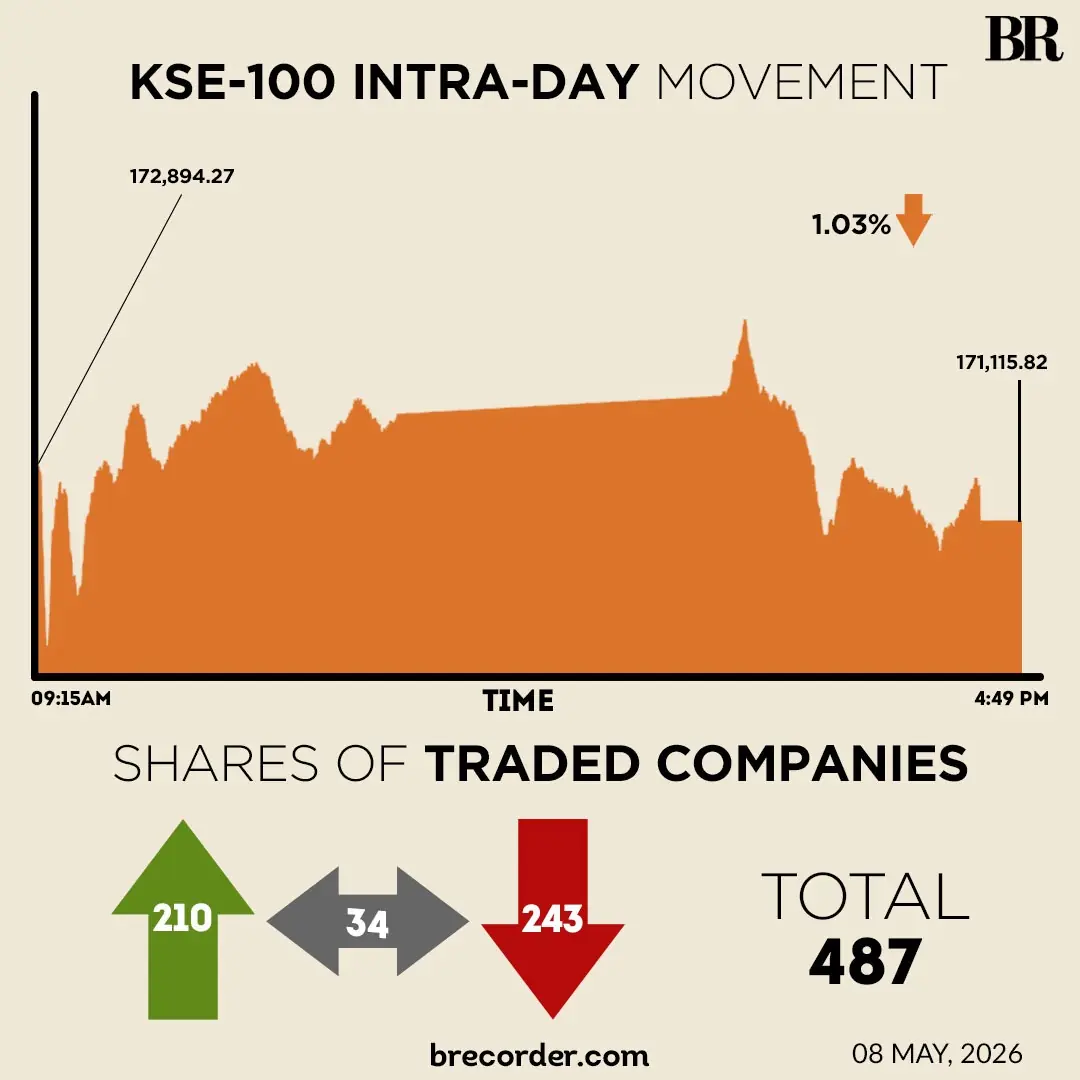
The benchmark index initially came under sharp selling pressure soon after opening, dropping to the intraday low of 170,393.12.
However, aggressive buying support helped the benchmark recover steadily during the first half of the session, with the index climbing towards the 172,000 level by midday.
Momentum turned negative again in the later hours of trade as renewed selling pressure erased earlier gains.
At close, the benchmark index settled at 171,115.82, down by 1,778.45 points or 1.03%.
“While the market hit record highs yesterday, the sudden shift in global stability has triggered a massive sell-off across all key sectors,” said Behtari Capital on Friday.
“If diplomatic channels, mediated via Pakistan, don’t signal a de-escalation by the closing bell, we may see further technical selling heading into next week,” it added.
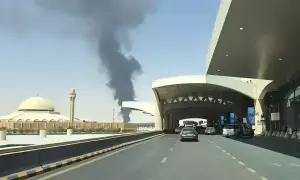
Similarly, Arif Habib Limited, in its post-market commentary, said that profit-taking was observed on Friday, as the US and Iran clashed near the Strait of Hormuz, with US forces targeting missile and drone launch sites and other military assets in Iran.
“The clashes risk undermining talks over a US-proposed deal to end the war, with Iran expected to send a response to the proposal via Pakistan within days,” it added.
On Thursday, PSX extended its bullish momentum as investors continued buying equities on improving sentiment, although mid-session profit-taking erased a significant portion of the market’s early gains. The benchmark KSE-100 Index still managed to close firmly in positive territory, gaining 1,189.52 points or 0.69 percent to settle at 172,894.28 points.
Internationally, oil prices were higher on Friday and stocks a little bit lower as the U.S. and Iran exchanged fire in the Middle East, though many markets in Asia were still heading for stellar weekly gains as AI demand has swept up chipmakers.
Benchmark Brent crude futures were up 1.3% at $101.60 a barrel and European stock futures fell 0.7%.
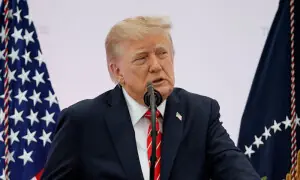
The United States and Iran exchanged fire on Thursday in the most serious test yet of their month-long ceasefire, but Iran said the situation had returned to normal while the US said it did not want to escalate. President Donald Trump said the ceasefire, which has more or less held for a month, was still in effect, sustaining hopes for a negotiated resolution.
Stock markets in Asia, which have been soaring thanks to gains in chipmakers and other AI-linked stocks, slipped only slightly from record highs.
MSCI’s broadest index of Asian shares outside Japan fell 0.8%, as did South Korea’s KOSPI though the latter was still headed for a weekly gain of more than 12% - the largest since 2008 - as Samsung and SK Hynix have surged.
Taiwan’s benchmark is up 6.9% this week, and Japan’s Nikkei 4.5%.
Meanwhile, the rupee gained against the US dollar during trading in the inter-bank market on Friday. At close, the local currency settled at 278.70, a gain of Re0.01 against the greenback.
Volume on the all-share index increased to 1,025.27 million from 986.97 million recorded in the previous close.
However, the value of shares declined to Rs36.67 billion from Rs52.70 billion in the previous session.
K-Electric Ltd.was the volume leader with 144.42 million shares, followed by Hascol Petrol with 100.75 million shares, and Cnergyico PK with 84.11 million shares.
Shares of 487 companies were traded on Friday, of which 210 registered an increase, 243 recorded a fall, and 34 remained unchanged.












Comments