


Escalating regional tensions: No mechanism to handle returned cargo vessels
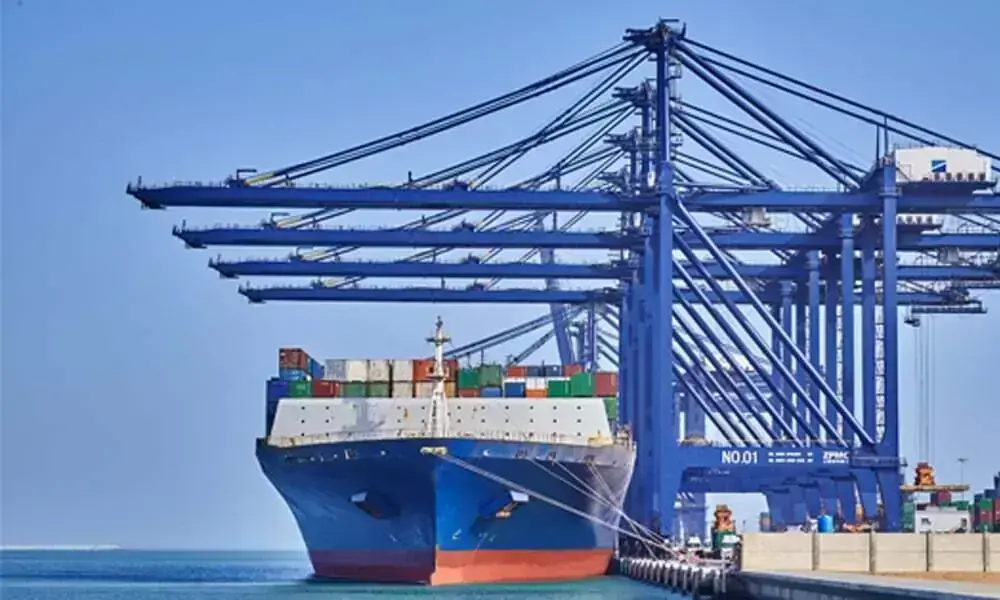

KARACHI: Pakistan customs and port authorities have no ready mechanism to handle a cargo vessel forced back to Pakistani waters amid escalating regional tensions.
The vessel at the centre of the crisis, M.V. Celsius Emmen V-022, departed Pakistan on March 2, 2026, carrying export containers and international transshipment cargo bound for Middle Eastern ports. As regional tensions flared, the ship was compelled to return to Karachi port.
The vessel’s return exposed a serious systemic gap: neither port nor customs has a ready mechanism to handle a returned export vessel, creating a legal and logistical limbo for exporters whose goods were now floating back to the same berths from which they had sailed weeks earlier.
READ MORE: Foreign-flagged transshipment vessels: Fiscal measures package unveiled
In response, the Chief Collector of Customs (Exports & IOCO) Karachi convened an emergency meeting at the Custom House, bringing together officials from the Pakistan Single Window (PSW), port operator KGTL, and customs authorities to discuss a workable solution.
Two options were placed on the table. The first reverting the “load event” for each container within the WeBOC customs system was swiftly deemed technically impracticable. Officials said that berthing the vessel requires filing a Vessel Intimation Report (VIR) and an Import General Manifest (IGM) in WeBOC, which automatically assigns international transshipment containers a “Release Message” status, rendering any reversal unworkable.
The second option won unanimous backing: processing the returned consignments as returned imports under Section 22 of the Customs Act, 1969, through the filing of import Goods Declarations (GDs) in the WeBOC/PSW system.
The meeting concluded with a formal decision that KGTL would permit M.V. Celsius Emmen to berth upon completion of VIR and IGM formalities, with the carrier required to file relevant documents per S.R.O. 450(I)/2001.
Meanwhile, Khurram Ijaz, former Vice President FPCCI, issued a sharp condemnation of what he called “unjust and exploitative practices” by port authorities and shipping lines.
“Exporters had fulfilled all obligations i.e., payments cleared, bookings confirmed, and containers delivered to ports well before the escalation of regional tensions in late February. Yet, with vessel operations disrupted, shipments remained stuck at terminals,” Ijaz said, calling the imposition of demurrage, detention, and container rent charges on affected exporters both legally and morally unjustified.
He urged the Ministry of Maritime Affairs and the Federal Board of Revenue (FBR) to intervene immediately, directing all terminals and shipping lines to waive such charges for consignments that arrived at ports between February 24 and March 10, particularly those destined for Middle Eastern markets. He further proposed that the government consider a temporary compensation mechanism should operators be unable to absorb those costs themselves.
The shipping lines, following a series of meetings with a committee constituted by the Ministry of Maritime Affairs to address trade disruptions, reached an agreement with traders to ensure fair pricing, advance disclosure of costs, and minimal diversion of cargo except in genuine emergencies.
As part of the agreement, shipping lines committed to refraining from undue or opportunistic pricing and agreed to maintain transparency and consistency in the application of war-risk surcharges on shipments originating from or destined for Pakistan.
On the other hand, both ports, KPT and PQA, continued to register strong operational figures. KPT handled 112,127 metric tons of cargo in the latest 24-hour period, comprising 89,033 tons of imports and 23,094 tons of exports, with eight vessels berthed and six sailed.
Similarly, PQA processed 109,856 metric tons across eight vessels, split between 58,365 MT of imports and 51,491 MT of exports, bringing the combined throughput of both ports to over 221,000 metric tons. KPT’s shipping intelligence report confirmed the arrival of seven container ships and two crude oil tankers on April 1-2, including TS Mumbai, Zhu Cheng Xin Zhou, Wasterly, Future, Greenhouse, Carl Schulte, Lepton and two crude oil tankers including M.T. Sargodha and M.T. Karachi, which are expected to discharge 73,000 MT of crude oil each on April 2.
Copyright Business Recorder, 2026






















Comments
Comments are closed for this article.