



PARIS: Almost three weeks into the Middle East war, analysts fear that a long-drawn out conflict and the associated disruption to oil trade may undermine the global economy.
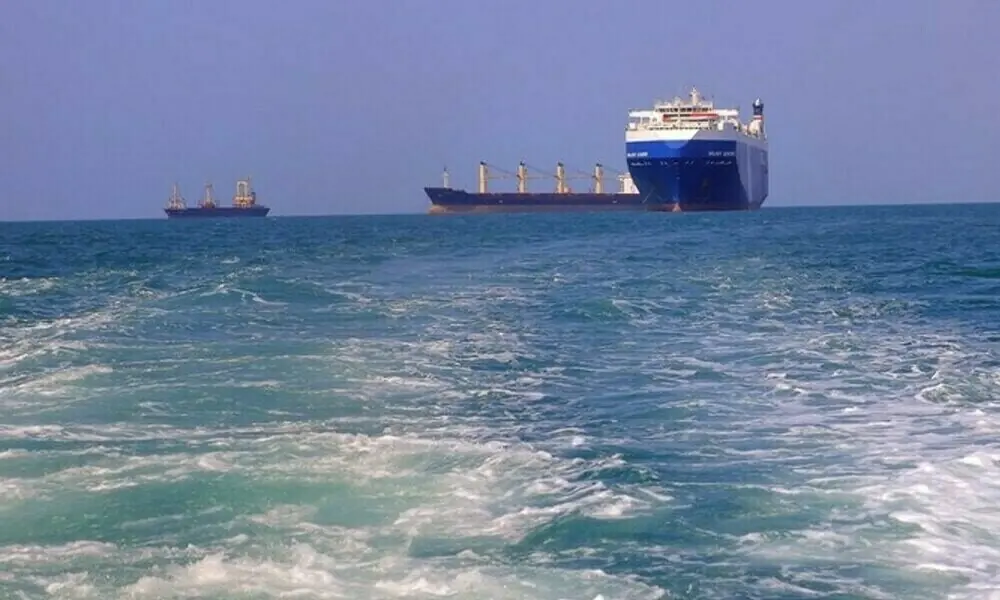
Economists are contemplating a gloomy combination of prices rising across the board and growth stalling. The conflict, which started late February with US and Israeli strikes on Iran, has seen oil traffic through the vital Strait of Hormuz chokepoint — through which a fifth of global crude and liquified natural gas normally transits — come to a virtual standstill.
As a result, oil prices have spiked from around $60 prior to hostilities to current levels of around $100 — after briefly touching around $120.
Iran has responded to US and Israeli strikes by attacking strategic energy infrastructure across region, leading major economies to begin dipping into their strategic oil reserves.
“The longer this conflict drags on, the more it begins to look like a classic energy shock feeding directly into inflation,” said Stephen Innes, managing partner for SPI Asset Management.
“Oil is the macro transmission channel that touches everything from freight to food to household utility bills. So the first impact is inflation, but the second order effect is on growth because higher energy prices act like a tax on consumers and businesses,” Innes added.
“Before the war broke out, we expected steady growth and rather less inflation,” Helene Baudchon, deputy chief economist for BNP Paribas, told AFP.
Baudchon says the hostilities have flipped that benign scenario to concerns about so-called stagflation, where lower growth is accompanied by higher inflation.
“But how high? At this stage there is no certainty, it will depend on the length and scope of the conflict,” she said.
For now, BNP Paribas is sticking with its growth forecast of 2.9 percent for this year for the United States, 4.7 percent for China and 1.6 percent for the eurozone.
For Baudchon, two stagflationary paths loom.
In the first scenario, the intensity of the conflict drops off and hydrocarbon prices gradually decline — while remaining above pre-conflict levels — which “would appear manageable for the global economy,” which has so far remained relatively resilient, even to increases in US tariffs.
However, a surge in oil prices lasting several weeks or months would be “more negative” and could force central banks to raise interest rates to curb rising consumer prices.
“The longer the (Hormuz) blockade lasts, the more products and raw materials it will affect, the more supply chains will be disrupted and the more inflationary effects will be felt. They would not be limited to oil and gas prices,” says Baudchon.
- Like post-Covid?
According to Fitch Ratings, oil prices holding at $100 per barrel would reduce global GDP by 0.4 percent after four quarters and add “between 1.2 and 1.5 percentage points to inflation in Europe and the United States.”
Such an outlook is liable to reignite fears of another inflationary shock after the one caused by the post-Covid recovery and the start of the war in Ukraine in 2022, even if today’s context is very different.
At that time, demand was strong, supply was constrained by supply chain disruptions, and fiscal policies were accomodative.
Several key central bank meetings are on the agenda this week, with the US Federal Reserve on Wednesday, and the European Central Bank and the Bank of England on Thursday, expected to keep their rates steady.























Comments
Comments are closed for this article.