



Back in time, in the harsh mountains of Chagai Hills in Balochistan, the earth trembled on a historic day in May 1998 where beneath the rocky terrain, a series of underground nuclear tests signified a defining moment in the history of Pakistan. With the successful commencement of the Chagai-I Nuclear Tests, Pakistan became a nuclear power which certainly transformed its place on the map as regional and global balance of power.
Pakistan’s nuclear journey stretches back much further, a tale woven from insecurity, conflict, and the relentless quest for strategic advantage in a region fraught with tension. Since its inception, Pakistan grappled with a difficult security situation. Its relationship with India is defined by rivalry and frequent clashes.
The strategic landscape underwent a significant change in 1974 when India detonated its inaugural nuclear device, the “Smiling Buddha” test. This development of nuclear weapons in South Asia fundamentally altered the balance of power, and Pakistan, without its own nuclear arsenal, faced genuine security worries. It gave a clear message that the regional security environment had fundamentally changed and India is has the key to it.
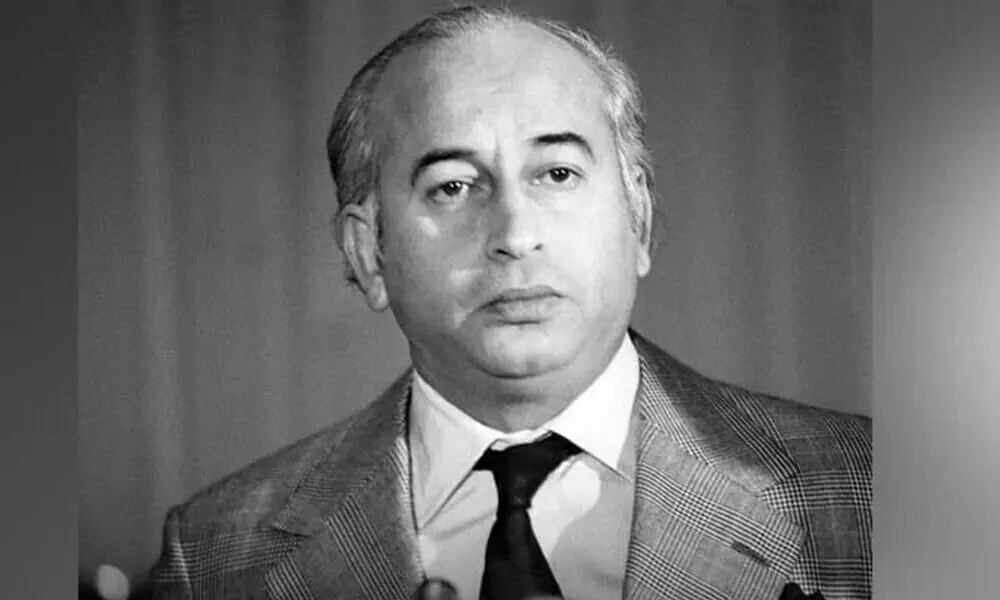
Pakistan’s leadership realised that now is the time to establish unbreakable perception a reality and made a historic decision that would shape the country’s future. Under the leadership of the then Prime Minister Zulfiqar Ali Bhutto, Pakistan embarked on an ambitious effort to develop its own nuclear capability. Bhutto believed that national survival required strategic deterrence. His determination and foresight laid the foundation of Pakistan’s nuclear programme.
Many Pakistanis believe that the country’s eventual emergence as a nuclear power owes much to his conviction and political courage. In many ways, the success was achieved decades later at Chagai stands as a testament to the vision Bhutto envisioned for Pakistan’s strategic security. Dr Abdul Qadeer Khan became closely associated with Pakistan’s nuclear programme as a key team member.
Over the following years, despite international pressure, sanctions, and technological barriers, Pakistan steadily built the scientific infrastructure required to achieve nuclear capability.
In 1998 working against the clock, Pakistan finally conducted its nuclear tests and created the impact on world with continues till to date. The tests did more than just shift the military equilibrium in the area; they also made it loud and clear to the world that Pakistan now has the capacity to safeguard its existence.
Later, during the times of intense conflict in 1999 in Kargil, the existence of nuclear weapons highlighted the potentially devastating results of increased fighting. Despite ongoing disagreements, the principles of deterrence still shaped the strategic decisions in the region.
In the real times, Pakistan is facing a complex array of security challenges. In eastward lies India, a nation possessing nuclear weapons and a history of political and military tensions. It did try to mingle in May of 2026, however, Pakistan emerged triumphant, with a 6-0 victory. To the west, instability in Afghanistan has created long-standing security concerns and a war against terrorism is a constant struggle.
At the same time, Pakistan has spent years confronting internal threats from extremism and terrorism. In the south west, Iran has an ongoing war against Israel and America which has affected the Middle East and the whole region.
In such an environment, nuclear capability functions as a strategic shield. This approach compels any opponent to thoughtfully consider the dangers of engaging in conflict with Pakistan.
The presence of nuclear weapons does not eliminate rivalry or conflict, but it significantly raises the threshold for war. Enemies at least once ponder before they aim to play with Pakistan.
Our country has always emphasised that its nuclear capability is based on a doctrine of responsible deterrence and it maintains strict command and control mechanisms and repeatedly affirms that nuclear weapons exist solely to prevent war, not to provoke it.
More than two decades after the tests at Chagai, Pakistan’s nuclear capability remains a cornerstone of its national security strategy. Initially, the response to vulnerability led to a deterrence strategy, which has, in turn, helped to stabilise the region.
Pakistan’s nuclear reality is not just a tale of scientific achievement; it is a story of survival, strategic foresight, and national resolve. The foundations of this journey lie in the vision of Zulfqar Ali Bhutto, whose steadfast belief that Pakistan must secure its own strategic balance set the nation on the course that ultimately culminated in the historic nuclear tests.
Pakistan’s trajectory from being strategically weak to having nuclear weapons is now a reality, Bhutto’s determination during a moment of great national uncertainty paved the foundation for what would become one of Pakistan’s most important strategic successes, it was not merely a technological achievement but also the realization of a long-held national goal. It is now a nuclear power that possesses the means to safeguard its sovereignty and maintain the delicate equilibrium of the region.
Pakistan as a nuclear state mirrors ZAB’s perspective and belief, which persists in shaping its current security and stability.
Bhutto’s conviction that Pakistan must establish its own deterrent capabilities remains influential within the nation and as of today making Pakistan a nuclear responsible state and regional stabiliser.
Copyright Business Recorder, 2026

























Comments
Comments are closed for this article.