


Credit markets dented as Middle East war piles onto ‘cockroaches’ fears

LONDON: A number of key European credit indicators deteriorated on Monday, with an index of regional junk corporate credit hitting its highest since November on investor jitters over conflict in the Middle East and the fragility of the private credit market.
The US-Israeli air war against Iran expanded on Monday, engulfing Lebanon with Israel responding to strikes by Hezbollah, while Tehran fired missiles and drones at Israel, Gulf states and a British air base in far-away Cyprus.
As sentiment faltered, investors ditched riskier assets such as credit, cryptocurrencies and equities.
The iTRAXX Europe Crossover index - which captures the cost of insuring against the risk of default on a basket of high-yield corporate debt - rose by nearly 11 basis points to around 270 bps, having already risen last week by the most since early October.
A similar measure of investment-grade credit, the iTRAXX Europe Main, rose by 2.5 bps to around 58 bps, the most since mid-October.
The collapse of a niche British mortgage financing company last week has added to worries among investors over ballooning corporate debt levels related to the artificial intelligence boom, as well as over lending standards.
Much of this borrowing has come via the private credit, typically less transparent and liquid than public markets and which can seize up in the event of a shock to the financial system.
“With all the focus right now on the oil price, currency and equity moves, and what may or may not represent a safe asset in the new normal, one should not lose sight of everything that is going on in the credit space (where spreads have in some cases been wafer-thin), and a known (difficult to quantify) risk that has in recent weeks been coming more and more to the fore - namely private markets and the exposure of banks through their lending books, to non-bank financial institutions,” said Saltmarsh Economics chief economist David Owen.
JPMorgan boss Jamie Dimon warned late last year that more “cockroaches” could emerge from pockets of Wall Street’s multitrillion-dollar credit machinery.
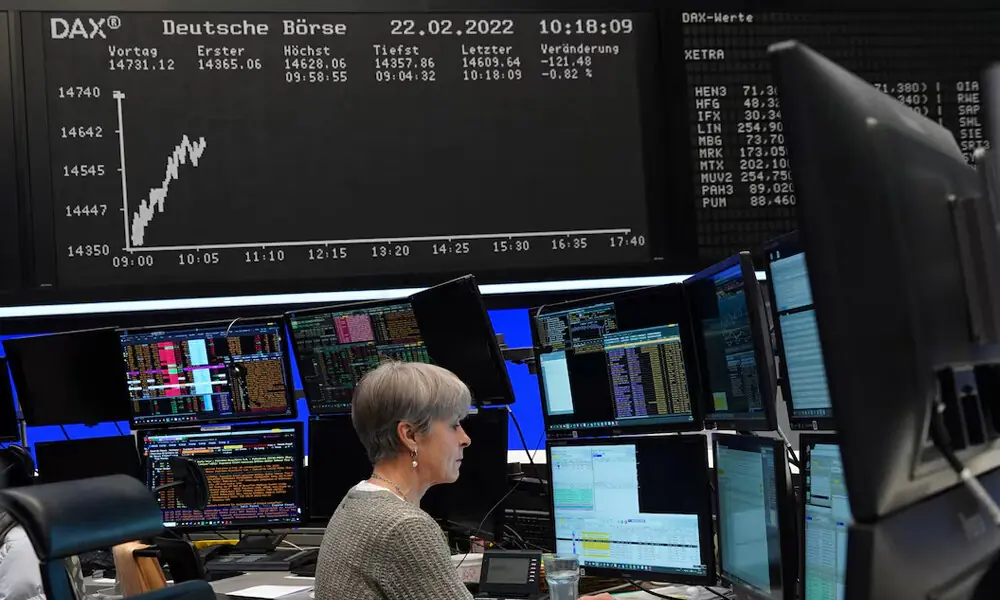
European shares fell broadly on Monday, led by losses in travel and leisure stocks, while bank stocks tumbled. Shares in major lenders such as HSBC, Banco Santander and Deutsche Bank fell 4-5 percent.


























Comments
Comments are closed for this article.