



After two years from hell, two years of relief was the bare minimum Pakistanis could have hoped for. By that measure, 2025 delivered, and then some.
Weekly price data on essential items tracked by the Pakistan Bureau of Statistics (PBS) shows that while the sharp decline in headline inflation is well documented, it is the breadth of the price relief that stands out as the year’s defining feature.
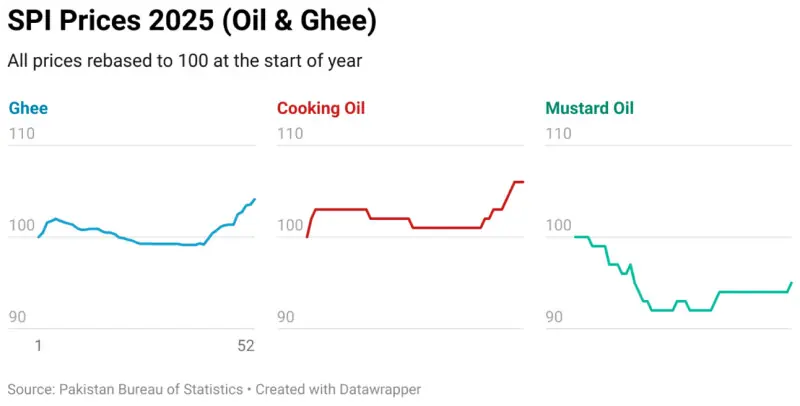
Across categories, from grains and cereals to electricity and petrol, and from vegetables and poultry to clothing and footwear, an overwhelming majority of the 51 essential items posted annual price increases that are the lowest in a very long time.
In many cases, they are the lowest in over half a decade. A confluence of factors drove this outcome.
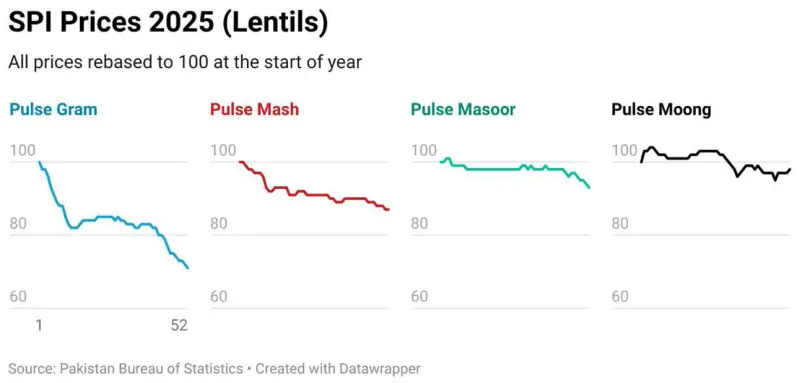
Soft international commodity prices, improved domestic agricultural supply, exchange rate stability, and lower fuel costs all helped cool food inflation decisively.
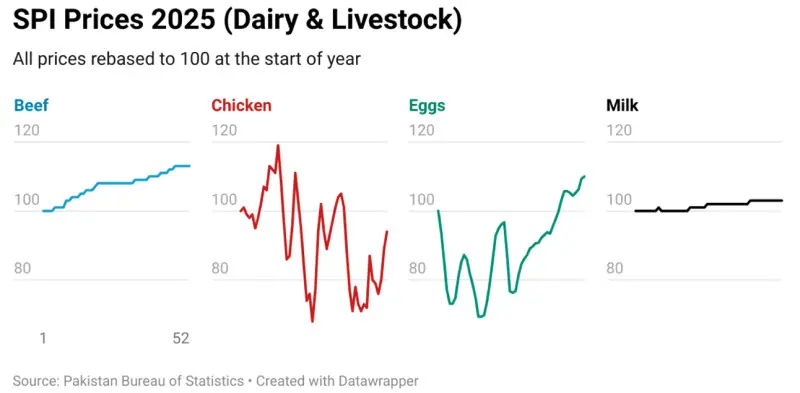
In the meat segment, both chicken and beef registered their lowest annual price increases in five years. Chicken prices, in particular, recorded their weakest yearly increase since at least CY18, remaining 24 percentage points below the five-year average annual change.
Beef prices, too, stayed comfortably below their trailing average. Milk and eggs followed a similar pattern, with both recording their lowest annual price increases in over seven years, alongside noticeably reduced volatility.
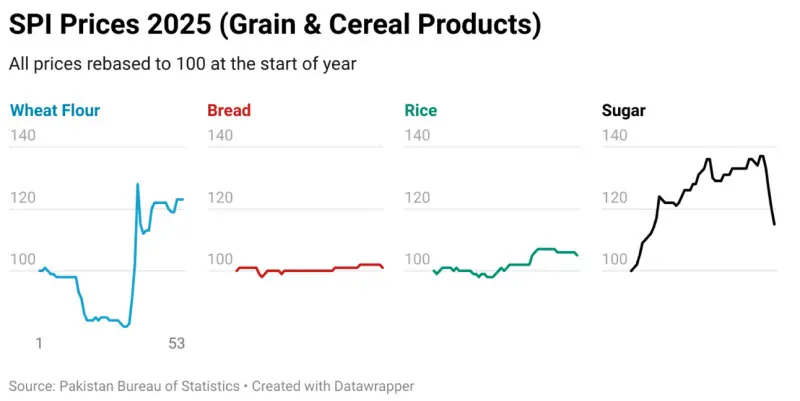
On the grains and cereals front, wheat flour was the notable exception. Prices surged sharply as policy missteps left the market exposed.
Even so, the average annual increase in CY25 remained more than 10 percentage points below the five-year trailing average.
Sugar prices eased in the final two months of the year, but a pronounced spike between the two crushing seasons was sufficient to push its annual increase above the historical average.
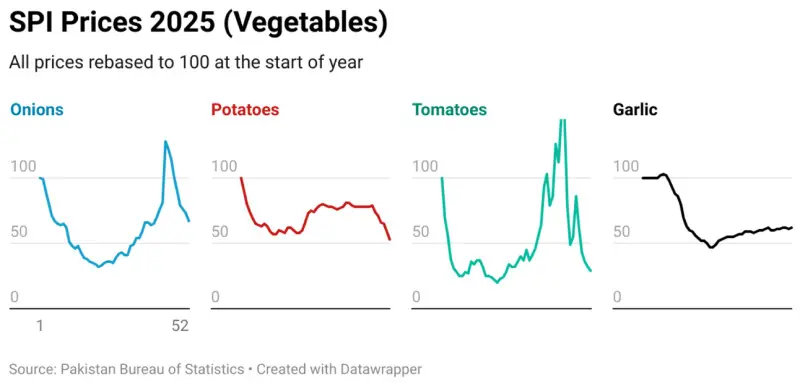
Vegetables delivered the biggest surprise. Potatoes marked a rare calendar year in which prices never exceeded their level at the start of the year, eventually closing at nearly half that level. Onions, tomatoes, and garlic also posted markedly lower annual price changes compared to recent years, reinforcing the depth of the food price correction.
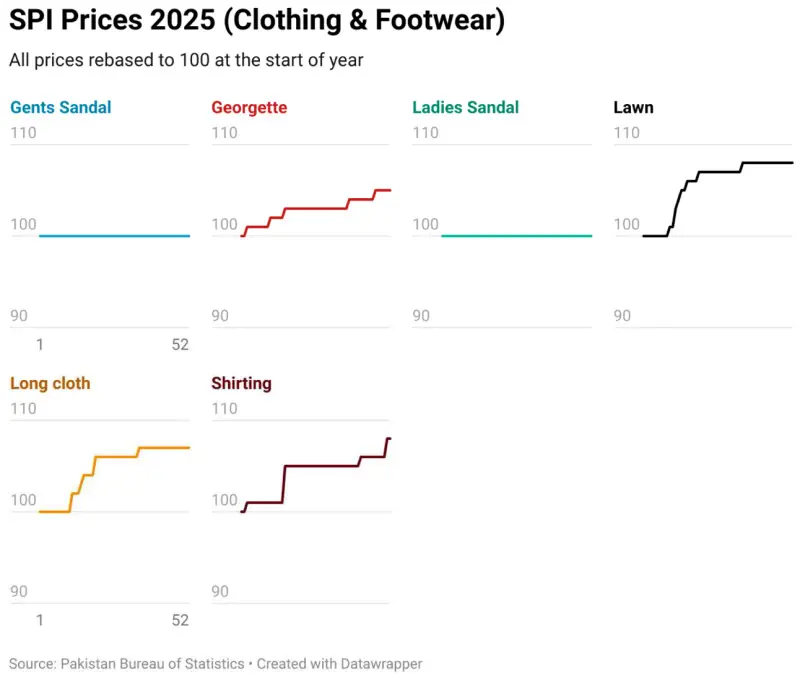
CY25 also recorded the lowest annual increase in clothing and footwear prices in recent memory. From sandals to sponges, and from long cloth to lawn and georgette, price pressures remained subdued.
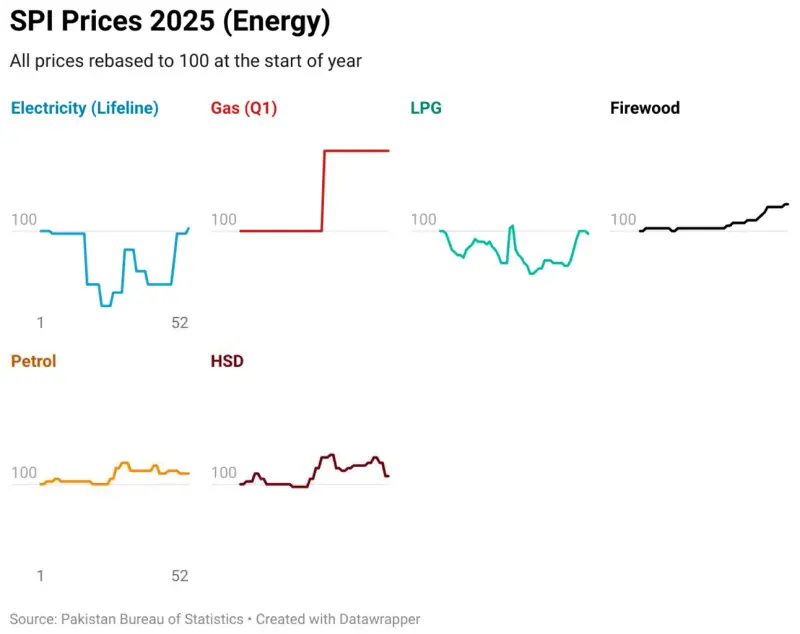
Relief on the energy side, driven by currency stability, softer international energy prices, and renegotiated IPP contracts, played a critical role in anchoring costs across the broader consumption basket.
There is little doubt that the year ending today ranks among the better ones for price stability. Yet it is important to remember that this respite follows an extraordinary two-year inflationary shock.
With global commodity prices still soft, no immediate pressure on the currency, a gradually reviving manufacturing sector, and better than expected agricultural output, the hope is that 2026 sustains this hard-won stability rather than merely borrowing it from the past.


























Comments
Comments are closed for this article.