


Cyclone-hit Sri Lanka: India blocks air delivery of humanitarian aid

NEW DELHI: Pakistan accused bitter rival India on Tuesday of blocking an air delivery of humanitarian aid to cyclone-hit Sri Lanka, a claim which New Delhi dismissed as “anti-India misinformation”.
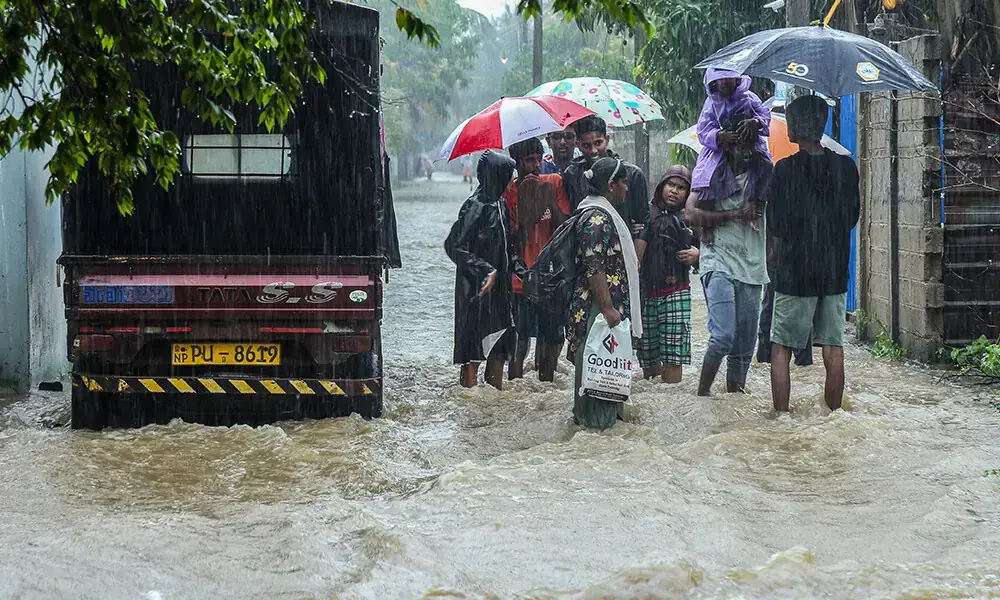
Flash floods and deadly landslides across Sri Lanka have killed at least 410 people, with President Anura Kumara Dissanayake declaring a state of emergency and calling for international support — which both India and Pakistan have already begun providing.
But a request from Islamabad to let an aircraft carrying aid fly over India on its way to Sri Lanka — a much shorter route, instead of circumventing the subcontinent — has turned into a diplomatic spat. India and Pakistan have both extended an airspace ban on the other country’s airlines earlier this year, after the worst violence in decades between the nuclear-armed rivals. Officials in New Delhi said on Monday that authorities had granted clearance to the Pakistani aid aircraft within hours of the request being made.
Islamabad’s foreign ministry said on Tuesday that “the special aircraft carrying Pakistan’s humanitarian assistance to Sri Lanka continues to face delay for over 60 hours now, awaiting flight clearance from India.”
The problem, according to the Pakistani foreign ministry, was that India gave only a “time-bound” clearance with no assurances that the plane would be able to return along the same route, making the flight “operationally impractical”.
A spokesman for India’s foreign ministry, Randhir Jaiswal, rejected “the ridiculous statement” from Pakistan, calling it “yet another attempt of spreading anti-India misinformation”.
“India remains committed to assisting the people of Sri Lanka in these challenging times through all available means,” Jaiswal said in a statement.
The neighbouring countries have imposed their respective airspace bans after a deadly attack in April on Indian tourists in Kashmir, which sparked a four-day military conflict, killing dozens of people.


























Comments
Comments are closed for this article.