


US F-35 jets to be sold to Saudi Arabia to lack Israel’s advanced features
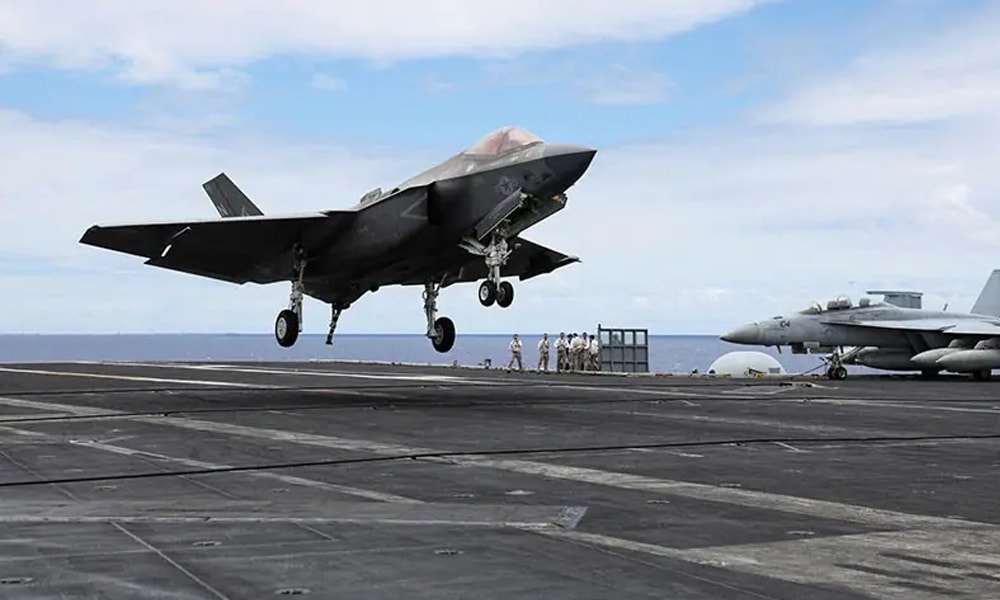

WASHINGTON: The F-35 fighter jets the US plans to sell Saudi Arabia will be less advanced than those operated by Israel, in line with a US law that guarantees Israel’s military edge in the region, US officials and defense experts said on Wednesday.
President Donald Trump announced the sale this week, but officials said the Saudi aircraft will lack superior features of Israel’s fleet that include advanced weapons systems and electronic warfare equipment.
Israel enjoys unique permissions to modify its F-35s, including the ability to integrate its own weapons systems and add radar-jamming capabilities and other upgrades that do not require US approval. Still, the Israeli Air Force opposed the planned sale, warning in a position paper to political leaders that it would undermine Israel’s air superiority in the region, The Times of Israel reported on Tuesday.
Even if Saudi Arabia gets the jets, it is unlikely to receive the AIM-260 Joint Advanced Tactical Missile, next-generation air-to-air missiles being developed for fifth-generation aircraft, according to Douglas Birkey, executive director of the Mitchell Institute for Aerospace Studies.
The 120 mile-plus range of the JATM represents the most sensitive missile technology associated with the F-35 platform. The missile would likely be offered to Israel.
The F-35 is customized to each country and pilot. The US has the most capable versions, with every other nation receiving a lesser fighter. It is possible to keep the Saudi jets, made by Lockheed Martin, technologically inferior to Israeli jets based on the software package permissioned to the jet.
Beyond capability differences, Israel maintains a numerical advantage, currently operating two squadrons of F-35s with a third on order. Saudi Arabia would be limited to two squadrons that won’t be delivered for several years.
Israel has operated F-35s in the region for roughly eight years, giving it significant experience in learning the aircraft’s systems and capabilities.


























Comments
Comments are closed for this article.