


Circular debt stock brought down to Rs1.614trn: Leghari
- Outlines govt’s circular debt financial management plan worth Rs 1.225 trillion
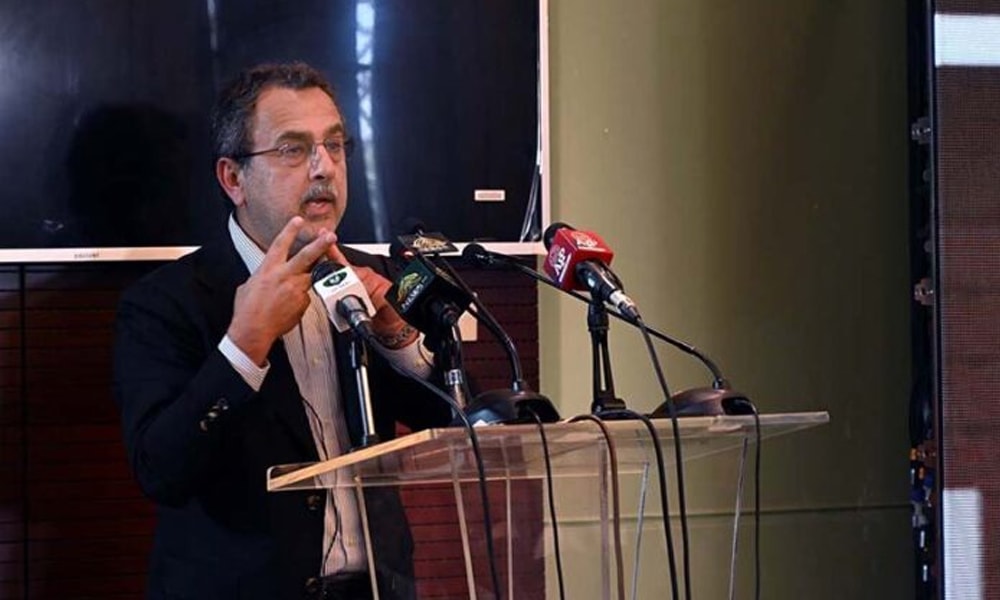

ISLAMABAD: Minister for Power, Sardar Awais Ahmed Khan Leghari, announced on Friday that the government has reduced the circular debt stock by Rs 780 billion — bringing it down from Rs 2.394 trillion to Rs 1.614 trillion — without any manipulation.
At a press conference, Leghari outlined the government’s circular debt financial management plan worth Rs 1.225 trillion. Under this plan, the debt will be paid off over six years through the collection of a Debt Service Surcharge (DSS) of Rs 3.23 per kilowatt-hour (kWh).
“Circular debt is a burden on Pakistan. It keeps growing every year due to systemic losses. We have now reached an agreement with banks to eliminate it permanently — and at better interest rates,” Leghari said.
Circular debt will be wiped out in 6 years: Leghari
He noted that when the PML-N government left office in 2018, the circular debt stood at Rs 1.1 trillion. By 2022, it had risen to Rs 2.25 trillion. Since taking office, the current government has negotiated reduced interest rates, saving 3.5% to 5.5% on the cost of servicing the debt. The
Kibor rate for circular debt financing was settled at minus 0.9%.“We inherited a circular debt of Rs 2.4 trillion. Within a year, we reduced it by Rs 780 billion without any deceit,” he said.
Leghari explained that, due to economic recovery and falling interest rates, the government saved Rs 175 billion. An additional Rs 363 billion was saved through negotiations with Independent Power Producers (IPPs), and Rs 242 billion was recovered by reducing transmission and distribution losses. As of June 30, 2025, the circular debt had fallen to Rs 1.614 trillion.
He emphasized that the government’s efforts to curb theft and operational inefficiencies contributed significantly to this reduction. “In six years, there will be no mention of circular debt. Previously, such surcharges continued for 8 to 10 years. Now, the Rs 3.23 surcharge will end within 5 to 6 years,” he added.
Leghari reiterated that eliminating circular debt is a critical step toward stabilizing Pakistan’s economy, which heavily depends on the energy sector. He said the boards of Distribution Companies (DISCOs) are now performing better, helping reduce system losses.
He confirmed that discussions were held with the International Monetary Fund (IMF) on circular debt, and agreements were reached as part of the ongoing economic review. “The IMF mission is currently in Pakistan, and circular debt was a key part of our talks,” he noted.
In response to questions, the minister said the industrial sector is now receiving electricity at 38% lower rates, while 18 million domestic consumers are paying nearly 50% less.
On solar energy, Leghari described current net metering rates as unsustainable. “If net metering rates are reviewed, electricity tariffs could be lowered for up to 35 million people,” he stated.
Responding to another query, he added that the power sector’s dollar-denominated debt has been significantly reduced.
Copyright Business Recorder, 2025


























Comments
Comments are closed for this article.