


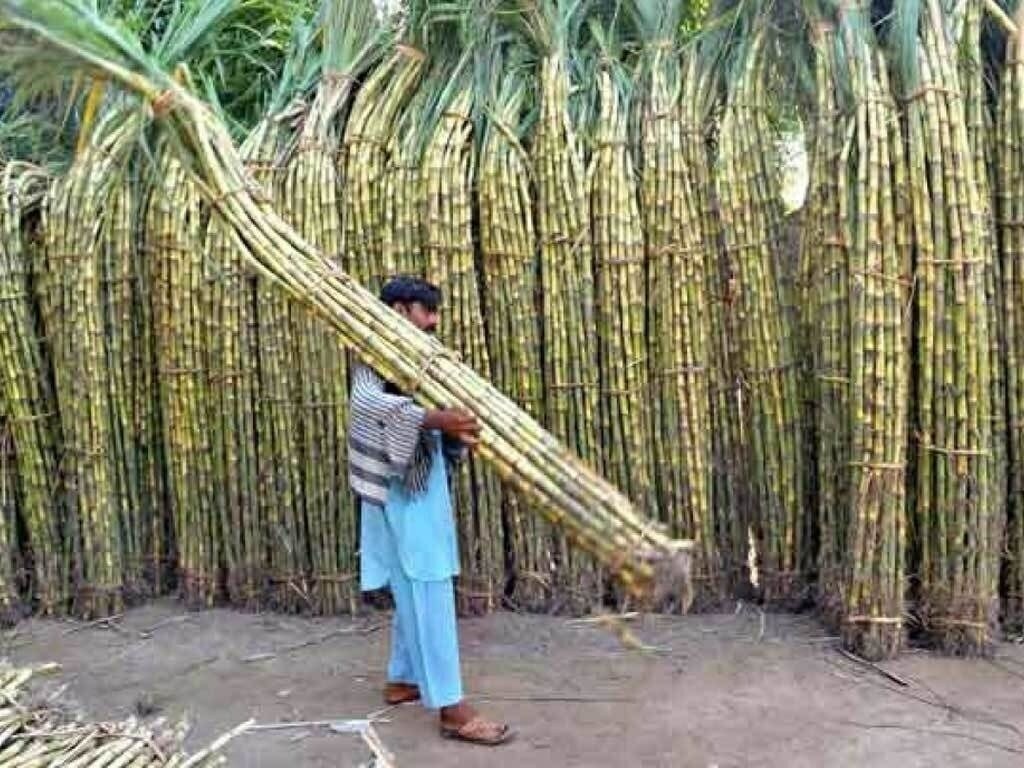

Trading Corporation of Pakistan (TCP) has reportedly floated another tender to import 0.1 million tons of sugar, on top of an earlier 0.1 million tons this month. On the face of it, the timing seems perfect.
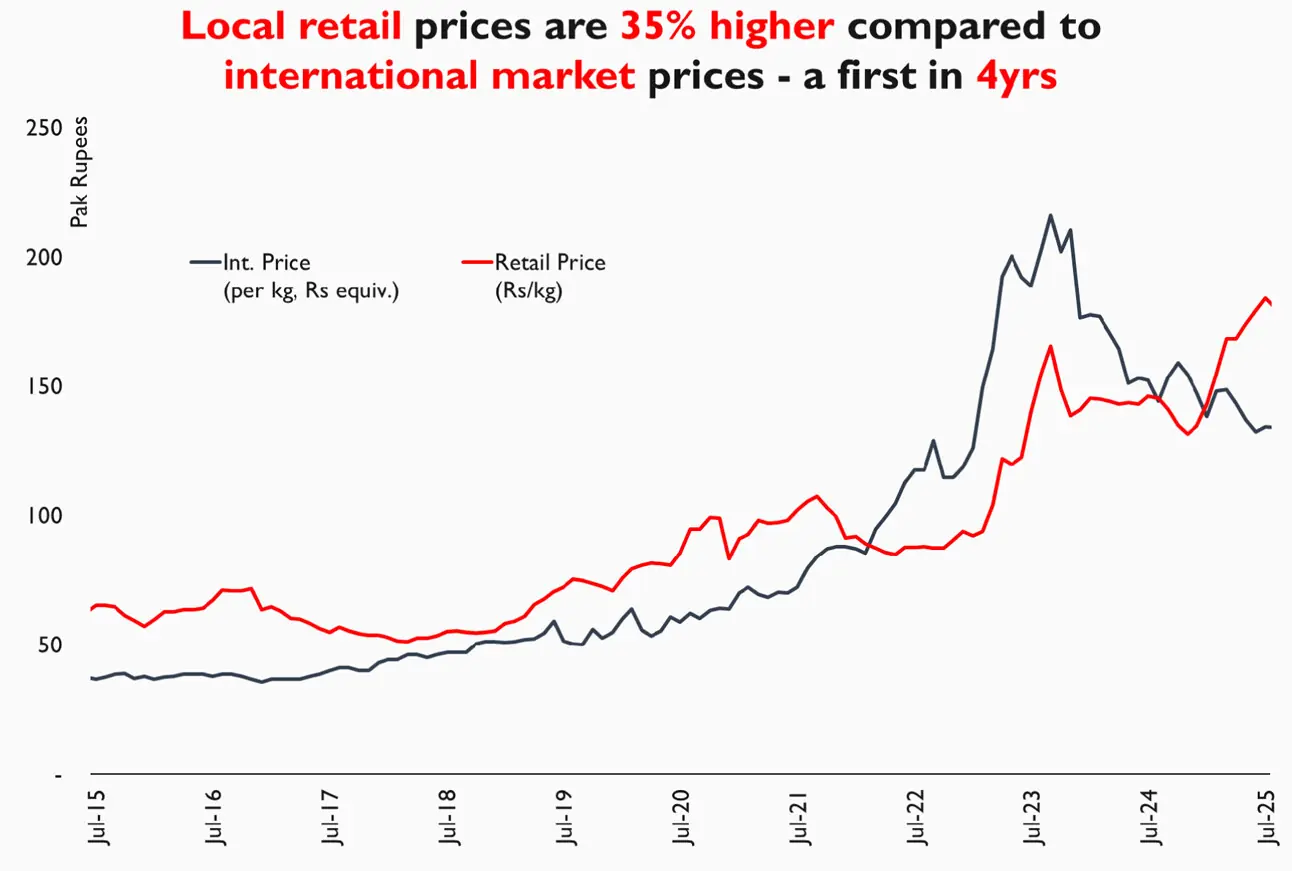
World sugar prices are at a 50-month low, down nearly a quarter from domestic retail. For a government under pressure due to fears of looming food inflation, importing at these levels should have been a straightforward win: cheap supply to calm the market.
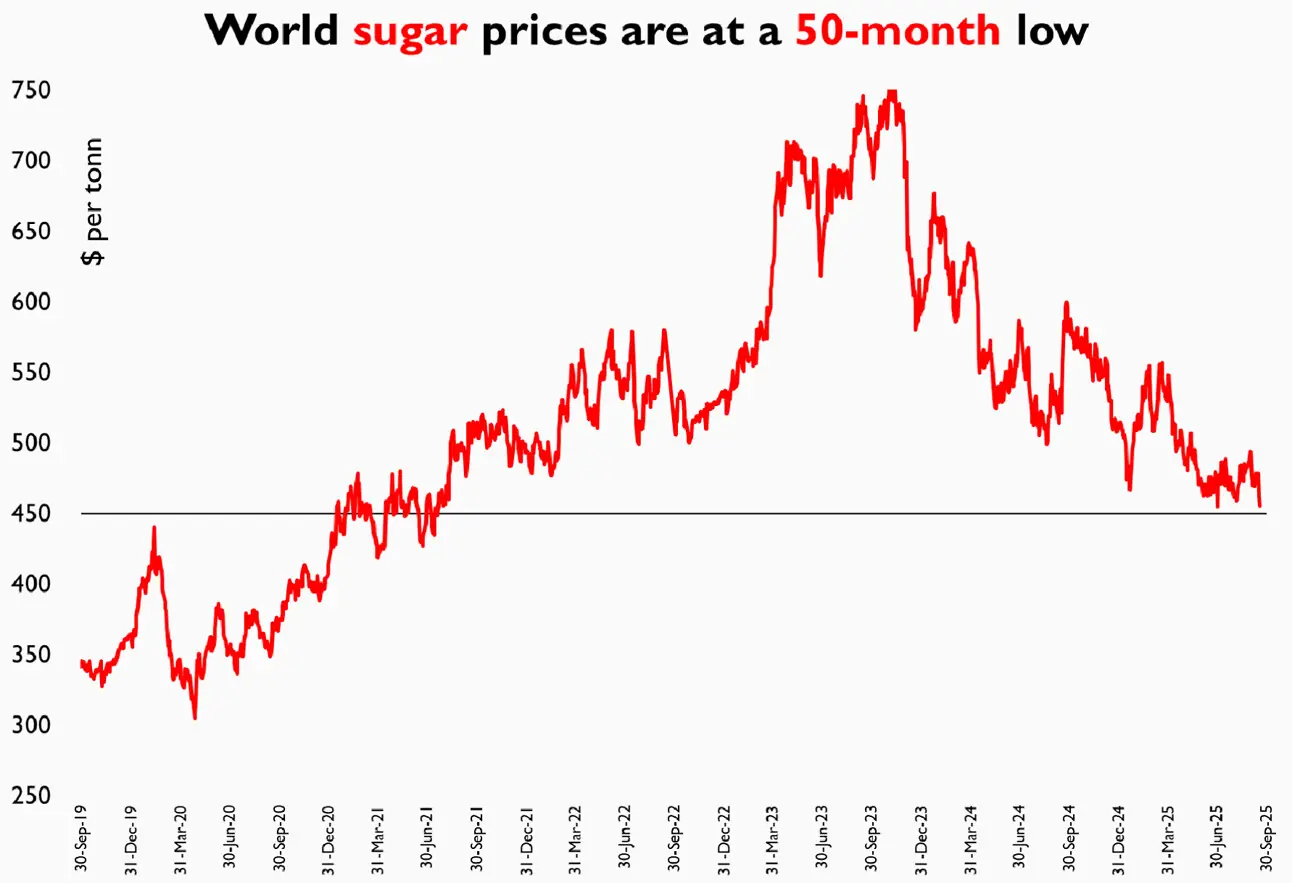
Except that is not what has happened. News reports suggest Pakistan has contracted its first consignment at an average of $565 per ton, almost 20 percent higher than the prevailing international average of $470. Even if one accounts for the fact that contracts are booked on a C&F basis, the math does not flatter.
At these rates, the landed cost is only about 13 percent lower than current retail. Once taxes, inland transport, warehousing, and financing are factored in, the price difference between imported sugar and domestic market rates virtually disappears.
This raises a basic question: if imports are not meaningfully cheaper, why now? The official answer is to relieve pressure on supply, with fresh crushing still two months away. But the timing betrays another effect.
By releasing imported stock right on the cusp of harvest, the state has stripped cane growers of the one bargaining chip they enjoy each year.
Ordinarily, a seasonal tightness before crushing allows farmers to negotiate better prices with mills. Now, that window is gone. Farmers already reeling from the impact of flooding on their crop will see their returns clipped even further.
Consumers, meanwhile, will not see much lasting benefit either. Any short-term dip in prices will be erased as soon as the imported stock is consumed.
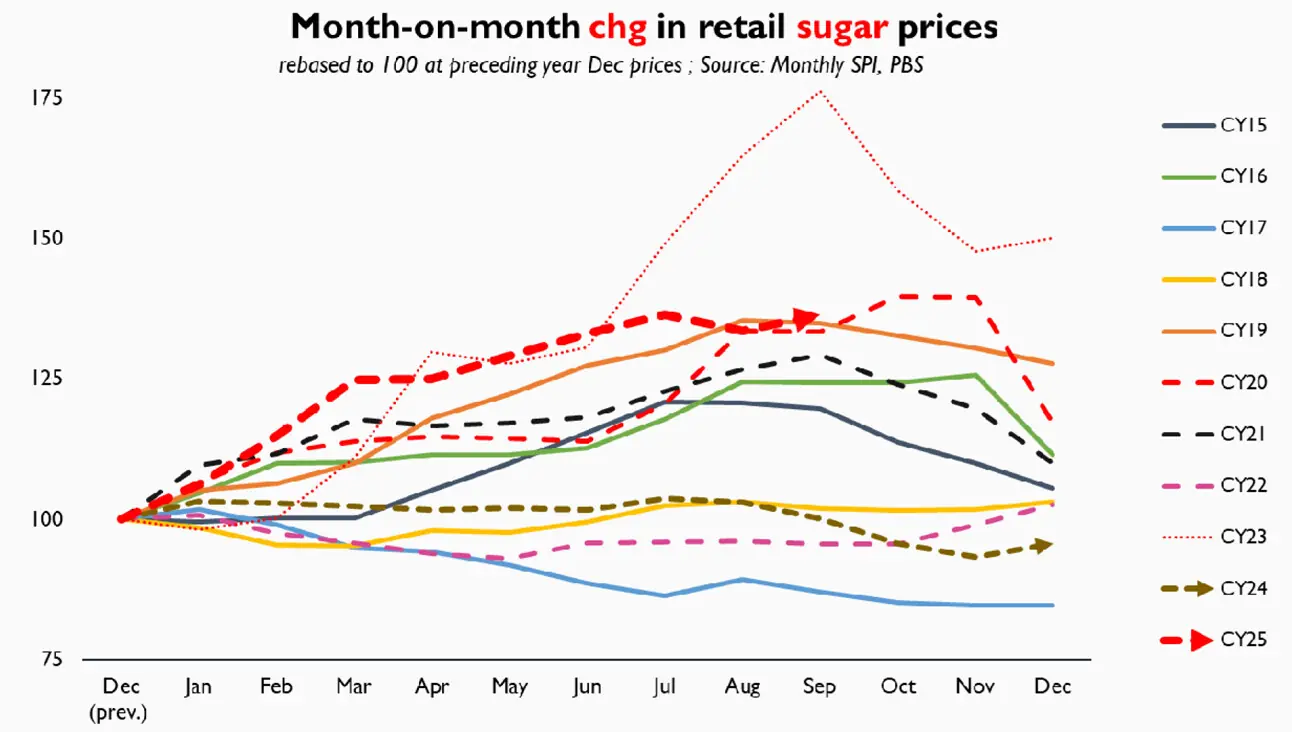
Once the peak harvest glut is over, retail prices will resume their familiar upward climb during off-production months, egged on by lower cane output due to post-flood yield losses. The only guaranteed outcome is that TCP will book losses and the deficit will quietly absorb them next year.
So, the real beneficiaries of this import spree are neither farmers nor consumers. The sugar industry benefits from higher prices that will almost certainly bounce back by next March, the government buys a few headlines about temporarily “taming sugar” and ordinary Pakistanis are left with the same price cycle and a bigger fiscal hole. That is not reform, not stabilization, not even crisis management. It is simply anti-farmer policy dressed up as consumer relief.


























Comments
Comments are closed for this article.