


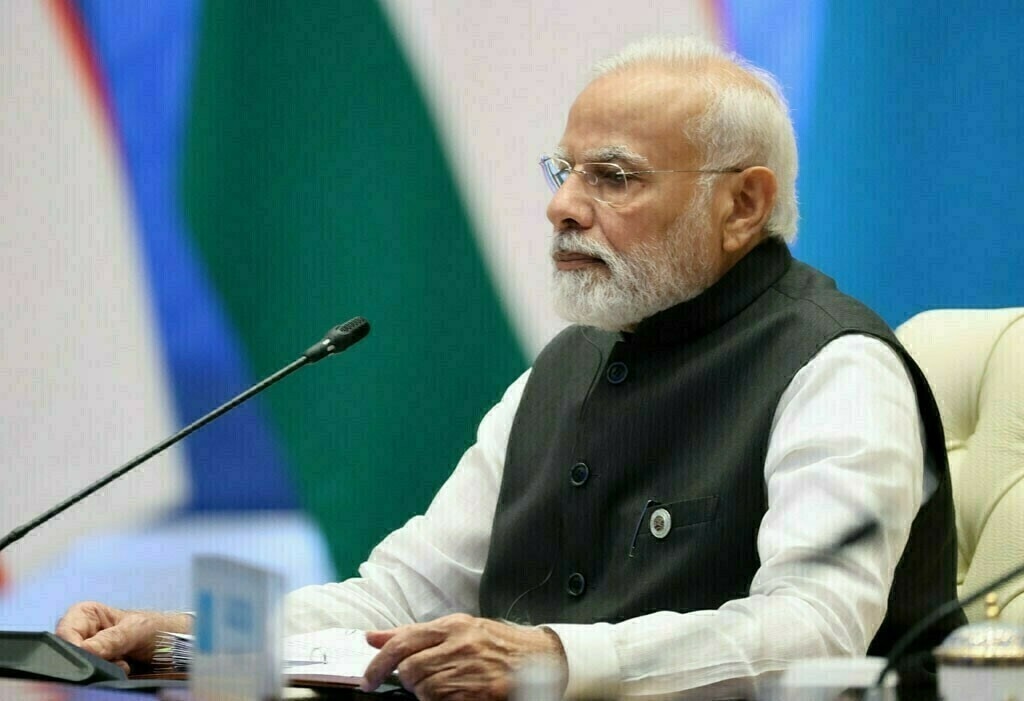
EDITORIAL: Indian Prime Minister Narendra Modi’s upcoming visit to China later this month — his first since 2018 — to attend the Shanghai Cooperation Organisation (SCO) summit comes at a pivotal moment amid shifting global power dynamics.
On Tuesday in New Delhi, Chinese Foreign Minister Wang Yi underscored the significance of India-China ties, stating, “History and reality prove once again that a healthy and stable China-India relationship serves the fundamental and long-term interests of both our countries.” His remarks were not mere diplomatic pleasantries, but a clear invitation for India to adopt a more strategic and forward-looking regional vision.
India appears to be reassessing the long-term costs of sustained hostility with China — its second-largest trading partner and a leading force behind the rapidly expanding BRICS economic cooperation bloc. With India set to assume the BRICS presidency next year, and as global economic alignments shift, New Delhi may be recalibrating its China policy in light of broader geopolitical trends, including its increasingly complicated ties with the United States.
Notably, tensions with Washington flared over India’s refusal to credit President Donald Trump with brokering a ceasefire during last May’s military confrontation with Pakistan. Yet, even as it explores a potential thaw with China, the Modi government’s South Asia policy remains constrained by a narrow, ideologically-driven worldview rooted in Hindu nationalism and enduring hostility towards Pakistan.
The ruling Bharatiya Janata Party (BJP) has consistently leveraged anti-Pakistan sentiment for domestic political gains. This has reduced India’s regional engagement to a series of tactical manoeuvres rather than a coherent long-term strategy for peace and cooperation. The latest of these confrontational moves in May resulted in a forceful military retaliation from Pakistan, underlining the risks of such short-sighted approaches.
Similarly, while India continues to view China as a strategic competitor economic ties between the two continue to deepen. The two nations also share converging interests in multilateral platforms like the SCO and BRICS, which advocate for multipolarity, non-alignment, and inclusive regional development. Since the disruption of global trade triggered by President Trump’s tariff wars, India, like many others, has found itself navigating a delicate balance between economic pragmatism and geopolitical rivalry.
In this context, Modi’s visit to China has the potential to be more than just a diplomatic formality. It offers India a valuable opportunity to adopt a broader, more mature foreign policy that prioritises regional cooperation over confrontation. That would mean moving away from zero-sum narratives of vengeance, and embracing the principle of indivisible security — a core tenet of both the SCO and BRICS.
As the world transitions toward a multipolar order, stability in South Asia cannot be built on religious nationalism or military posturing. If India truly aspires to a leadership role in the Global South, it must shed ideological rigidity and commit to a consistent strategic vision — one that values diplomacy over division, and constructive engagement with both Pakistan and China over enmity.
Copyright Business Recorder, 2025

























Comments
Comments are closed for this article.