


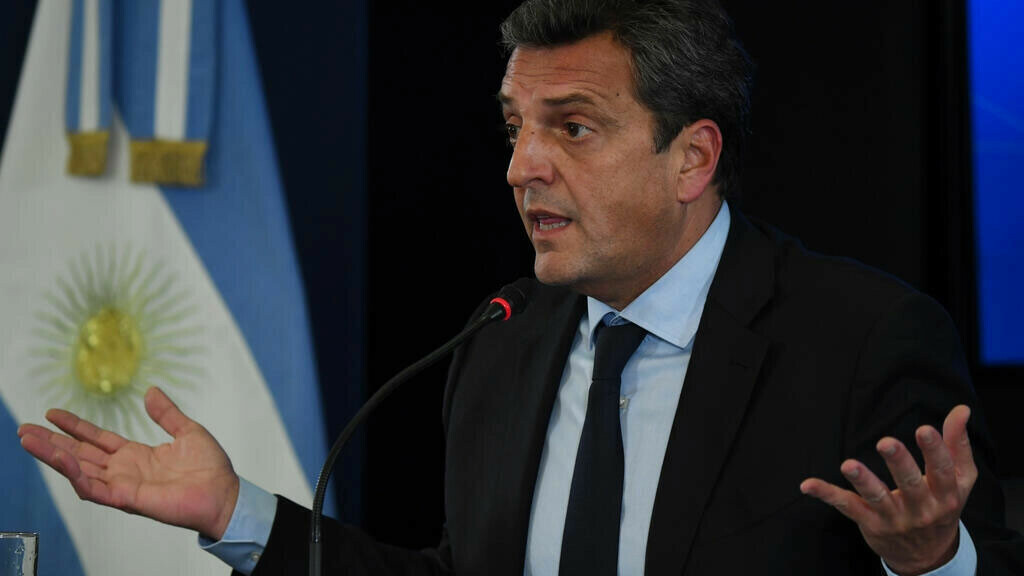

BUENOS AIRES: Argentina’s new economic “super minister” pledged Wednesday to respect the crisis-wracked country’s commitment with the IMF to reduce its public deficit to 2.5 percent this year.
As part of Argentina’s long-running negotiations with the International Monetary Fund to restructure a $44 billion debt, authorities had agreed to progressively reduce the public deficit from three percent in 2021 to 0.9 percent by 2024.
“We will meet the goal of the 2.5 percent primary fiscal deficit. We will make the necessary corrections to comply with our word,” said Sergio Massa, in an announcement of his first measures as the new “super minister” in charge of the economy, development and agriculture ministries, as well as relations with international organizations.
Argentina has suffered years of economic crisis, with some 37 percent of its population now living in poverty.
Inflation for the first half of this year alone topped 36 percent, and is predicted to reach 80 percent by the year’s end.
Speaking at a press conference after being officially presented by President Alberto Fernandez in his new job, Massa described inflation as the “biggest poverty factory” in the country.
“Inflation is one of the main issues to fight. The last month and the one just started will be the most difficult in terms of inflation and from there we will begin a downward curve,” said Massa, 50, a lawyer by trade who on Tuesday resigned as president of the lower house of congress to take up his new post.
Massa brushed aside the monicker “super minister,” saying “I’m not a ‘super’ anything – not a magician, nor a savior. I have come to work in a very determined way.”
IMF ready to help Bangladesh face ongoing crisis
Fernandez, speaking at Massa’s swearing-in, hailed a “new stage of government.”
“I am convinced we will come through successfully,” he added.
Tough challenges ahead
Massa becomes Argentina’s third economy minister in as many months.
In late July, economist Silvina Batakis was let go less than a month after being chosen by Fernandez to fill the spot suddenly vacated by Martin Guzman, the architect of the debt refinancing deal who had served in the role since December 2019.
In his speech, Massa pledged to tackle the “two-sided Argentina” where there is some economic growth and employment, but “a huge lack of confidence in the currency, spending disorder, public investment gaps and a huge injustice in income distribution.”
One of Massa’s toughest challenges will be to increase Argentina’s available international reserves, which analysts say are at critical levels.
On that front, Massa announced Wednesday an agreement with exporters to advance sales and bring some $5 billion into the Central Bank within 60 days.
For Victor Beker, director of the Center for the Study of the New Economy at the University of Belgrano, the announcements made Wednesday “are important, they go in the right direction, but they fell short of expectations.”
“We are still far from having a comprehensive economic plan, far from having answers on how inflation is going to be fought, nor how the exchange market is going to work,” Beker told AFP.
A problem he will not be able to solve, though, is the ongoing power struggle inside the ruling Frente de Todos political coalition between Fernandez and Vice President Cristina Kirchner, herself a former president.


























Comments
Comments are closed for this article.