



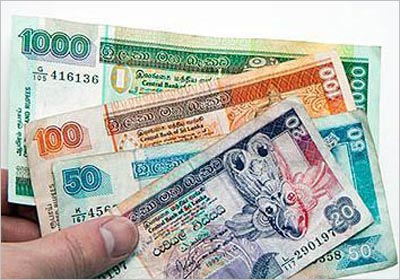
 COLOMBO: The Sri Lanka rupee traded weaker on Tuesday due to importer dollar demand, and dealers said downward pressure could remain throughout the year if the US Federal Reserve continues to wind down stimulus.
The Fed's January decision to cut its monthly bond buying programme has largely not affected Sri Lanka so far, though some foreign funds have sold a net 3.72 billion rupees ($28.45 million) in stocks in the three sessions through Monday.
However, foreign investors bought 15.57 billion rupees ($119.1 million) in the week ended Feb. 5 in government securities, the central bank's latest data showed.
The spot rupee was at 130.80/85 per dollar by 0627 GMT, weaker than its Monday's close of 130.75/80.
Some dealers said one of the two state banks, through which the central bank directs the market, sold dollars at 130.80 to prevent volatility.
"I think the central bank will hold the rupee at these levels until April and then assess the situation according to inflows," a currency dealer said on condition of anonymity.
"But if the US Treasury yields are going to rise to 3.5 percent in the second half in the event of continuous tapering, then foreign investors in government securities would also might leave and that could put more pressure on the rupee."
The rupee has remained relatively stable so far this year against the US dollar at around the same level recorded at the end of 2013, said the central bank after the market close on Monday.
"In the meantime, in terms of cross currency exchange rate movements, the rupee appreciated against the euro (1.62 percent), the pound sterling (1.09 percent) and the Indian rupee (0.82 percent), while depreciating against the Japanese yen (2.75 percent) during the year so far up to 07 February 2014," the central bank said in a statement. Dealers expect the central bank to keep the currency below 130.85 per dollar until April.
Usually, the rupee is under downward pressure in March and early April due to seasonal imports ahead of traditional new year in mid-April.
Five dealers Reuters spoke to said the market is yet to see the impact of inflows from the 15.57 billion rupee foreign buying in government securities as reported by the central bank last week.
Central Bank Governor Ajith Nivard Cabraal on Jan. 27 said Sri Lanka should not experience any major capital outflows or market volatility due to the Fed stimulus cut.
The rupee has gained about 3.3 percent since it hit a record low of 135.20 on Aug. 28. It lost 2.5 percent in 2013.
At 0628 GMT, Sri Lanka's main stock index was up 0.13 percent, or 7.87 points, at 6,118.14, recovering from a one-month closing low.


























Comments
Comments are closed for this article.