



 TOKYO: Japan's earthquake battered economy faces a new and unpredictable threat from a deepening nuclear crisis and power blackouts that analysts say could hinder a recovery from the disaster.
The 9.0 magnitude tremor and killer tsunami which struck on March 11 are feared to have caused hundreds of billions of dollars in damage to the world's third largest economy, although the full impact is still far from clear.
The four worst affected prefectures account for about six to seven percent of the Japanese economy, Barclays Capital analysts estimate.
The calamity has already taken a heavy toll on the industrial sector, with corporate titans such as Toyota and Sony suspending factory output."The economy will undoubtedly contract sharply in the near term due to
shocks to both supply and demand," said Morgan Stanley economist Takehiro Sato.But history suggests that the economic impact of natural disasters such as major quakes is usually temporary and mitigated by reconstruction efforts.
"In the near term, damage to Japan's nuclear power plants, transport
system, and infrastructure will disrupt energy, water, and other production inputs, crippling activity across both the industrial and service sectors," analysts at Moody's Analytics wrote in a research note."The situation in Japan will improve in the third quarter, when reconstruction efforts financed by emergency public spending will help lift growth," they added.
But the fear of a major disaster at a stricken Japanese nuclear power plant which released radiation into the atmosphere after a series of explosions has taken the Japanese economy into uncharted territory.
"Given the uncertain probabilities associated with a calamitous nuclear event, the markets have responded with a push of the panic button," said David Zervos, head of global fixed income strategy at broker Jefferies and Co.
Tokyo stocks suffered the biggest two-day sell-off for 24 years on Monday
and Tuesday, plunging 16 percent, although they have since showed signs of stabilising as the central bank pumped massive funds in the financial system.
The fear is that a full blown nuclear catastrophe would have long lasting
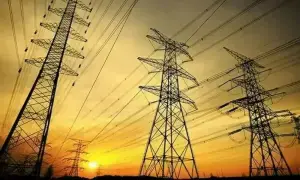
effects on the economy, particularly consumer sentiment and food exports.Electricity blackouts could also lead to prolonged disruption to production of cars, flat screen televisions and electronic gadgets key to Japanese growth.
"The big uncertainty about this disaster is that roughly 10 percent of electricity generation capacity (both nuclear and coal) may be off line for a few months, until oil and gas fired plants can ramp up," said Nariman Behravesh, chief economist at US consultancy firm IHS.
"In the near term, this could have major negative ramifications for the Japanese industrial sectors," he warned.
Another major concern is the strength of the yen, which has hit a record high against the dollar a move Tokyo has blamed on speculators betting that
Japanese firms will repatriate funds from overseas to help fundreconstruction. A stronger currency can have a severe impact on Japan's key export sector.Damage to roads, bridges, sea and air ports as well as power plants
suggests the economic damage from the quake is likely to be several tens of trillions of yen (hundreds of billion of dollars), said analysts at Morgan Stanley.
In the wake of the Great Hanshin earthquake in 1995 which levelled much of the Japanese port city of Kobe, industrial output quickly bounced back after an initial slump, while massive stimulus spending helped to support the economy.
The latest disaster comes with Japan's economy already in the doldrums,
struggling to recover from the 1990s "lost decade" and the global economic slump sparked by the 2007-2008 crisis.
The initial shock of the latest disaster "might pull the economy back into recession territory," warned analysts at Standard and Poor's.
Japan's economy contracted by an annualised 1.3 percent in the final quarter of 2010 and Credit Agricole economist Susumu Kato said growth was now likely to shrink for three straight quarters, falling into a "temporal recession."
"As consumers become even more careful and increase precautionary saving for rainy days, that will sharply weigh on private consumption in those quarters," Kato said.
But reconstruction activities from the July-September quarter will result in a return to positive growth thereafter, he added.
Repairing the damage inflicted by the earthquake is expected to set back Japan's efforts to reduce what is the industrialised world's biggest debt, at around 200 percent of gross domestic product, and may require tax increases.




















Comments
Comments are closed for this article.