



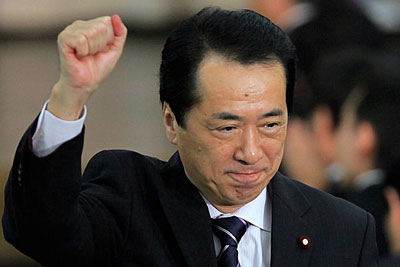
 TOKYO: Japan's economy contracted by more than first thought in the fourth quarter of 2010 due to weaker-than-expected business investment and private consumption, data showed on Thursday. The economy contracted by a revised 1.3 percent in the quarter, compared to an initial estimate of a 1.1 percent slide, as expiring subsidies hit car sales, a new tobacco tax sapped cigarette demand and a strong yen hurt exports. Japanese GDP data is subject to constant revision and the latest was in line with the median forecast in a survey of economists by Dow Jones Newswires and the Nikkei business daily. The data also confirmed Japan's economy grew 3.9 percent in 2010, as it ceded its 42-year ranking as the world's second-biggest economy to China, which first eclipsed its neighbour in the second quarter. While Japan was expected to fall behind a surging China in the year, the data underlined the weak state of a Japanese economy burdened by deflation, soft domestic demand and pressured by the industrialised world's biggest debt. Private consumption slipped by a revised 0.8 percent from the previous quarter, worse than the initial estimate for a 0.7 percent decline. Car sales were hit by the expiration of subsidies to encourage the purchase of green vehicles, and cigarette sales were dented by Japan's biggest ever tobacco tax hike. Exports slipped in the quarter as the yen surged to 15-year highs against the dollar, making Japanese goods more expensive overseas and eroding repatriated profits. However, analysts expect the economy to rebound in the March quarter as the rising tide of global recovery lifts Japan, amid a recent pick-up in output and exports. But there are worries about higher oil and other commodity prices as unrest across the Middle East and North Africa threatens to increase import costs, which manufacturers would be unable to pass onto consumers amid weak domestic demand, analysts say. Pressure is on beleaguered Prime Minister Naoto Kan, who has seen his approval ratings tumble amid a legislative impasse over funding for a $1.1trillion budget for next fiscal year beginning April 1. Ratings agency Standard & Poor's on Tuesday warned that political uncertainty in Japan threatens to weigh on the country's recovery and that growth this year would not come close to pre-crisis levels. In January the agency cut Japan's credit rating one notch to "AA-" from "AA", saying the government lacked a "coherent strategy" to ease a debt running near 200 percent of GDP, the highest of any developed nation. The political future of Kan is now seen to be even more precarious after his high-profile foreign minister Seiji Maehara quit over a donations row. Kan, Japan's fifth leader in as many years, has said he would not dissolve parliament and call snap elections as repeatedly demanded by the conservative opposition. The government's immediate hurdle is to pass legislation enabling it to keep itself funded, a critical issue given that borrowing accounts for 48 percent of what it plans to spend in its primary budget. But the Liberal Democratic Party (LDP), which controls the upper house, will be able to block them, threatening a government shutdown by the summer.























Comments
Comments are closed for this article.