


EDB takes exception to standpoint of car assemblers against imports

 IQBAL MIRZA
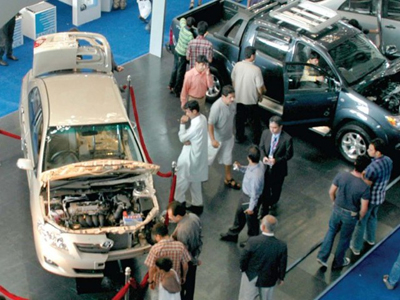
KARACHI: Engineering Development Board (EDB) has taken exception to the standpoint of car assemblers against imports, as major factor eating into the small Pakistan's car market and on other multiple grounds.
According to an EDB assessment published in its house journal 'Industrial Bulletin', the three Japanese car assemblers, who share a market of 130,000 cars between them, regularly blame low volumes as main stumbling block impeding further indigenization of critical parts and their efforts to give relief to the helpless consumers by way of rationalising cars prices.
Presently, a buyer deposits full amount of the car in a company's account (inclusive of all taxes, duties, levies and even the duties to be paid for import of CKD) at the time of booking but he is made to wait for three to six months to get a new car.
Statistics, EDB says supposed to be available with the Original Equipment Manufacturers (OEMs) would indicate increasing number of buyers waiting in line to get their cars on priority, but usually end up paying a premium called 'on money' ranging from Rs. 30,000 to 100,000 to the dealers.
If such is the demand position of cars in Pakistan then why the car assemblers make the buyers wait for such long periods leaving them no choice but to resort to imported cars, questions the EDB? This is despite the fact that sufficient capacities exist with the OEMs to cater to consumer needs well within justifiable time.
A careful look at the profits of OEMs would show a sizeable amount that fattens their account books comes from interest income. This profit is generated and probably invested by the OEMs from the money of helpless buyers who are made to wait for months for their cars to be delivered.
Having low volumes means non-viability of indigenizing critical parts thus making transfer of technology a far cry, paving way for import of CKD and parts thereby enabling vendor industries of the exporting countries to flourish and making a huge dent on the ability of local vendor industries to indigenize and grow.
According to EDB, another factor that hurts Pakistan's auto sector in general and the vendor industry in particular is that cars declared unfit in Japan coupled with cut and welded vehicles (scrapped) find their way into Pakistan's market thus making it a junkyard of unwanted and environmentally hazardous vehicles.
It is essential that these vehicles are scrapped and not allowed to be exported to countries like Pakistan where its budding vendor industry is already bearing the burnt of low volumes. It is important to clarify here that Pakistan government has allowed import of used cars up to five years old under the gift and baggage transfer schemes in its bid to make cheaper cars available to some extent.
Lastly, instead of visualizing the energy situation in Pakistan and defining a roadmap for developing fuel efficient cars for consumers, the world renowned OEMs operating in Pakistan resorted to CNG fitted cars which actually are not technically designed for CNG in the first place thereby making the already expensive cars costlier by at least Rs. 60,000 for the consumers and making the engines of their cars prone to rapid deterioration.
Pakistan's automobile market has great potential to grow by all counts only if the OEMs wholeheartedly strive to make cost effective and fuel efficient cars for a growing middle class segment. It is high time for the OEMs to sense the pulse of Pakistan's market by offering different variants and a right to choice to the consumers, if they are sincere to Pakistan's auto sector development and growth, otherwise the marker forces will not wait for too long to take their own natural course, EDB said.




















Comments
Comments are closed for this article.