


The World Bank launched its Pakistan Development Update last week, which is a twice-a-year publication shedding light on the state of the country's economy and its future prospects. In these times when the state of Pakistan's economy is a subject of widespread public and economic gurus, the World Bank Update, perceived to be neutral and based on credible data and analysis, is of interest to all.
Presented below are some of the highlights on the subjects which are of main concern:
1) The GDP growth rate is projected to increase modestly to 5.5 percent this fiscal year and 5.8 percent in 2018-19, "provided macro economics risks are managed."
A GDP growth of 5.5 percent this year and a possibility of 5.8 percent next year is a great achievement when benchmarked with leading emerging markets.
The challenge to the economic managers of the state is that this trend of growth continue overriding the vested tangents and political hype on account of the coming national elections.
2) "Growth in remittances will remain subdued as Gulf nations make gradual economic recovery. Remittances from the region were 62 percent of all inflows in 2016/17."
Pakistan's dependence of 62 percent of all foreign exchange inflows is a serious issue. This means poor foreign direct investments (FDI) and very poor exports, as both are the real inflow drivers.
Looming political and economic uncertainty in the Gulf region threatens remittances. So much dependence on remittances is a mistake.
3) "Only 12.3 percent of small firms in Pakistan use foreign inputs or supplies in their products, compared to a global average of 55 percent.
"This is mainly on account of the fact that the products of small firms In Pakistan are largely for local consumption where price has preference over quality. This becomes more challenging when Pakistan's products have to compete with Chinese products. The Free Trade regime between the two countries is largely in favour of China."
4) "Non-tax reserves rose 23 percent to Rs 967 billion. During 2016-17 provincial non-tax revenue collection fell 15 percent in contrast to a growth of 23 percent last year. Fiscal slippages are expected to continue through elections cycle which will widen the fiscal deficit during 2017-18 compared to 5.8 percent in this fiscal year."
"During the tenure of the present regime the fiscal deficit was well managed at 5.8 percent. The forthcoming election will see it slipping out. The signs are already there. Much of public money is reported to be doled out to the members of the assemblies in the guise of public works in their constituency, which has become a usual phenomenon in the past years.
"It is now an open secret that the elections of the legislatures is significantly funded out of public money, which ensures return of the majority of the same personalities in the assemblies."
5) "A weaker rupee would help improve external accounts. Moderate rise in inflation and manageable growth in debt financing is expected.
"The government over years is resisting to devalue rupee and has managed to align it around Rs 105 to a US dollar whenever it bounce up due to free-market dynamics. How far the government can manage it is questionable. What is important is that rupee parity should be governed by economic dynamics rather than ego or vested interests.
"Debt financing is lately the main cause of concern and a issue much escalated by political parties and economic experts of the country." The World Bank update has termed it manageable.
6) "Acceleration will be driven by consumption on the demand side while growth is likely to come from service and industry sectors on the supply side.
"China's and India's economic jump-start was driven by the growing middle class with demand for better lives for themselves and their families. This demand had its impact on the consumer and service industry which propelled the other segments of economy.
"This phenomena is beginning to show its impact in Pakistan. Pakistan has one of the world's largest growing middle class and is a potential for the economic growth of Pakistan.
"According to global rankings, Pakistan has come up as one of the leading nations in retail and service industries. This segment remains much out of the ambit of our documented and regulated economy and is largely driven by market dynamics of supply and demand."
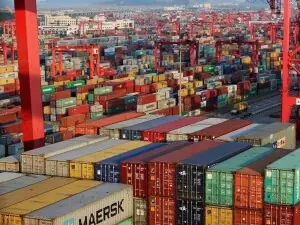
7) "From 2005 to 2016, Pakistan's exports grew 27.3 percent, compared to 276 percent in Bangladesh and 166 percent in India. Trade-to-GDP ratio has remained low at 28.1 percent.
"Pakistan's decline in exports is a source of great concern, but it is not surprising. Pakistan's competitiveness in global markets is systematically declining over years. Pakistan's ranking in ease and cost of doing business is sliding down each year.
"Unless this issue is addressed there is no chance for increase in the exports of Pakistan
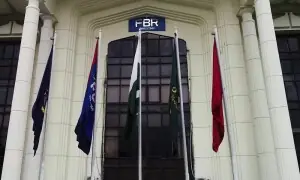
8) "Collection from direct and indirect taxes grew from by 12.7 and 5.1 percent. On average 17 percent of direct taxes were collected as withholding tax over the last three years.
"Tax collection in Pakistan remains low. Due to lack of will and political expediency many of the taxable segments have managed to remain out of the tax net.
9) "Tariffs are almost twice as high as the world average. Pakistan's simple average tariff rate was 13.6 percent in 2014, compared to South Asia's average of 11.7 percent.
"This status is further deteriorated on account of the recent levy of regulatory duty on many items, which mainly affects the foreign investors in Pakistan."
10) "Inflation, after remaining moderate in 2016-17, is expected to rise steadily in FY18 and FY19. The increase will be driven by higher domestic demand and global oil prices.
"The management of inflation in the country over the last years has been reasonable, but the electricity costs remains one of the highest in the world and unaffordable by the industry and the public."
11) "To maintain continuity of tax reforms, a detailed review of the tax policy is needed. A fully automated and able tax administration is also imperative."
It is imperative for all political parties, in the best interest of the people, that they isolate economy of the country from politics. The nation's economy is good for all the people of Pakistan, irrespective of political affiliations. The Charter of Economy among all political parties is desirable and in the greater public interest.
(The writer is former President Overseas Investors Chamber of Commerce and Industry)







Comments
Comments are closed for this article.