



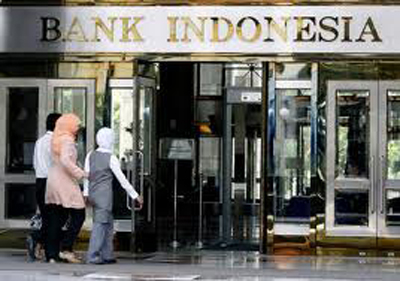
 JAKARTA: Bank Indonesia sees room for further rate cuts after a surprise move to reduce its benchmark rate to a record low, as it seeks to push banks to switch funds kept at the central bank into loans to drive Southeast Asia's biggest economy.
"Going forward, if there is still excess liquidity then there is still room to cut the BI rate," deputy governor Hartado A. Sarwono, who is in charge of monetary policy, said on Friday.
Bank Indonesia (BI) on Thursday cut its benchmark rate by 25 basis points to 5.75 percent, taking advantage of current low inflation in an effort to ensure growth stays strong. The G20 economy posted 6.5 percent GDP growth in 2011, its strongest in 15 years.
The country's exports slowed sharply in December, but Indonesia is likely to be cushioned from the global slowdown because domestic demand makes up over half the economy. Local consumption has mostly been buoyant so far though policymakers want even higher growth.
"We think that BI also wants to achieve two other goals ... Redirecting the banking sector's huge excess liquidity away from being placed at BI to more productive loans, and at the same time reducing BI's costs of sterilization," Anton Hendranata, an analyst at Bank Danamon, said in a report.
Bank Danamon was one of the few expecting Thursday's rate cut, and sees another 25 basis points cut in March.
The rate cut meant that BI's interbank overnight deposit rate also fell to 3.75 percent, which reduces BI's costs and is likely to discourage banks from holding excess funds there.
After the surprise cut, some analysts have changed their expectations of a pause on rates back towards forecasting further rate cuts, particularly as the central bank's view on inflation appears to show government plans to lift fuel prices or cut the use of subsidies may be delayed or cancelled.
"If the government postpones or cancels its plans on subsidy reforms, further rate cuts cannot be completely ruled out," said Helmi Arman, economist at Citigroup, in a report.
Sarwono said inflation could fall at the lower end of its 3.5-5.5 percent end-year target range, assuming there was no change to fuel subsidies.
Economists worry the rate cut could push up inflation later this year. Some have also questioned the decision as loan growth remained strong in December at 24.5 percent year-on-year, while money supply grew by 16.4 percent.
However, Indonesia's domestic motorcycle sales, an indicator of consumption, fell 2.9 percent in January from a year earlier, data showed on Friday, underlining the central bank's concerns.
The rupiah has weakened slightly since the rate cut, but Sarwono sees it appreciating because of capital inflows and said the current level was still good for trade. The rupiah has posted the slowest gains this year among Asian emerging markets excluding China.
Foreign funds returned to Indonesia in January after Moody's restored the country to investment grade, boosting its foreign exchange reserves by 1.9 trillion rupiah ($212.41 million) to 112 trillion rupiah.
























Comments
Comments are closed for this article.