



 ISLAMABAD: The UN refugee agency is overhauling its strategy to help Afghans returning to the war-torn country in a bid to stop them becoming destitute, and to focus on sustainable reintegration.
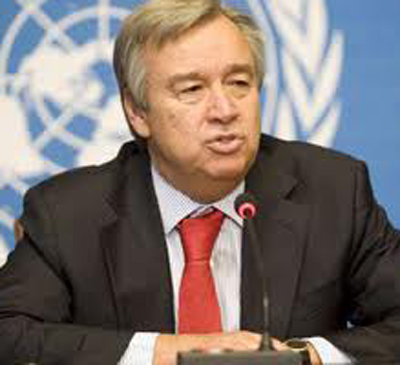
UNHCR head Antonio Guterres told AFP that 10 years after the US-led invasion and with 5.7 million refugees having returned since 2002, the United Nations no longer wants to restrict its aid to individuals who return.
Instead it will invest in communities, health and education in order to create more attractive conditions for return, and support host communities in Iran and Pakistan to preserve asylum space and ease the sharing of resources.
Three million registered Afghan refugees still live in exile. The lack of jobs, food and shelter and the volatile security situation in many parts of the country makes it difficult for those who want to return.
The number of Afghans coming back has fallen as security has worsened and fighting has intensified between NATO and the Taliban.
"We have witnessed a considerable reduction of the number of Afghans that went back home, last year only 52,000, when in the past we have helped more 3.7 million people go back from Pakistan into Afghanistan," Guterres said.
Afghans were not only leaving for neighbouring countries "but everywhere in the world" and in Europe "we are particularly worried with the rising number of unaccompanied minors".
Guterres said that UNHCR would invest in education, health, water, sanitation and income generation -- "supporting communities in order for them to be able to integrate those who come".
His comments come a month after the UNHCR representative in Afghanistan, Peter Nicolaus, told AFP that the agency's strategy in the war-torn country since 2002 had been the agency's "biggest mistake".
Many returning Afghan refugees are homeless or live in slums under tarpaulin. Nicolaus said the international community had failed to help them find a means of earning a living and therefore reintegrating into society.
Guterres said the new strategy, approved this week at talks in Dubai between the Afghan, Iranian and Pakistani governments, would be unveiled at an international conference scheduled for early May in Switzerland.
"We hope to have several innovative solutions allowing for the international communities to be more effective and more pro-active in supporting both the Afghans in Afghanistan and the host communities in Iran and Pakistan," he said.
About 20 percent of the population in Afghanistan are refugees. Of those abroad, there are 1.7 million Afghans in Pakistan and a million in Iran.
UNHCR insists all returns are voluntary. Until now, it has provided cash grants for returnees of $150. The money covers transport home and is supposed to help them survive the first few months of their new lives.
























Comments
Comments are closed for this article.