



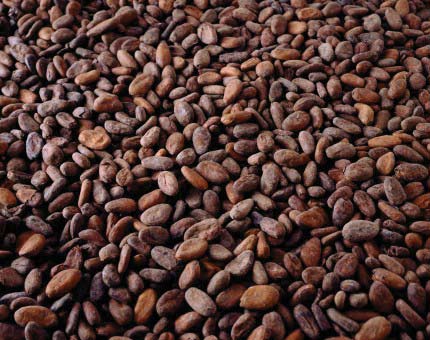
 NEW YORK/LONDON: Cocoa futures closed at an eight-week high in heavy volume on Wednesday, underpinned by a sharp slowdown in port arrivals in top producer Ivory Coast, while arabica coffee rallied on short-covering.
Sugar futures also climbed but were relatively subdued following last week's volatility and a lack of new fundamentals.
The soft commodities advanced despite the day's weak move of the Thomson Reuters-Jefferies CRB index.
Orange juice futures, however, dived almost 10 percent, completely reversing the previous day's sharp gains as traders reckoned fears of a US import ban on Brazilian juice were overblown.
ICE March cocoa futures rose $17, or 0.7 percent, to close at $2,350 a tonne, the highest settlement for the spot contract since Nov. 17. That follows the biggest two-day rally in 11 years at 15 percent on a flurry of short-covering.
Total volume exceeded 26,200 lots, 75 percent above the 30-day average, preliminary Thomson Reuters data showed.
London March cocoa closed up 18 pounds, or 1.2 percent, at 1,562 pounds per tonne, the highest close since Nov. 18, on a heavy 16,374 lots.
"We have to remember just how much the ICE cocoa market had sold off since September, to levels that were not sustainable," said Keith Flury, a senior soft commodities analyst with Rabobank, referring to the rallies in cocoa futures this week.
"There is not a lot of downside risk," he said, adding that he expected fourth-quarter European grinding figures due to be released on Friday, a key measure of demand, to rise 4 percent year-on-year.
A strike in Nigeria, the world's fourth-largest cocoa producer, also underpinned cocoa futures prices, Flury said.
Nigerian oil workers threatened on Wednesday to shut down output in Africa's top crude producer, deepening a national strike over a more than doubling of petrol prices.
Cocoa arrivals at ports in Ivory Coast slowed sharply last week, exporters said on Monday, as overly dry and windy weather in recent months started hitting output from the West African nation's farms.
Profit-taking from the rally led to choppy dealings that traded on both sides of unchanged, dealers said.
"It's technical short-covering. We were holding that low from December," said Boyd Cruel, softs analyst for Vision Financial Markets in Chicago, referring to the $1,898 level.
On the spot contract basis, ICE cocoa appeared headed for the 61.8 percent Fibonacci retracement level around $2,436, Cruel said.
Arabica coffee futures on ICE also climbed in heavy volume, ignoring the strong US dollar. March jumped 8.95 cents, or 4 percent, to close at $2.3490 per lb, its biggest daily move higher in six weeks.
Total volume more than doubled its 30-day average at more than 28,000 lots, preliminary Thomson Reuters data showed.
"There's a big short position that we've had and finally somebody's come around to stimulate the market," said one veteran coffee dealer in New York.
A "contrarian trader with deep pockets" led the way higher, he said.
"We got above resistance around $2.29-$2.25, so buy stops were hit above there and above $2.30," Cruel said.
Dealers said the market remained underpinned by diminished prospects for the 2012/13 crop in Brazil following a spell of dry weather although it is still likely to reach a record level.
Robusta coffee futures on Liffe were firm, with upside limited by the huge crop in top producer Vietnam.
March robusta coffee on Liffe climbed $33, or 1.8 percent, at $1,838 per tonne. The contract hit $1,712 on Monday, the lowest level for the benchmark second month since October 2010.
SUGAR RANGEBOUND
Raw sugar futures on ICE were marginally positive but the market remained rangebound after last week's failed attempt at an upside breakout.
Abundant northern hemisphere crops and expectations for a global supply surplus, weighed on sugar prices, dealers said.
March raw sugar on ICE rose 0.37 cent, or 1.6 percent, to end at 23.69 cents a lb.
"We suspect sell stops to be lurking below the December low of 22.62 cents and expect end user support at 22 cents," said Nick Penney of brokerage Sucden Financial.
"In the meantime, all that is keeping the raws afloat is the index fund reweighting, now on its third day and expected to end this week."
The reweighting had been anticipated by the market and accordingly was not having much impact on prices. Dealers predicted net buying of some 25,000-28,000 lots.
China may buy sugar from the domestic market for state reserves soon as part of efforts to shore up home prices and help farmers, industry sources said.
London March white sugar futures climbed $6.70, or 1.1 percent, to settle at $618.20 per tonne in quiet dealings of just over 3,000 lots.
























Comments
Comments are closed for this article.