


Pakistan plans to privatise three DISCOs in first quarter of 2027: adviser
- Three DISCOs include Faisalabad Electric Supply Company, Gujranwala Electric Power Company, and Islamabad Electric Supply Company
Pakistan plans to privatize three power distribution companies by Q1 2027, aiming to reform the energy sector, reduce costs, and attract investment through efficiency and market competition.
- Timeline for privatizing key power distribution companies.
- Government's strategy to mitigate investor concerns.
- Planned reforms for tariffs and market competition.
- Safeguards for employees and consumer benefits.
- Broader privatization agenda for other state entities.

Pakistan plans to privatise three power distribution companies (DISCOs) in the first quarter of 2027, Prime Minister’s Adviser on Privatisation and Chairman of the Privatisation Commission Muhammad Ali has said.
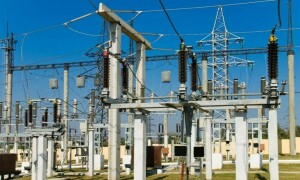
The three DISCOs include the Faisalabad Electric Supply Company (FESCO), Gujranwala Electric Power Company (GEPCO), and Islamabad Electric Supply Company (IESCO).
In an interview, Muhammad Ali said that due diligence for the three companies was already under way, while potential investors had requested additional time to assess the complex transactions, according to a press release issued by the Privatisation Commission.
He said the government had initially planned to hold bidding in December, but the process might be delayed slightly, with the target now set for the first quarter of next year.
The government has also started work on the privatisation of Hyderabad and Sukkur power distribution companies, with their transactions expected to be completed in the second quarter of 2027. Lahore, Multan, Peshawar and Hazara distribution companies are also part of the government’s privatisation programme, with a target to complete their process in the second half of 2027.
Muhammad Ali described the power sector reform as a national security issue, saying high energy costs were undermining industrial competitiveness, exports and economic growth.
He said Pakistan needed to reduce electricity tariffs and introduce competition in the power supply market to prevent consumers and industries from shifting away from the national grid.
Referring to the experience of K-Electric, he acknowledged that investors had raised concerns about regulatory uncertainty, tariff revisions and the protection of long-term investments.
He said the government was working on safeguards to address these concerns, including finalising investment plans and multi-year tariffs before bidding.
According to Muhammad Ali, DISCOs would be required to improve their performance through smart metering, technology adoption, reduction in electricity losses, better recovery, uninterrupted power supply and improved load management.
He said investors would face penalties for failing to meet performance benchmarks, while improved efficiency and reduced losses would be rewarded. The benefits of improved performance would also be shared with consumers.
The Privatisation Commission has prepared a reform paper covering tariff structures, investment plans, business activities and the introduction of a competitive electricity market.
He said the government intended to share the reform proposals with the public by mid-November after consultations with relevant institutions, the Prime Minister and the Steering Committee.
The proposed reforms also aim to gradually move away from the uniform electricity tariff by introducing a competitive supplier system, while retaining a supplier of last resort for consumers unable to access competitive suppliers.
Muhammad Ali said investors would receive returns in Pakistani rupees rather than dollars, with returns linked to inflation and calculated under the capital asset pricing model.
He stressed that investors must receive a fair return on their investments, but the government would also ensure that consumers benefited from improvements in efficiency.
On employees’ concerns, he said the government would protect DISCO workers and provide a specific period during which investors would not be allowed to take adverse action against employees or change their employment terms.
He added that employees would remain essential to operating the electricity distribution system even after privatisation.
The adviser said the government was also examining the privatisation of Pakistan State Oil (PSO), Sui Southern Gas Company and Sui Northern Gas Pipelines Limited, while strategic activities of PSO could remain under government control.
He said the government was pursuing a broader privatisation programme aimed at improving efficiency, attracting investment and addressing structural challenges in key sectors of the economy.






















Comments