


PM lambasts PTI’s KP governance, defends governor’s rule to ‘protect lives, economy’
- Invites political forces to join hands against terrorism
PM Shehbaz Sharif defended governor's rule in Khyber Pakhtunkhwa, citing failed negotiations and the need to protect lives and the economy. He criticized the provincial government's performance and handling of terrorism.
- Justification for imposing governor's rule and emergency in Khyber Pakhtunkhwa.
- Allegations regarding the resurgence of terrorism and resettlement of militants.
- Criticism of the provincial government's financial management and development priorities.
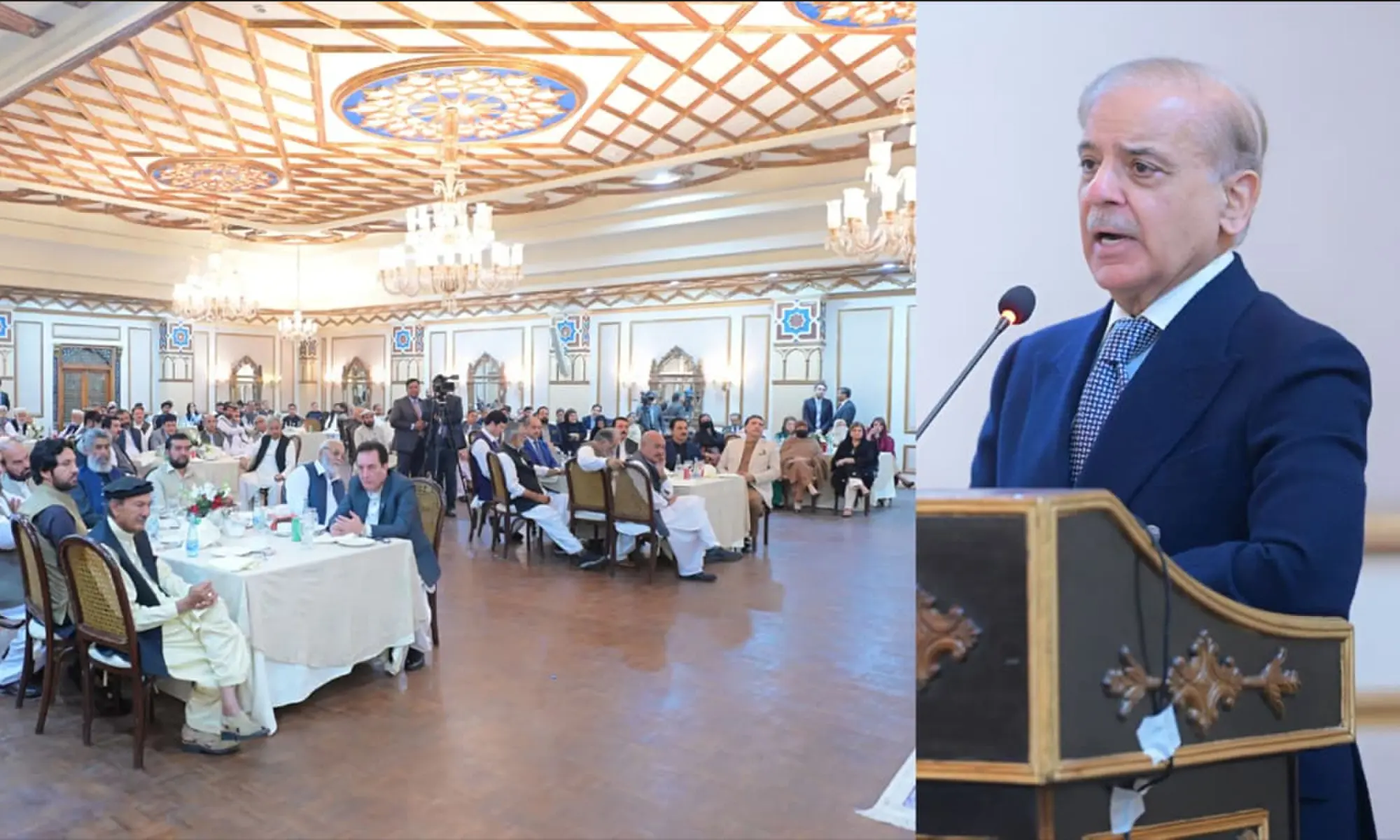
Prime Minister Shehbaz Sharif on Saturday defended the imposition of governor’s rule and emergency in Khyber Pakhtunkhwa, saying the decision was necessary to protect the lives of people, the province’s economy and society, as well as the country.
Addressing members and office-bearers of the Pakistan Muslim League-Nawaz’s (PML-N) parliamentary party in Khyber Pakhtunkhwa, the prime minister said the government had tried to resolve matters through negotiations, but its proposals were not accepted, according to the PM Office.
He said a joint committee of the Pakistan Peoples Party and PML-N held 48 hours of talks, after which the government waited for approval of the agreed draft, but it did not come.
“Had we delayed the decision, the province could have suffered further losses,” he said, adding that the government had been left with no other option.
Shehbaz also invited political forces to join hands against terrorism, saying the government had offered to fight the menace collectively, as it had done in the past, but the offer was not heeded.
He said Pakistan had suffered heavy human and economic losses in the war against terrorism, with around 80,000 people killed and economic losses estimated at $150 billion to $200 billion.
The prime minister recalled that terrorism had been eliminated from the country by 2017-18 through joint efforts by the nation and state institutions. He said the people of Khyber Pakhtunkhwa, along with the police, armed forces and political leaders, had made immense sacrifices.
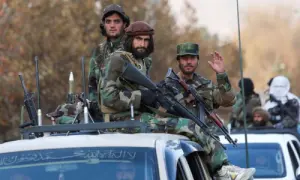
Referring to the resurgence of militancy, Shehbaz alleged that terrorists had been brought back from Afghanistan and resettled in Swat in 2019 and 2020. He said thousands more people had been killed in terrorist attacks over the past two and a half years, including police personnel and members of law enforcement agencies and the armed forces.
He said the government had repeatedly called for joint action against terrorism but its appeals had not been accepted.
The prime minister questioned how the Khyber Pakhtunkhwa government had utilised the additional resources allocated to the province under the 2010 National Finance Commission (NFC) Award.
He said the province had received around Rs800 billion under the arrangement, which included an additional one per cent share, but questioned how many safe city projects had been established and how much the Counter Terrorism Department had been strengthened.
He also said around 5,000 vacant police posts had not been filled, arguing that available resources should have been used to equip and train the police with modern weapons and skills.
Criticising the provincial government’s performance over the past 13 years, Shehbaz said political slogans, long marches and sit-ins had taken precedence over public service. He questioned how many universities and hospitals had been built during that period and raised concerns over the use of public funds.
He said people in Peshawar, Kohistan, Hazara and the southern districts continued to face unresolved problems.
The prime minister also referred to the 2014 sit-in, saying it had led to the postponement of Chinese President Xi Jinping’s visit to Pakistan. He said the visit eventually took place in 2015, when important agreements were signed, while the elimination of prolonged power outages was achieved through the efforts of the government led by former prime minister Nawaz Sharif.
On the economy, Shehbaz said the political and military leadership had worked together over the past two and a half years to stabilise the country’s finances.
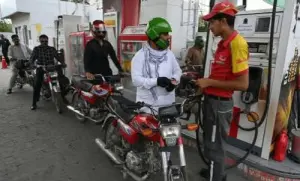
He said international developments and the Gulf conflict had caused an extraordinary increase in energy prices, but the government had launched a fuel subsidy scheme to provide relief to the public despite financial constraints.
According to the prime minister, 13 million people had benefited from the voucher scheme, while the government had allocated Rs75 billion for public relief. He said providing assistance to low-income households remained a key priority.
Shehbaz also announced plans to establish more Danish schools in Khyber Pakhtunkhwa, saying underprivileged children in Chitral, Haripur, Mansehra, Bajaur and Shangla would receive education on the lines of Aitchison College, Lahore.
He said the PML-N would continue working for the province’s development, peace, prosperity and public welfare.
Earlier, PML-N Khyber Pakhtunkhwa president and Federal Minister for Kashmir Affairs and Gilgit-Baltistan Engineer Amir Muqam said the people of the province had rejected what he described as politics of agitation and wanted development and peace.
He said PML-N workers would continue working for the development of the country and the province under the leadership of Nawaz Sharif and Prime Minister Shehbaz Sharif.










Comments