


PSX: volatility at bourse, KSE-100 settles with over 650 points gain
- Benchmark index settles at 163,038.46
The Pakistan Stock Exchange experienced significant selling pressure, with the KSE-100 Index dropping over 800 points, as the Monetary Policy Committee meets today amid conflicting rate hike expectations.
- Reasons for the KSE-100 Index's sharp decline.
- Conflicting expectations for the central bank's policy rate decision.
- Global market trends and oil price movements.
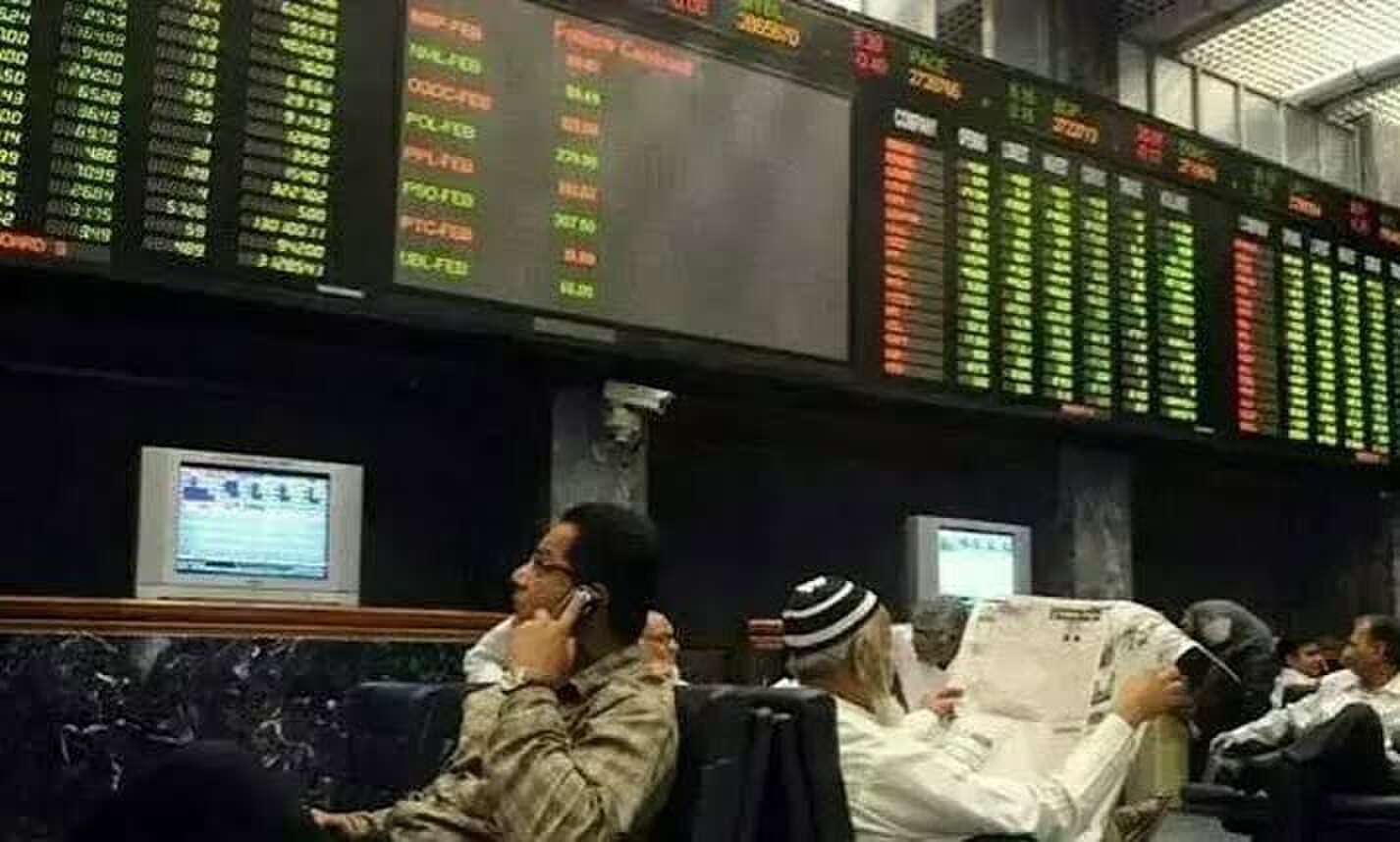
The Pakistan Stock Exchange (PSX) observed a volatile trading session, with the benchmark KSE-100 Index settling with a gain of over 650 points amid strong late-session buying on Monday.
The benchmark index initially came under selling pressure to hit an intraday low of 161,250.06 points. It subsequently recovered, rebounding towards the 162,000 level before gaining further momentum in the afternoon session. The index crossed the 163,000 mark and approached its intraday high of 163,477.08 points before easing slightly.
At close, the benchmark index settled at 163,038.46, up 663.59 points or 0.41%.
In a key development, the MPC of the State Bank of Pakistan (SBP) decided to raise the policy rate by 50 basis points, taking it to 12% amid inflationary pressures and rising global commodity prices.
During the previous week, PSX extended its losing streak to a fifth consecutive week, with the benchmark KSE-100 Index shedding 4,044.84 points, or 2.4% week-on-week, to close at 162,374.84 points as Brent crude surged make Pakistan’s trade deficit widened and persistent geopolitical tensions compounded domestic economic uncertainty.
Globally, stock markets traded cautiously on Monday as oil eased from six-month highs ahead of a week packed with central bank meetings and corporate earnings that will further test investor confidence in the AI boom.
Brent oil slipped 1.6% to $114.88 following reports that Qatari mediators were in Tehran on Sunday as part of an effort to de-escalate regional tensions in coordination with the US.
Brent futures jumped 6.2% last week to their highest weekly close since mid-2022 as Houthi attacks in Saudi Arabia stoked concerns about energy supplies. US crude futures fell 1.9% to $101.29 a barrel.
Japan’s Nikkei dipped 0.5% after losing 4.0% last week, while South Korea’s main index fell 1.1%, having shed almost 20% so far this month. MSCI’s broadest index of Asia-Pacific shares excluding Japan eased 0.1%.
Chinese blue chips lost 1.0%, as China’s ruling Communist Party began its fifth plenum in Beijing. The market has now fallen for 11 weeks straight amid concerns about domestic demand - even as exports remain strong.
The inflationary pulse from oil is likely to alarm all the central banks that are meeting this week, with hikes seen as just a matter of time even if some hold for now.


















Comments