


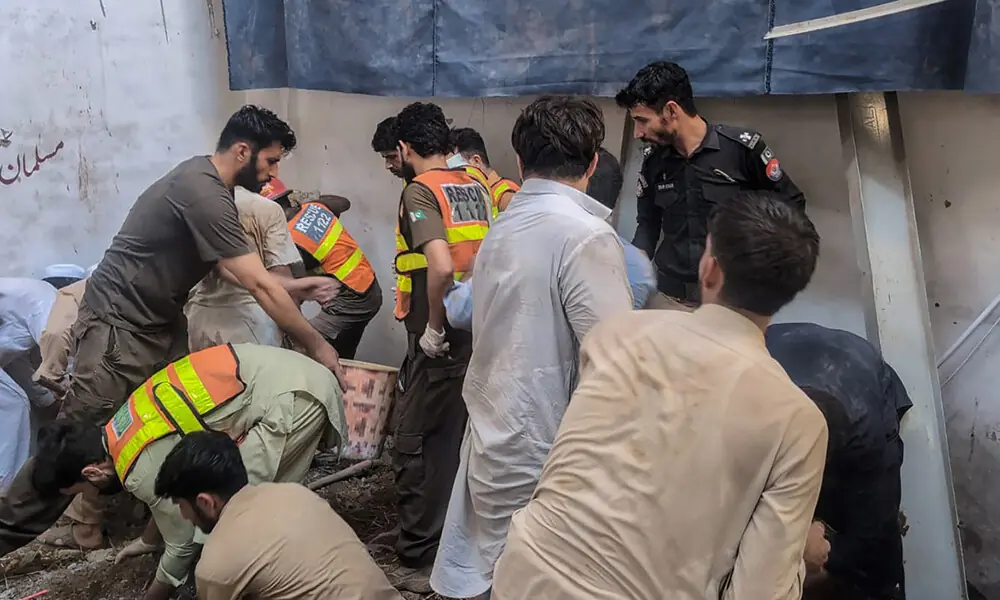
EDITORIAL: The deaths of more than 30 children and a teacher in the collapse of a private school building in Peshawar demand accountability at every level of government and administration.
The tragedy at Al-Khair School has again exposed an appalling failure to protect children entrusted to an educational institution, with preliminary reports pointing to a structurally weak building burdened by additional construction.
The precise death toll has varied across reports, but the enormity of the tragedy is beyond dispute. Children went to school for an ordinary day of learning and never returned home. There can be no acceptable explanation for allowing such conditions to develop, and no official or institution responsible for their safety should escape scrutiny.
The circumstances emerging from the investigation are deeply disturbing. Police have indicated that the building was structurally unsound, while reports suggest that concerns about its condition had previously been raised. These allegations require thorough examination, including whether the additional construction was authorised, whether qualified engineers assessed the building’s capacity and whether school management ignored warnings.
The owner has reportedly been arrested, but the investigation must establish responsibility through evidence and extend to every person whose actions or omissions contributed to the disaster.
Equally serious questions confront the departments responsible for approving buildings, registering educational institutions, and enforcing safety regulations. According to the provincial private schools regulator, Al-Khair was registered in March, although technical personnel were absent from the inspection. That disclosure alone should trigger an examination of the entire registration process.
How could an institution accommodating so many children receive approval without adequate scrutiny of the premises? Which authorities were responsible for verifying structural safety, and what records exist of inspections, permissions and subsequent alterations? Worse, how many more such buildings are still accommodating children, waiting for another disaster to expose the same failures? The public deserves specific answers, supported by documentary evidence.
The provincial government must accept its share of institutional responsibility. Regulation and enforcement are fundamental functions of government, and their effectiveness cannot be measured by the number of committees established after a catastrophe.
The authorities have announced inspections of private school buildings, but such exercises must lead to independent structural assessments, immediate action against dangerous premises, and enforceable safety requirements. Findings should be made public, with clear responsibility assigned for corrective measures and follow-up inspections.
Officials found to have neglected statutory duties must face consequences alongside private individuals whose negligence is established.
There is also the disturbing matter of repetition. 14 children died when a tuition centre roof collapsed in Lahore in June, followed shortly afterwards by another fatal school roof collapse in the city. Those incidents should have prompted a nationwide examination of the safety of schools, tuition centres and other premises accommodating children. Their recurrence raises serious questions about whether warnings from earlier tragedies have produced any meaningful preventive action.
Every provincial administration should now examine the adequacy of its inspection arrangements, particularly for educational institutions operating in converted residential buildings or premises that have undergone structural alterations.
Accountability must be accompanied by lasting reform. Building approvals, educational registration and periodic safety certification should operate within a coordinated regulatory framework, with structural assessments undertaken by qualified professionals.
Unauthorised construction must attract effective penalties, and unsafe institutions should remain closed until independent certification establishes that they can operate safely. Parents must also have access to reliable information about the safety of premises where their children spend much of their day.
Compensation for bereaved families is necessary, as is support for the injured, but neither can discharge the state’s responsibility for preventing such disasters. The investigation must establish the full chain of decisions and failures that preceded the collapse, and its findings must lead to prosecution wherever criminal responsibility is established.
Pakistan has allowed preventable failures of public safety to claim innocent lives for far too long. The children of Peshawar deserve justice, and every child still attending school deserves the protection that these victims were denied.
Copyright Business Recorder, 2026





















Comments