


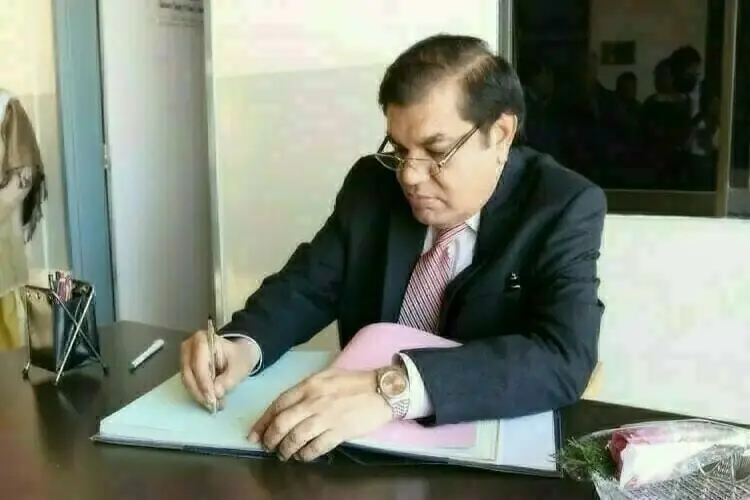
KARACHI: President of the Pakistan Businessmen and Intellectuals Forum (PBIF) and All Karachi Industrial Alliance, Chairman of the National Business Group Pakistan, Chairman of the FPCCI Policy Advisory Board Mian Zahid Hussain urged the government to ensure reliable energy supplies to export industries at competitive rates and to clear tax refunds without delay.
Simplifying port procedures, customs clearance and trade documentation is also necessary to reduce business costs and production lead times, he said adding frequent or unpredictable changes to tax and sales tax refund rules, customs duties on raw materials and machinery, and industrial electricity and gas tariffs create uncertainty for investors and exporters. Decisions on taxation, tariffs and energy should be clear, consistent and predictable, he said.
Hussain added that domestic alternatives should be developed to help ease import pressures, while avoiding protection that makes locally produced goods more expensive or lowers their quality.
He said that the 10.84 percent increase in exports during the first quarter of FY2026-27 was encouraging. However, imports grew by 13.21 percent, causing the trade deficit to widen by 15.13 percent to USD 10.79 billion, according to the Pakistan Bureau of Statistics’ report for September 2026. While commenting on the July-September trade figures, he said exports reached USD 8.42 billion, compared with approximately USD 7.60 billion in the same period last year.
He said the rise in the import bill could not be dismissed as a one-month development. Its causes, composition and effects on domestic production needed to be examined. The US-Iran war has sharply raised petroleum prices, contributing to pressure on Pakistan’s import bill, he said.
Hussain said that if the quarterly trade deficit remained close to USD 10.79 billion in each of the remaining three quarters, the full-year deficit could reach approximately USD 43.16 billion, or about USD 43.2 billion. Pakistan received USD 41.6 billion in remittances during FY2025-26, while the State Bank of Pakistan projects inflows of USD 44 billion in FY2026-27.
Remittances are expected to provide an important cushion to the external account, but they cannot be treated as a direct offset to the merchandise trade deficit.
Mian Zahid said the rise in exports was encouraging, but sustaining that progress would require Pakistan to broaden the range of products it exports and the markets it serves.
Copyright Business Recorder, 2026
























Comments