




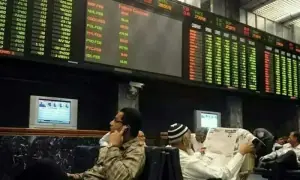
With the monetary policy decision due in two weeks or so, secondary market yields in the money market are inching up, with 10-year bonds pricing close to 13 percent while the policy rate is at 11.5 percent. Increasingly, expectations of a rate hike are building among banking treasuries, with the exception of a few who think there are no visible external and fiscal stresses to warrant another rate hike.
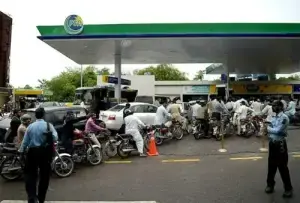
The minority group has a valid point. The economy is dead slow. If there was any pickup in demand, it has dried up after the sharp spike in petroleum prices. The government is fully passing on the prices so as not to let fiscal stress develop, while a slowdown in demand amid lower RLNG imports, along with growing home remittances, has kept external account pressures in check. Inflation has crept up; however, real rates are still positive.
The question is why bond yields are rising. This might be due to expectations of a rate hike. Yields went up in May and June, even after the policy rate hike of 1 percent in April, as fears of a full-blown war were growing. Thereafter, they fell sharply in July as a temporary ceasefire took place and are now moving up again.
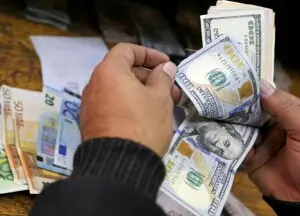
This time, the increase in domestic yields is more due to rate hikes in the US and other economies. Since the currency is stable, the growing interest rate differential between Pakistan and the US is making some uncomfortable, and they are demanding more. Then, IMF pressure on issuing more long-term fixed-rate bonds is pushing longer-term bond yields even higher.
The question is how Monetary Policy Committee members would take this. Last time, there were three votes for a rate hike, perhaps 100 bps, while the rest wanted to adopt a wait-and-see approach. The war is not over, and international oil and petroleum prices are not coming down. If things remain like this for the next two weeks, the chances of a rate hike will grow.
However, we should see the situation in the context of Pakistan’s own history and what other central banks are doing to counter the oil-price shock in this wave.
Historically, over the last twenty years, whenever the 10-year paper has been around or above 13 percent, there have been visible external and fiscal cracks. That is not the case today. The economy is showing resilience against higher oil prices this time due to a host of reasons—massive solarisation, lower RLNG imports and demand curtailment due to higher prices, to name a few.
The bottomline is that debt-to-GDP is declining while SBP forex reserves are growing. There is no panic.
The other way is to look at how other economies have responded. India has not increased the policy rate but has allowed the currency to adjust. In Bangladesh, interest rates fell while the currency remained stable. Sri Lanka is more defensive, with both a rate increase and currency depreciation, as is the case with the Philippines and Indonesia. The story is similar for developed economies such as Australia and Japan.
Interestingly, Pakistan was among the first to respond to the war by increasing the policy rate by 100 bps in April. At that time, the historical view was kept in mind, as Pakistan’s macro numbers have deteriorated whenever oil has crossed $100. However, we have now seen the economy’s resilience.
Now, the case for an increase based solely on the narrowing of the historical Pakistan-US interest rate differential might be superficial, given the improved macroeconomic position we have relative to the US in historical perspective. A better policy response could be what India, Thailand and others have done by allowing the currency to absorb some of the pressure. Pakistan should let the currency adjust slightly.
The question is how to respond to the oil shock—through higher fuel prices to curb demand, adjusting the currency to absorb the shock, or increasing interest rates to curb demand. Pakistan has already increased rates and fully passed on the prices. It should try the third variable too.
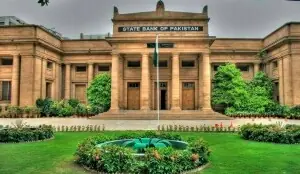
Having said that, even if SBP decides not to increase rates this time, the tone should be hawkish and caution is warranted. The final decision will depend on oil prices over the next twelve sessions before the policy meeting.













Comments