




KARACHI: Pakistan’s Real-time Interbank Settlement Mechanism Plus (PRISM+) settled 6.3 million transactions worth Rs1,566 trillion during FY26, equivalent to approximately 12.3 times the country’s nominal GDP.
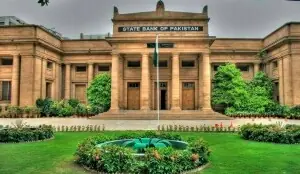
The State Bank of Pakistan (SBP) on Tuesday released its Annual Report on Payment Systems, highlighting the continued expansion of Pakistan’s payments landscape and the growing role of digital channels in everyday financial transactions conducted through formal banking and payment channels.
The report provides an overview of the key trends, developments, innovations, and financial transactions shaping the country’s formal payment ecosystem during fiscal year 2025-26.
READ MORE: SBP unveils revised PRISM+ operating rules
According to the report, PRISM+, developed by the SBP, settled 6.3 million transactions amounting to PKR 1,566 trillion, representing a 5 percent increase in transaction volume and 24 percent increase in transaction value in FY26 compared with FY25.
Against the country’s nominal GDP of PKR 126.9 trillion (at current market prices), value of settlements via PRISM was equivalent to approximately 12.3 times of GDP. The increase in the ratio indicates that the value of financial settlement flows processed through the large-value payment infrastructure continued to grow faster than the nominal size of the economy.
However, SBP mentioned that the ratio represents payment-system turnover relative to economic outputand should not be interpreted as a contribution to GDP, as funds may be transferred through the system multiple times.
Fiscal year 2025-26 witnessed strong momentum in the ongoing transformation of payment landscape, with consumers, businesses, and financial institutions increasingly embracing mobile apps, internet banking, e-money wallets, QR-based payments, and other digital channels. This growth has been supported by various policy measures, improved digital infrastructure, and industry-led initiatives.
Retail payments through formal banking channels during FY26 registered significant growth, reaching 14.3 billion transactions valued at PKR 673 trillion, representing year-on-year growth of 58 percent in volume and 10 percent in value.
Digital channels continued to gain traction as consumers increasingly adopted mobile banking apps, internet banking, and e-money wallets for everyday payments. Out of 14.3 billion transactions conducted through formal banking channels, 13.2 billion transactions were conducted through digital channels representing year-on-year growth of 65 percent.
Further, digital channels accounted for 92 percent of total retail payment transactions, up from 88 percent in FY25. Mobile phone-based solutions led digital transactions with over 11.1 billion transactions, registering 79 percent growth, while internet banking portals processed 0.3 billion transactions, up 15 percent from the previous fiscal year.
The expansion of digital acceptance infrastructure at merchants/retailers’ outlets further supported this growth. The POS network expanded to 337,791 terminals across 295,367 merchant locations, supporting nearly 1.5 million daily card payments compared to 1.0 million in the previous fiscal year.
E-commerce payments also continued to gain traction, with account-based online payments accounting for 96 percent of total e-commerce transactions conducted through banking channels. Branchless banking mobile app users increased to 99.1 million, while banks’ mobile app users reached 30.4 million, highlighting the continued shift of everyday banking activities towards smartphone-based platforms.
A major development in payment infrastructure was the introduction of PRISM+ in August 2025, marking the transition of the RTGS system to the ISO 20022 standard.
The upgraded platform is designed to improve efficiency, transparency, and security of payment processing across retail and large-value segments. With the implementation of the new PRISM+ system, Pakistan joins the league of countries with both wholesale and retail (Instant Payment System) built on ISO 20022.
The State Bank of Pakistan remains committed to fostering secure, efficient, and inclusive payment systems and to strengthening the country’s financial infrastructure in line with evolving technological developments and international practices, while maintaining public trust, resilience, and stability.
Copyright Business Recorder, 2026






















Comments