


EDITORIAL: Reports indicate that the visiting International Monetary Fund (IMF) team will reach a staff-level agreement on the fourth review of the ongoing 7 billion dollars Extended Fund Facility (EFF) and the third review of the 1.4 billion-dollar Resilience and Sustainability Facility (RSF) which, once approved by the Fund Board, would lead to disbursement of 1.2 billion dollars – a release that is critical for support of the external value of the Pakistani rupee, ensure that the reserves meet at least three months’ imports, a standard requirement by multilaterals, and ensure the rollovers from two friendly countries, Saudi Arabia and China, to remain in place.
It has also been reported that no new upfront, time-bound, or structural conditions were proposed by the Fund for the release of the next tranches. This reflects the fact that the government has not deviated from the Fund’s prescriptions—which are considered harsh on the general public—specifically those relating to raising tariffs to achieve full cost recovery for utility companies, as well as tight monetary and fiscal policies that negatively impact both growth and employment opportunities.
The rationale for these tight conditions was to check the rate of inflation; however, the ongoing Middle East conflict has seriously compromised their effectivity. Needless to add, higher inflation than forecast at the start of the current calendar year is equally evident globally and unless the conflict is resolved there is little likelihood of a reprieve for the general public.
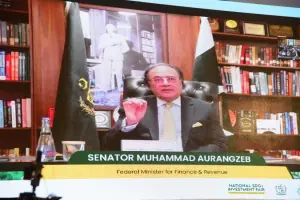
Be that as it may, until the document detailing the staff-level agreement is uploaded to the IMF website—an action that on average takes at least a month—one cannot definitively state that all conditions were met without waivers, or that no new conditions were agreed upon. Furthermore, it remains unclear whether the Fund team has sanctioned the loosening of fiscal and monetary policies. Such a loosening is a prerequisite for fulfilling the repeated public pledges made by both Prime Minister Shehbaz Sharif and Finance Minister Muhammad Aurangzeb: that with stabilization now achieved, the government will embark on pro-growth policies to fuel employment and lower the high poverty levels, which are currently estimated at 44.7 percent by the World Bank.
In the event that the Fund team will disallow a loosening of fiscal and monetary policies the only recourse left to the government is to try to reduce current expenditure. There is overwhelming evidence that the Finance Ministry’s capacity to reduce outlay is largely limited to slashing the Public Sector Development Programme (PSDP) that is no more than 5 percent of total outlay which, by the end of the fiscal year, may well fizzle down to under 3 percent – even less than the 4 percent allocated for Benazir Income Support Programme (BISP).
What our Finance Ministry has never been able to budget are the following expenditures: debt servicing around 43 percent of the total, pensions 6 percent, defence 16 percent, running of civilian government 5.7 percent and subsidies another 6 percent or a total of 85 to 86 percent. If one adds the outlay on keeping poorly performing state-owned entities afloat, then a cynic may well conclude that the Finance Ministry’s power to allocate and then actually disburse is limited to the PSDP (public sector development programme) – a power that it uses mercilessly each year but especially when on an IMF programme to keep its deficit sustainable.
To change the status quo would require not cosmetic surgery but a painful transplant or, in other words, the government must limit itself to budgeting as many loans as would reduce the flow as well as stock of loans each year while seeking major recipients of the current expenditure to voluntarily make a sacrifice for at least three years for that alone would lead to inclusive growth – the objective of the Prime Minister and the Finance Minister.
Copyright Business Recorder, 2026





















Comments