


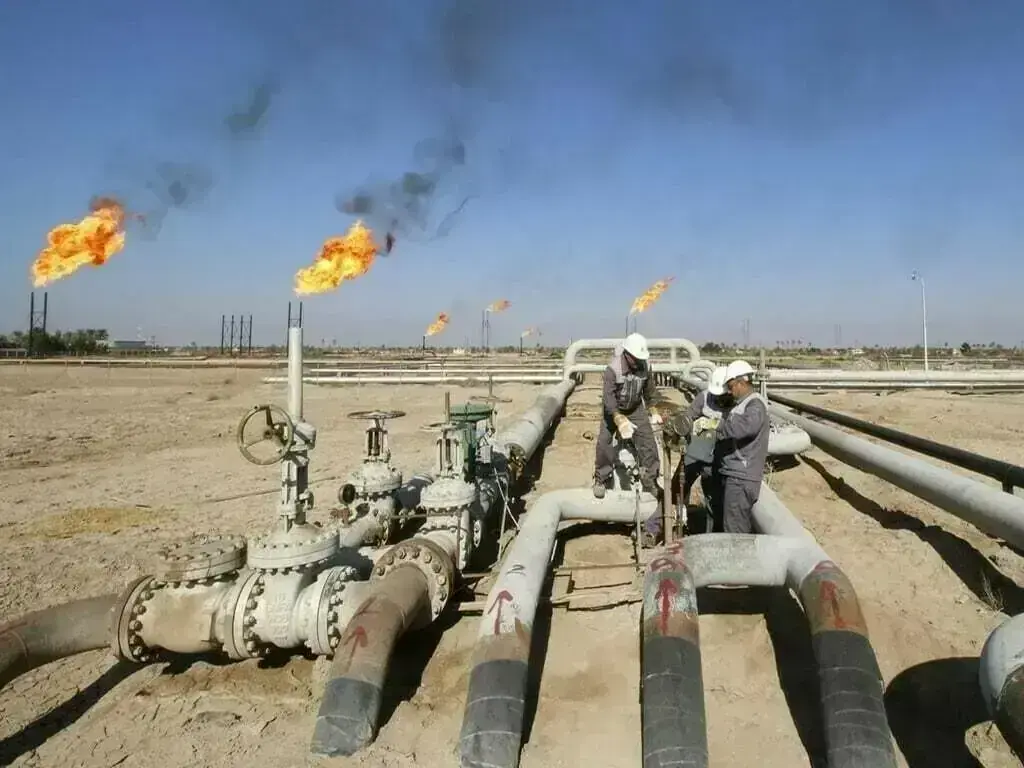

Pakistan’s gas sector has perfected a ruinous business model: lose gas, misallocate expensive imports, delay payment to producers, and send somebody else the bill. Industry pays through higher tariffs. Taxpayers pay through subsidies. Producers pay through unpaid invoices. The institutions responsible survive to propose the next increase.
This arrangement is destroying the commercial foundations of the energy system. SNGPL and SSGCL need to be rebuilt around a different purpose: transporting gas efficiently for competing suppliers, with independently measured performance and no licence to pass every failure downstream.
The reported gas-sector circular debt reached Rs3.607 trillion in March 2026. Almost Rs1.723 trillion represented late-payment surcharges. That is a monument to accumulated non-payment, not merely an engineering problem. Nor is the entire stock the value of stolen or leaked gas. Conflating debt, subsidy arrears and unaccounted-for-gas (UFG) would weaken the indictment. The documented failures are serious enough without embellishment.
The UFG record nevertheless exposes an expensive failure of stewardship. SNGPL reported 30.026 billion cubic feet in FY2025, or 5.27 percent overall. SSGCL’s assessed, provisional figure was 34.8 billion cubic feet, or 12.07 percent; its lower company claim remained disputed. SNGPL’s reductions over earlier years deserve recognition. They do not excuse the remaining losses, or SSGCL’s much worse performance.
At the September 2026 RLNG distribution prices used in our analysis, the two FY2025 volumes have a combined gross tariff-equivalent value of roughly USD 951 million. Using the Indian city-gas operator Mahanagar Gas’s 2.3 percent as an illustrative comparator, the excess amounts to about USD 658 million. Applying the same comparator and RLNG prices to FY2020–FY2025 produces approximately USD6 billion cumulatively.
These are illustrative replacement-value calculations, not audited historical import expenditure or guaranteed recoverable savings. Network characteristics differ and UFG includes commercial and measurement errors. The evidence supports hundreds of millions of dollars annually and billions cumulatively. That is already an appalling burden. We do not need to invent billions every year to establish the urgency of reform.
The engineering remedies have been discussed for more than a decade. Meter the system properly. Reconcile energy at each network boundary. Restore corrosion protection. Repair the worst zones first. Test meters instead of replacing them indiscriminately. Isolate abandoned mains. Measure actual savings rather than celebrate raids, disputed recovery notices and kilometres of new pipe. Management should earn rewards for verified performance, not for persuading the regulator to enlarge the bill.
The abandoned World Bank project makes the institutional failure harder to dismiss. A USD200 million operation approved in 2012 closed in 2016 without fieldwork. The Bank’s cancellation review documents weak ownership, restrictive specifications, procurement delays and failure to appoint the owner’s engineer. Only the USD250,000 front-end fee was disbursed. SNGPL had opted to pursue other financing.
This record justifies demanding answers about resistance to procurement discipline. It does not prove that protecting kickbacks caused either company’s decision. SSGC also objected to the government’s on-lending terms. The charge that can be sustained is devastating enough: institutions expected to manage major networks failed to execute a programme intended to reduce the losses their customers were financing.
Then came the absurdity of expensive imported gas displacing domestic production while local producers waited for payment. OGDCL’s nine-month report to March 2026 recorded more than Rs508 billion overdue from the two Sui companies. It attributed average production curtailment of 141 MMcfd to RLNG oversupply and weak demand, alongside reduced oil and LPG output. These were period-specific findings, not evidence of a permanent nationwide surplus. They still expose the cost of disconnected procurement and payment decisions.
When metered RLNG is diverted to households at prices below its attributable cost, that gap does not become UFG. It becomes an unfunded obligation unless somebody explicitly pays. Hiding it in industrial tariffs or upstream arrears merely moves the damage. Poor households deserve support; they do not deserve to be used as the explanation for opaque accounts. A transparent, eligibility-based, BISP-like mechanism should fund assistance from the budget and show the subsidy separately on bills.
The commercial price of gas should reflect supply and service costs. Differences justified by pressure, distance, load profile and reliability are legitimate. Government social obligations are not a cost of serving an exporter.
Industrial tariff categories create another invitation to abuse. SSGCL’s published July 2025 schedule lists process gas at Rs2,300/MMBtu and captive gas at Rs3,500 before additional levies. Such gaps reward misclassification and make decisions about connections and inspections commercially valuable. That creates opportunities for collusion and selective enforcement. A tariff architecture that makes the label on a connection worth a fortune is economically perverse.
SSGC should publish the findings of its reported recent enforcement drive: inspections, confirmed misuse, volumes, recoveries and disciplinary action. We have not obtained official results establishing its scale. Suspicions should be investigated, not inflated into statistics. Equally, enforcement alone cannot cure a pricing system that manufactures incentives to evade it.
Efficient cogeneration deserves particular attention. It produces electricity and useful industrial heat from the same fuel. Judging it solely on electrical efficiency ignores the fuel a separate boiler would consume. Punitive captive levies can penalise productive efficiency to support an underused grid. Energy costs are a major constraint on export competitiveness, even though they are not the only explanation for weak exports. Industry cannot repeatedly absorb the cost of institutional failure and remain competitive abroad.
Ad hoc levies and discretionary charges damage the entire energy system. They distort fuel choices, undermine investment and can strand capacity. Every new charge should face a published cross-sector assessment. Existing distortionary levies should be repealed or redesigned. A functioning market cannot survive if every competitive advantage attracts a new tax designed to eliminate it.
The structural answer is one national gas transmission company and multiple distribution companies serving smaller, clearly defined areas. Combine the trunk networks; make local distributors accountable for their own assets, metering, safety and losses. Neither should trade gas. Domestic producers and licensed LNG suppliers should contract directly with consumers, using published, regulated transport terms. Customers must be able to change supplier without changing the pipeline that serves them.
Smaller distributors will still be monopolies. They need independent regulation, transparent accounts and enforceable service standards. Real market opening requires available capacity, terminal slots, nominations, balancing, payment security and timely dispute resolution. Issuing supplier licences while withholding usable access is administrative theatre.
The boards must also change. Serving officials and former civil servants feature in published board profiles; SSGCL lists three ex-officio directors. This does not establish a serving-official majority. But bureaucratic domination is no credible foundation for commercial reform. Appointments by rank or patronage should end. Require a genuinely independent expert majority, published conflicts and annual performance assessments. Government ownership must not turn company boards into ministry extensions.
Integrated energy planning is indispensable. Gas procurement must be aligned with power dispatch, indigenous coal, seasonal hydel, renewables, transmission, and industrial demand. Planning each fuel in isolation can leave LNG commitments stranded during high hydel output and insufficient flexible supply during dry periods. Pakistan needs the lowest reliable total system cost, not a separate empire maximising the use of each fuel.
That requires a serious appraisal of merging NEPRA and OGRA into an independent energy regulator. Conflicting tariff and investment decisions cannot produce coherent outcomes across gas and electricity. A unified mandate should include upstream oil and gas regulation, licensing and concession administration, pipelines, terminals and downstream supply, with the necessary legal changes and respect for provincial responsibilities. Ministries should retain policy and fiscal responsibilities. They should not retain fragments of regulation that defeat the purpose of integration.
Give this programme twelve months. Establish the legal and financial foundations in the first three, begin independently settled third-party deliveries by month six, and complete the transmission and distribution restructuring by month twelve. Sustained engineering rehabilitation will continue, but institutional reform must not become an endless precondition for action.
A high-level committee of independent energy experts should monitor delivery and integrated planning every month, reporting publicly to Cabinet. Assign named owners, require corrective plans within fifteen days of missed milestones and escalate unresolved failures. Oversight must enforce accountability without taking over tariffs, tenders or dispatch.
Pakistan has spent years asking how much more consumers must pay to keep this system alive. The question now is why the system is allowed to keep failing them. Another tariff increase is easy. Ending the entitlement to pass failure on to others is the reform that matters.
Copyright Business Recorder, 2026

PUBLIC SECTOR EXPERIENCE: He has served as Member Energy of the Planning Commission of Pakistan & has also been an advisor at: Ministry of Finance Ministry of Petroleum Ministry of Water & Power
PRIVATE SECTOR EXPERIENCE: He has held senior management positions with various energy sector entities and has worked with the World Bank, USAID and DFID since 1988. Mr. Shahid Sattar joined All Pakistan Textile Mills Association in 2017 and holds the office of Executive Director and Secretary General of APTMA.
He has many international publications and has been regularly writing articles in Pakistani newspapers on the industry and economic issues which can be viewed in Articles & Blogs Section of this website.












Comments