


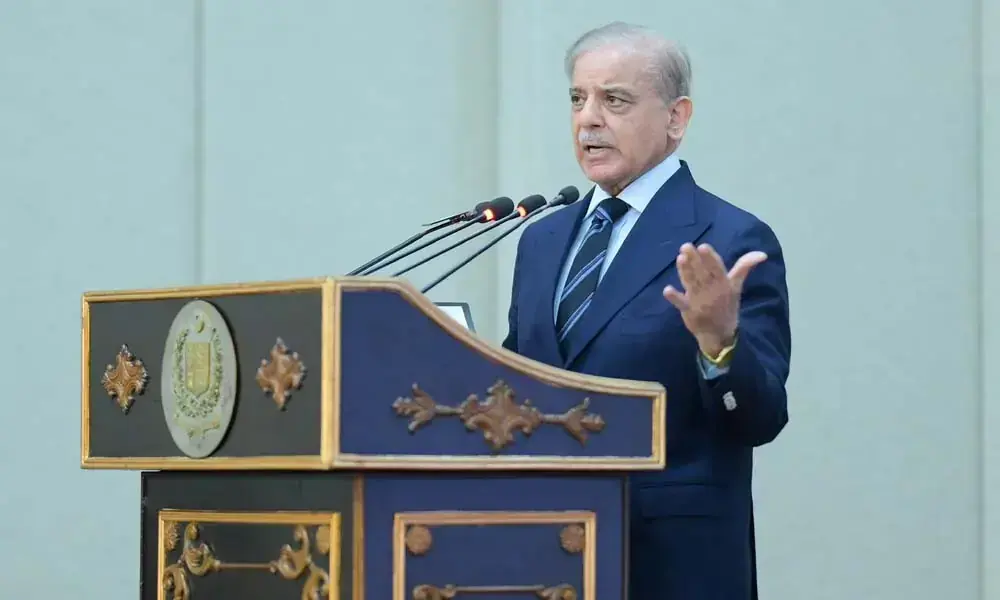

ISLAMABAD: Prime Minister Shehbaz Sharif on Monday approved duty-free import of high-yield and superior-breed livestock for specialised farms to produce animals for export, while ordering a corporate restructuring of the livestock sector to unlock its export potential.
Chairing a high-level meeting on livestock-sector reforms, the prime minister directed the establishment of specialised export-oriented farms where imported livestock would be reared under controlled conditions before being shipped to international markets.
He also ordered the introduction of a modern livestock tagging system to ensure that animals imported for the specialised farms were ultimately exported.
READ MORE: Economic recovery: PM declares agri, livestock as ‘most immediate route’
Sharif said the livestock sector should be reorganised along corporate lines and that private-sector experts should be engaged in designing and implementing reforms.
He directed the authorities to set specific targets for meat and livestock exports and prepare a comprehensive roadmap for expanding Pakistan’s presence in international markets.
The prime minister also ordered the formulation of a plan, within two weeks, to eradicate Foot-and-Mouth Disease (FMD) from the country.
He stressed the need for international certification of slaughterhouses and called for third-party validation to ensure compliance with global standards.
The Ministry of National Food Security and Research was directed to work with the provincial governments to eradicate livestock diseases, which officials said remained a major impediment to expanding exports.
Sharif also called for improvements across the livestock and meat value chain, including farming, processing, cold-chain facilities, de-boning and production of value-added meat products.
The meeting was informed that Pakistan has around 245 million livestock, with an estimated total value of Rs5.5 trillion.
The sector contributes 14.97 per cent to the national economy and 63.6 per cent to the agricultural economy. Annual production includes around 74.69 million tonnes of milk and 6.31 million tonnes of meat.
Around eight million rural families are associated with livestock, but the sector remains largely based on small-scale farming.
Officials said fragmented supply chains were also preventing Pakistan from fully exploiting its export potential.
Pakistan’s meat exports stood at around USD530 million during fiscal year 2025-26, with the Gulf accounting for most of the country’s existing exports.
The United Arab Emirates (UAE), Saudi Arabia, Kuwait and Qatar are among the principal destinations.
Officials identified Malaysia, Saudi Arabia and China as markets with significant potential for further expansion.
The meeting was briefed on government measures to strengthen the sector, including national animal disease surveillance, animal traceability, digital monitoring of vaccinations and diseases, and the establishment of FMD-free zones and compartments.
The government is also working on export-grade farms and internationally recognised animal health and Halal certification systems.
Other initiatives include promotion of feedlot farming, cold-chain infrastructure, de-boning, value-added products and export-related infrastructure, with a target of increasing meat exports by 2028.
Federal ministers Rana Tanveer, Ahsan Iqbal, Musadik Malik, Ahad Cheema, Muhammad Aurangzeb and Attaullah Tarar, Prime Minister’s Adviser Haroon Akhtar, Minister of State Bilal Kayani and senior officials attended the meeting.
Copyright Business Recorder, 2026













Comments