


UK offers Pakistan technical assistance for trade and investment
- British High Commissioner highlighted the UK’s continued interest in supporting Pakistan’s economic transformation
The UK offered Pakistan technical assistance to bolster investment, trade, and private-sector reforms, aiming to strengthen economic cooperation and improve the business environment.
- UK support for Pakistan's economic reforms.
- Strengthening institutional and policy frameworks.
- Trade, investment, and public-private partnership opportunities.
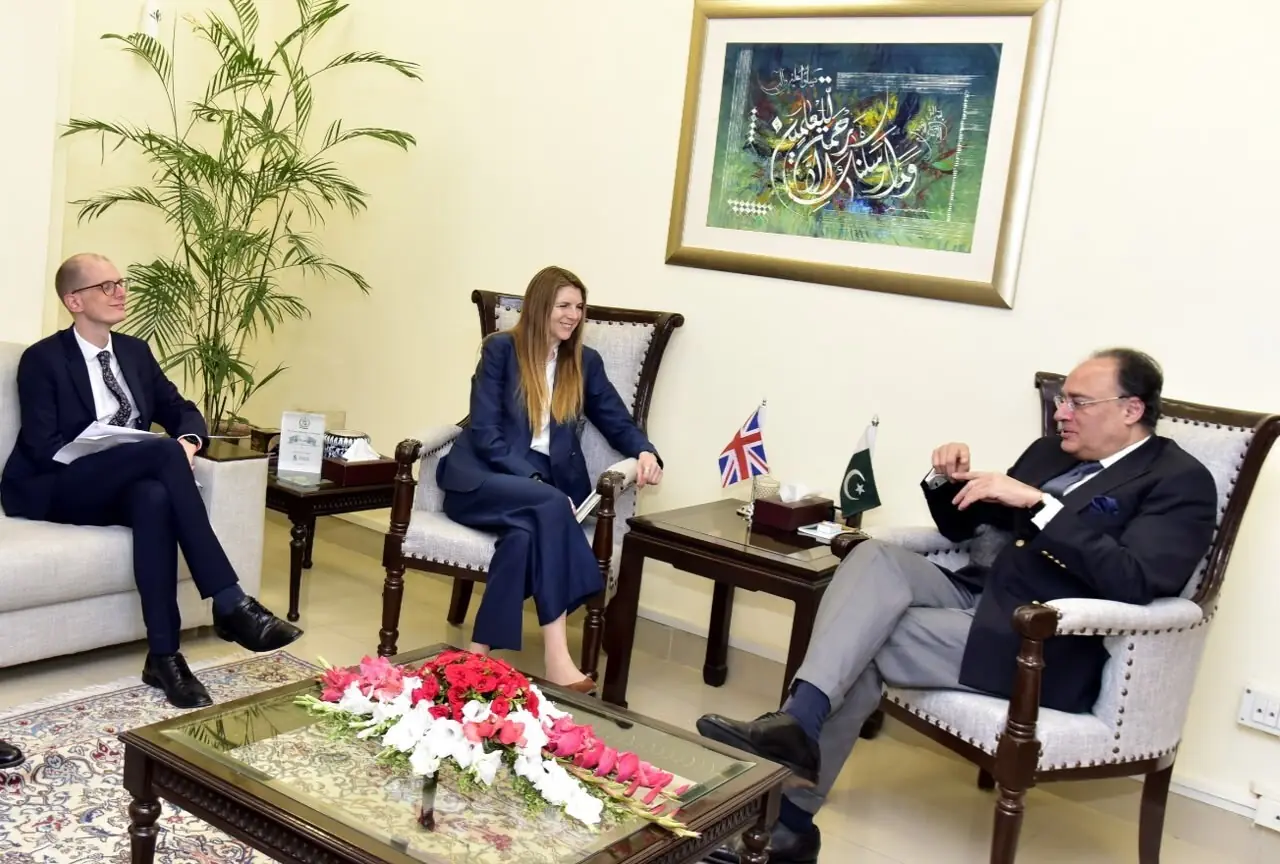

The United Kingdom offered to support Pakistan’s investment, trade and private-sector reforms through technical assistance, as the two sides discussed measures to strengthen the country’s institutional and policy framework and improve the business environment.
The development came after Jane Marriott CMG OBE, British High Commissioner to Pakistan, called on Federal Minister for Finance and Revenue, Senator Muhammad Aurangzeb, to discuss Pakistan’s economic reform priorities and opportunities to deepen trade and investment cooperation between Pakistan and the United Kingdom.
She was accompanied by Development Director Sam Waldock and Senior Economist Louie Dane, read a statement on Friday.
The finance minister welcomed the British High Commissioner and appreciated the United Kingdom’s continued support for Pakistan’s economic reform efforts through technical assistance, expertise and knowledge sharing.
He noted that Pakistan had moved from stabilisation towards sustainable, inclusive and responsible growth, with increasing emphasis on productivity, investment, exports and jobs.
The British High Commissioner highlighted the UK’s continued interest in supporting Pakistan’s economic transformation through technical assistance aimed at strengthening the institutional and policy framework for investment, trade and private-sector development.
She also appreciated the successful issuance of Pakistan’s $3 billion dual-tranche sovereign Eurobond, noting its significance for investor confidence and international market access. The discussion emphasised the importance of aligning UK support with Pakistan’s priorities and focusing on practical reforms.
The two sides discussed reform priorities, with particular emphasis on fiscal management, tax administration, digitalisation, expenditure efficiency, trade and investment promotion, public investment and public-private partnerships.
The finance minister stressed the importance of effective coordination across institutions to ensure consistency in implementation and create a more predictable environment for businesses and investors.
Aurangzeb highlighted the government’s ongoing efforts to improve the business environment and facilitate domestic and foreign investment.
Public-private partnerships were discussed as an avenue for mobilising private capital for development projects.
The finance minister highlighted the need for stronger project preparation, commercially sound structures and institutional capacity to support PPP transactions. The British side expressed interest in supporting these efforts through relevant technical expertise, including at the provincial level.
The meeting also covered opportunities to strengthen bilateral trade and investment and encourage greater engagement by UK businesses in Pakistan.
The British High Commissioner highlighted the potential of UK companies and diaspora networks to contribute to private-sector development, including by supporting the growth and internationalisation of small and medium-sized enterprises.
The two sides exchanged views on opportunities in the aviation sector, including potential international financing and investment. The British side highlighted the potential role of international financing partners, while the Finance Minister noted that relevant technical and commercial considerations would guide the process.


























Comments