


Sindh Cabinet orders wheat releases from 20th, endorses judicial appointments
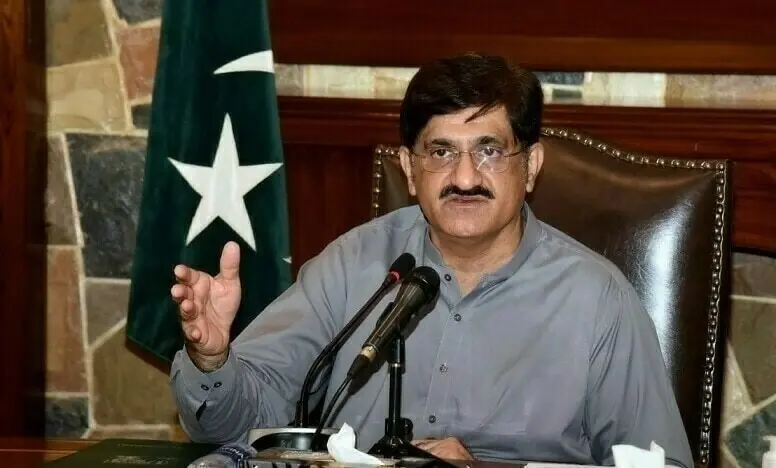

KARACHI: Sindh Chief Minister Syed Murad Ali Shah on Thursday presided over a meeting of the Provincial Cabinet and approved the extension of the Mir Raza Ali Inquiry Commission, ordered wheat releases from October 20, endorsed important judicial appointments, approved plans for a Mother and Child Hospital in Karachi, ratified funding for the STAR-WASH programme, and discussed Thar coal expansion and wildlife conservation measures.
The meeting, attended by provincial ministers, advisers, special assistants, Chief Secretary Asif Hyder Shah, Secretary to the Chief Minister Agha Wasif and senior officials of relevant departments.
At the outset, the Cabinet confirmed the minutes of its previous meeting held on September 17, 2026. It also ratified decisions taken by the Cabinet Committee on Finance through circulation regarding the construction of Police Station Khambra in Ghotki and the establishment of the Office of the Registrar under the Sindh Private Security Act, 2026.
The Cabinet also discussed and considered the proposal seeking extension in the tenure of the Commission of Inquiry investigating the death of Mir Raza Ali.
The Cabinet was informed that the commission, headed by Justice Omar Sial, had conducted extensive proceedings, recorded statements of numerous witnesses and required additional time to complete its findings and recommendations.
The Cabinet approved extension of the commission’s tenure up to October 15, 2026, and authorised Justice Omar Sial to continue the inquiry beyond that date if additional time is required.
Food Minister Makhdoom Mehboob Zaman presented a detailed briefing on wheat stocks and the proposed Wheat Release Policy 2026-27.
The Cabinet was informed that wheat flour prices had been steadily rising across Sindh because of sustained market demand, with wheat currently trading at approximately Rs 12,500 per 100-kilogram bag in Karachi. The chief minister directed the Food Department to prepare a detailed wheat release policy and submit it for his approval. He said atta prices must be stabilised.
Chief Secretary Asif Hyder Shah said the Food department should release government-held wheat stocks to licenced flour mills and chakkies through a structured mechanism to stabilise flour prices and provide relief to consumers. Wheat releases to flour mills were proposed to begin on October 20.
Food Minister Makhdoom Mehboob informed the meeting that the province currently possesses more than 9.19 million 100-kilogram bags of wheat, including carry-over stocks, newly procured wheat, seized stocks, wheat to be received from PASSCO and imported wheat expected later this month. Future of game bird hunting
Hunting of migratory birds:
The Cabinet also held an extensive discussion on wildlife conservation and the future of game bird hunting in Sindh and seriously considered banning the hunting.
The Forest & Wildlife department presented a detailed briefing on the proposed Game Bird Hunting Season 2026-27 under the Sindh Wildlife Protection, Preservation, Conservation and Management Act, 2020.
The officials explained the legal framework governing hunting activities, permit mechanisms, wildlife conservation measures and the findings of recent game bird population surveys conducted across the province.
The Cabinet was informed that wildlife surveys conducted in Sukkur, Larkana, Shaheed Benazirabad, Hyderabad, Mirpurkhas and Karachi divisions estimated the game bird population at 143,460 birds for the 2026-27 season compared to 140,866 birds recorded during the previous year.
The meeting was further informed that hunting activities are regulated through strict legal provisions governing species, hunting seasons, hunting methods, designated areas and bag limits. The use of prohibited methods such as automatic weapons, explosives, poisons and illegal trapping techniques remains strictly banned.
During the discussion, Cabinet members expressed serious concerns regarding the impact of hunting on wildlife conservation, particularly migratory birds and local bird species facing environmental pressures. The observations of the Chief Secretary regarding the need for stronger scientific evidence, stricter enforcement and a comprehensive ecological assessment were also discussed in detail.
The Forest & Wildlife department placed two options before the Cabinet: opening the Game Bird Hunting Season 2026-27 under existing regulatory safeguards or imposing a complete ban on hunting during the season.
After extensive deliberations, Chief Minister Murad Ali Shah constituted a ministerial sub-committee to examine all aspects of the issue and submit recommendations before the next Cabinet meeting. The committee comprises Health Minister Dr Azra Fazal Pechuho, Education Minister Syed Sardar Shah, Minister Zulfikar Ali Shah and Minister Rajvir Singh Sodha.
The committee has been tasked with reviewing conservation concerns, ecological implications, enforcement mechanisms and international best practices before submitting its recommendations for the Cabinet’s final decision.
The Board of Revenue (BOR) presented the proposed Sindh Government Lands Management Act, 2026, along with draft rules and statements of conditions aimed at establishing a modern legal framework for the management, allotment and utilisation of government lands across the province.
The proposed legislation seeks to replace the century-old Colonisation and Disposal of Government Lands Act, 1912, and introduces market-based land valuation, transparent auction mechanisms, stronger enforcement provisions, grievance-redress systems and clearly defined land-use categories for industrial, residential, commercial, agricultural, public-purpose and amenity purposes.
After deliberations, Chief Minister Murad Ali Shah directed the Board of Revenue to circulate copies of the draft law among all Cabinet members for detailed review and submit their observations within 10 days so that the matter could be taken up for final consideration at the next Cabinet meeting.
The Health department presented a proposal regarding the future management of the Sindh Government Children Hospital, North Karachi, following the expiry of its existing public-private partnership arrangement.
The Cabinet, on the recommendation of Health Minister Dr Azra Fazal, approved plans to hand over the facility to the Sindh Institute of Child Health and Neonatology (SICHN) and develop it into a dedicated 200-bed Mother and Child Hospital providing free maternal, neonatal and paediatric healthcare services to residents of Karachi’s densely populated Central District.
Round-the-clock operation of the Chanesar Dispensary
The Cabinet also considered a proposal submitted by the Indus Hospital and Health Network (IHHN) for the upgradation and round-the-clock operation of the Chanesar Dispensary and Maternity Home.
The proposed facility would provide 24/7 primary healthcare, maternal and newborn health services, immunisation, diagnostic facilities and community outreach services for an estimated population of more than 122,000 residents in the area. The Cabinet approved the proposal and directed the health dept to expedite the implementation.
The Energy department briefed the Cabinet on proposed amendments to agreements relating to the Sindh Engro Coal Mining Company (SECMC) to facilitate the financial close and expansion of Phase-III of the Thar Block-II mining project.
The Cabinet was informed that the proposed amendments would support enhancement of annual mining capacity from 7.6 million tonnes to 11.2 million tonnes, with provision for future expansion, while maintaining the Sindh government’s existing ownership structure and financial position.
The Cabinet approved three amendments to the Amended and Restated Joint Venture Agreement and the Amendment to the Government of Sindh Implementation Agreement (Direct Agreement). It also authorised the Secretary Energy to execute the amended agreements on behalf of the provincial government.
The Cabinet approved the territorial jurisdiction of the University of Larkano, comprising the districts of Larkano and Qambar-Shahdadkot, for the purpose of affiliation of colleges.
Chief Minister Syed Murad Ali Shah directed the university administration to develop a robust framework for academic oversight, examinations, quality assurance and institutional governance to ensure improved educational standards and effective coordination among all affiliated colleges within its jurisdiction.
The Cabinet also discussed the longstanding issue relating to the utilisation of Sindh Secretariat Complexes No. 7 and 8, two major development projects approved in 2012 for the construction of new government office facilities adjacent to the Sindh High Court.
Chief Secretary Asif Hyder Shah briefed the meeting on the status of the projects, informing members that Secretariat Complex No. 7, spread over 8.8 acres, and Secretariat Complex No 8, covering 7.9 acres, remain ongoing Annual Development Programme (ADP) schemes.
It was pointed out that Rs 966.6 million had been spent on Secretariat Complex No. 7 and Rs236.1 million on Secretariat Complex No 8. Structural work up to the third floor of one building block of Complex No 7 has been completed, while foundation works on other units remain incomplete. At Complex No 8, only excavation and initial foundation works were undertaken before construction activities came to a halt.
The Cabinet was further informed about recent high-level consultations held under the auspices of the Chief Justice of Pakistan regarding the future utilisation of the two sites.
Under one proposal, Plot No. 7 would be handed over to the High Court of Sindh while Plot No. 8 would remain with the Government of Sindh after relocation of the lawyers’ parking facility.
The Cabinet was informed that a review meeting chaired by the Chief Justice of Pakistan is scheduled later this month to assess progress on the proposals and address outstanding issues. The meeting also discussed the need for lifting restrictions on construction activities and authorising the concerned departments to proceed further in accordance with legal requirements and future decisions taken in consultation with the judiciary.
The Cabinet reviewed a proposal seeking ratification of Rs1 billion released to the Sindh Peoples Housing for Flood Affectees (SPHF) for implementation of the Sindh Transformational Accelerated Rural Water Supply, Sanitation and Hygiene Services (STAR-WASH) Programme – Phase I.
The programme, to be implemented by SPHF with support from the World Bank, Asian Development Bank and the Government of Sindh, aims to improve access to safe drinking water, sanitation and hygiene services in rural areas of the province.
The Provincial Cabinet ratified the release of Rs1 billion to SPHF for the STAR-WASH Programme Phase-I. Chief Minister Syed Murad Ali Shah directed that the amount be adjusted against the Government of Sindh’s 20 per cent counterpart share and duly accounted for in the PC-I financial framework of the programme.
The Sindh Cabinet approved the appointment of presiding officers for four vacant Anti-Terrorism Courts (ATCs) in the province.
The appointments were made from panels of nominees proposed by the Home Department in consultation with the Chief Justice of the Sindh High Court. The approved appointments include Ashraf Khawja as Presiding Officer of ATC-III Karachi, Ameen ul Din Khaskheli for ATC-IV Karachi, Irshad Hussain Dharejo for ATC Kashmore-Kandhkot and Babar Azeem for ATC Hyderabad.
The Cabinet also approved the appointment of Tahir Rajput as Presiding Officer of the Anti-Terrorism Court at Naushahro Feroze.
The Cabinet also approved the appointment of presiding officers for Special Courts established under the Sindh Control of Narcotic Substances Act, 2024, aimed at strengthening the province’s legal framework for the speedy trial of narcotics-related offences.
The Law Department informed the meeting that the proposed appointments had been recommended by the Chief Justice of the High Court of Sindh for operationalisation of the anti-narcotics courts created following the re-designation of former Anti-Terrorism Courts.
Under the approved appointments, Abdul Qadoos Memon was appointed as Presiding Officer of CNS-I Karachi, Mohsin Ali Khan Pathan for CNS-II Karachi, Asif Shaikh for CNS-IV Karachi, Mehboob Dayo for CNS-V Karachi, Kazi Muhammad Azhar for CNS-VI Karachi, Nasira Shaikh for CNS-II Hyderabad, and Jehangir Bhayo for the Special Court CNS Sukkur.
The cabinet discussed the appointment of judges and presiding officers for Special Courts established under the Sindh Control of Narcotic Substances Act, 2024.
The cabinet approved the appointment of presiding officers for the Special Courts, including Abdul Qadoos Memon (CNS-I Karachi), Mohsin Ali Khan Pathan (CNS-II Karachi), Asif Shaikh (CNS-IV Karachi), Mehboob Dayo (CNS-V Karachi), Kazi Muhammad Azhar (CNS-VI Karachi), Nasira Shaikh (CNS-II Hyderabad) and Jehangir Bhayo (CNS Sukkur).
The cabinet reviewed a proposal of the Industries & Commerce Department regarding the declaration of technology enterprises operating within Special Technology Zones (STZs) as an industry.
Members were informed that the proposal, initiated by the Ministry of Industries and Production of the federal government, seeks to enable technology enterprises established in notified STZs to avail facilities available to industrial units, thereby encouraging investment and strengthening Sindh’s technology ecosystem.
The cabinet approived the proposal saying that it would filed its comments shortly.
The cabinet also approved the constitution of new Boards of Governors for law colleges affiliated with the University of Sindh, Jamshoro and the University of Karachi following the expiry of the tenure of the previous boards on August 14, 2026.
The Law department informed the meeting that the boards have been reconstituted under the Sindh Government Education and Training Institutions Ordinance, 1960, to ensure continued governance, academic oversight and effective management of affiliated law colleges.
The proposed boards comprise official and non-official members representing academia, the judiciary, the legal fraternity and the government. The cabinet was further informed that, on the direction of Chief Minister Syed Murad Ali Shah in consultation with the Law Minister, former Justice Shahnawaz Tariq had been included in the Board of Governors for law colleges affiliated with the University of Karachi.
The Cabinet also approved a proposal for procurement of official vehicles for district judiciary officers and newly appointed judges of the High Court of Sindh.
Minister for Law Ziaul Hassan Lanjar informed the meeting that the High Court Administration had requested 87 vehicles for judicial officers and judges to facilitate judicial functions across the province.
Addressing the meeting, Chief Minister Syed Murad Ali Shah emphasised the importance of strengthening institutions, promoting technology-driven growth, improving public services and ensuring effective governance through timely implementation of Cabinet decisions. He directed all departments to pursue reforms and development initiatives in a coordinated manner for the benefit of the people of Sindh.
Copyright Business Recorder, 2026


























Comments