


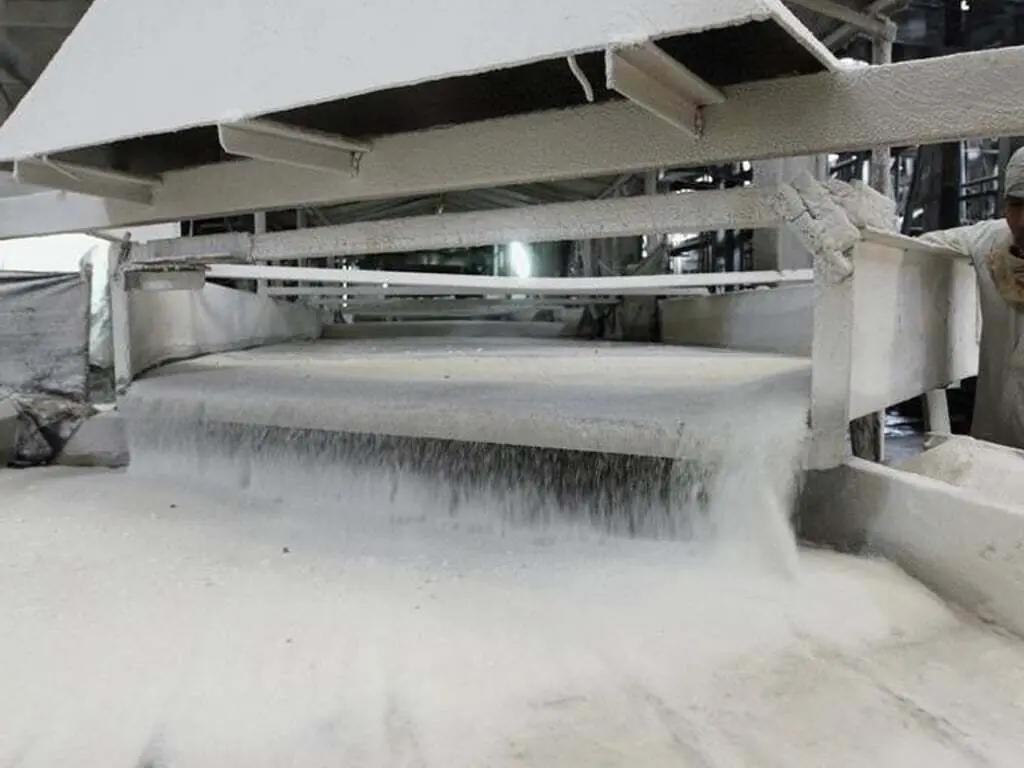
LAHORE: The Pakistan Sugar Mills Association (PSMA) on Wednesday warned that failure to allow the export of one million tons of surplus sugar could delay the start of the next crushing season, putting both farmers and sugar mills under pressure.
The association said timely disposal of the surplus stock was essential to create storage capacity and ensure a smooth transition to the new crushing season. Any delay in allowing exports, it added, could create difficulties for farmers as well as millers and disrupt the sugar sector’s seasonal cycle.
PSMA Chairman Ch Zaka Ashraf flanked by a large number of millers including a former PSMA Chairman Asim Ghani Usman and Ch Waheed Ahmad said during a press conference that at the start of the previous crushing season on November 16, 2025, there was a sugar stock of 271,000 tonnes, while data from August 31, 2026, indicates that approximately 7.7 million tonnes of sugar were produced this year. Combining the old and new stocks brings the total to approximately 8 million tonnes. The country’s monthly sugar consumption is approximately 560,000 tonnes. If this average holds until November 15, 2026, the country will have a surplus of 1.25 million tons of sugar at the start of the 2026-27 crushing season, after meeting domestic requirements.
The government has decided to export 108,000 tons of previously imported sugar and has allowed the export of 200,000 tons from domestic production; however, the quantity allocated by the government is insufficient. The government should immediately allow the export of at least one million tons of sugar to save farmers and the sugar industry from disaster. This government decision will not only adversely affect growers and the industry but also deprive the country of significant foreign exchange earnings, Zaka Ashraf added.
He said the sugar industry is the second-largest agro-based industry in Pakistan, following the textile sector. Pakistan ranks as the sixth-largest sugar-producing country in the world. The industry provides employment to hundreds of thousands of people and generates over PKR 1,000 billion in annual direct and indirect business activities across agriculture, transport, allied industries, and wholesale and retail markets. Additionally, it contributes approximately PKR 300 billion in direct and indirect taxes to federal, provincial, and local governments.
Millers further said Pakistan’s sugar industry has the potential to produce 15.00 million metric tons of sugar annually based on a 150-day crushing season, without requiring additional investment or capacity expansion. Consequently, 8.00 million metric tons of sugar could be exported each year, generating USD 4 billion in revenue, while ethanol exports could yield an additional USD 1 billion annually. Central Asian states, Afghanistan, and China represent major markets for Pakistani white sugar - markets where India is currently capitalising despite Pakistan’s geographical proximity and lower transportation costs. Through export facilitation schemes and free trade agreements with these nations, white sugar exports could generate significant foreign exchange earnings for the national exchequer.
Zaka Ashraf and other millers claimed that sugarcane growers have regained their confidence in the industry, thanks to good prices and timely payments. They said this year, the sugarcane crop has been excellent, resulting in a substantial increase in sugar production.
Millers said it would not be an exaggeration to say that the sugar industry is Pakistan’s most heavily regulated industry. Although the government of Pakistan has repeatedly assured that the sugar sector would be deregulated, this has not yet been implemented. While the 70 percent of sugar production utilised in commercial and industrial sectors is fully deregulated, sugar intended for domestic consumption remains subject to regulation; this entails, among other measures, the provincial government determining ex-mill prices, setting payment schedules, and prescribing penalties.
The sugar industry meets its local energy needs through the use of bagasse. A secondary industry has emerged from our surplus energy generation, and this excess electricity can also be utilised for other industrial purposes.
The government has deregulated sugarcane prices, enabling growers to receive substantial returns; however, despite repeated calls from the sugar industry, the price of sugar remains regulated. It is argued that partial deregulation is creating significant problems, and the real solution lies in deregulating sugar prices, just as was done for sugarcane, while also permitting its import and export.
Since the sugar industry is currently facing severe losses due to rising production costs and the maintenance of surplus sugar stocks, the government should grant permission to export sugar as soon as possible to earn valuable foreign exchange for the country, they added.
Copyright Business Recorder, 2026




















Comments