


Afghan border closure inflicts USD4.5bn loss on Pak exporters: report
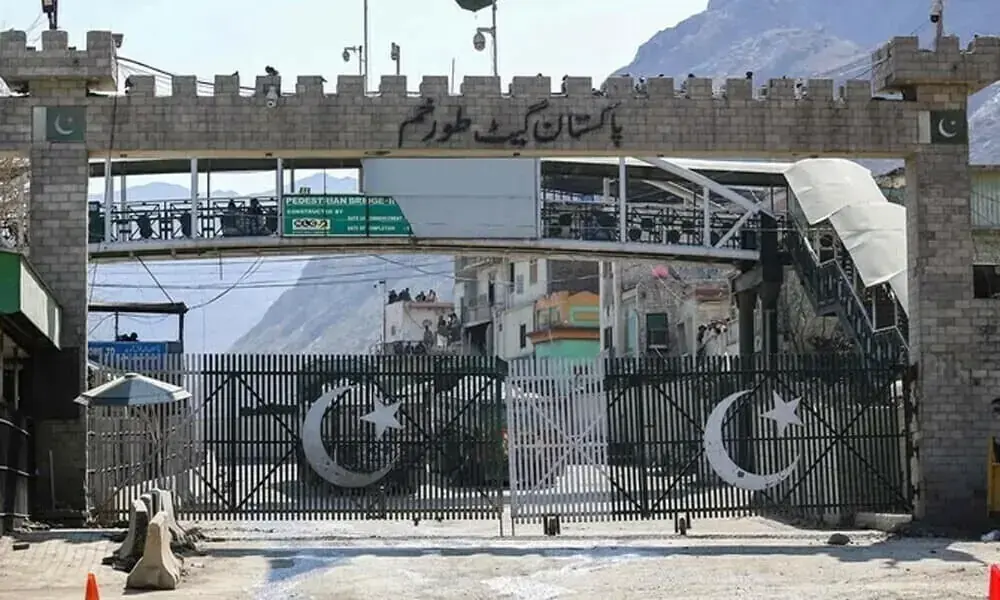

ISLAMABAD: The closure of the Pak-Afghan border since mid-October 2025 has caused losses of USD 4.5 billion to Pakistani exporters, according to a report by a leading research institute.
The report, titled ‘Policy Challenges for Pakistan-Afghanistan Relations’ and authored by Farah Naz and Anjeela Khurram of the Pakistan Institute of Development Economics (PIDE), said the border closure had created significant economic challenges for Pakistan, resulting in a 28 percent decline in bilateral trade, from USD 2.46 billion in 2024 to USD 1.77 billion in 2025.
On average, Pakistan’s exports have lost USD177 million/ month since closure, a significant drop of 56 percent as of early 2026. However, the report clarified that the methodology behind the figure has not been made clear by the source; it should be interpreted as an indication of the approximate scale rather than a verifiable loss estimate. The logistical overhead now exceeds the value of the produce itself, with container rent and fuel for reefers (refrigerated trucks), as well as demurrage and detention fees reaching USD150 to USD200 per container per day.
Pakistan-Afghanistan Joint Chamber of Commerce and Industry (PAJCC) reports an estimated monthly loss of PKR 50 billion (about USD6 million a day), due to 10,000-12,000 containers being stuck at the main borders during the January-February 2026 period.
A similar crisis is highlighted by Central Asia Regional Economic Cooperation (CAREC) Corridor Performance Measurement and Monitoring (CPMM) framework.
CPMM’s empirical assessment reports that Torkham and Chaman remained the most time-consuming BCPs. There are structural bottlenecks, complicated anti-smuggling checks, and poor infrastructure that raise the clearance costs even on normal days, which definitely spike during periods of active conflict. These figures have been derived from government sources, industry associations, and media reports and should thus be considered indicative estimates and not independently verified loss estimates.
The report mentioned that the Pak–Afghan trade corridor has long served as a critical channel for the exchange of perishable commodities, linking producers, traders, and consumers across both economies. In recent years; however, recurring border closures driven by security concerns and geopolitical tensions have increasingly disrupted this flow, particularly affecting time-sensitive goods such as fruits and vegetables.
Given the highly perishable nature of these commodities, even short delays lead to significant spoilage, income losses, and market distortions. These disruptions not only affect bilateral trade volumes but also create price volatility, supply-demand imbalances, and uncertainty across domestic markets. Moreover, the economic costs extend beyond the immediate losses, influencing production decisions, trade relationships, and food security outcomes over time.
Copyright Business Recorder, 2026






















Comments