


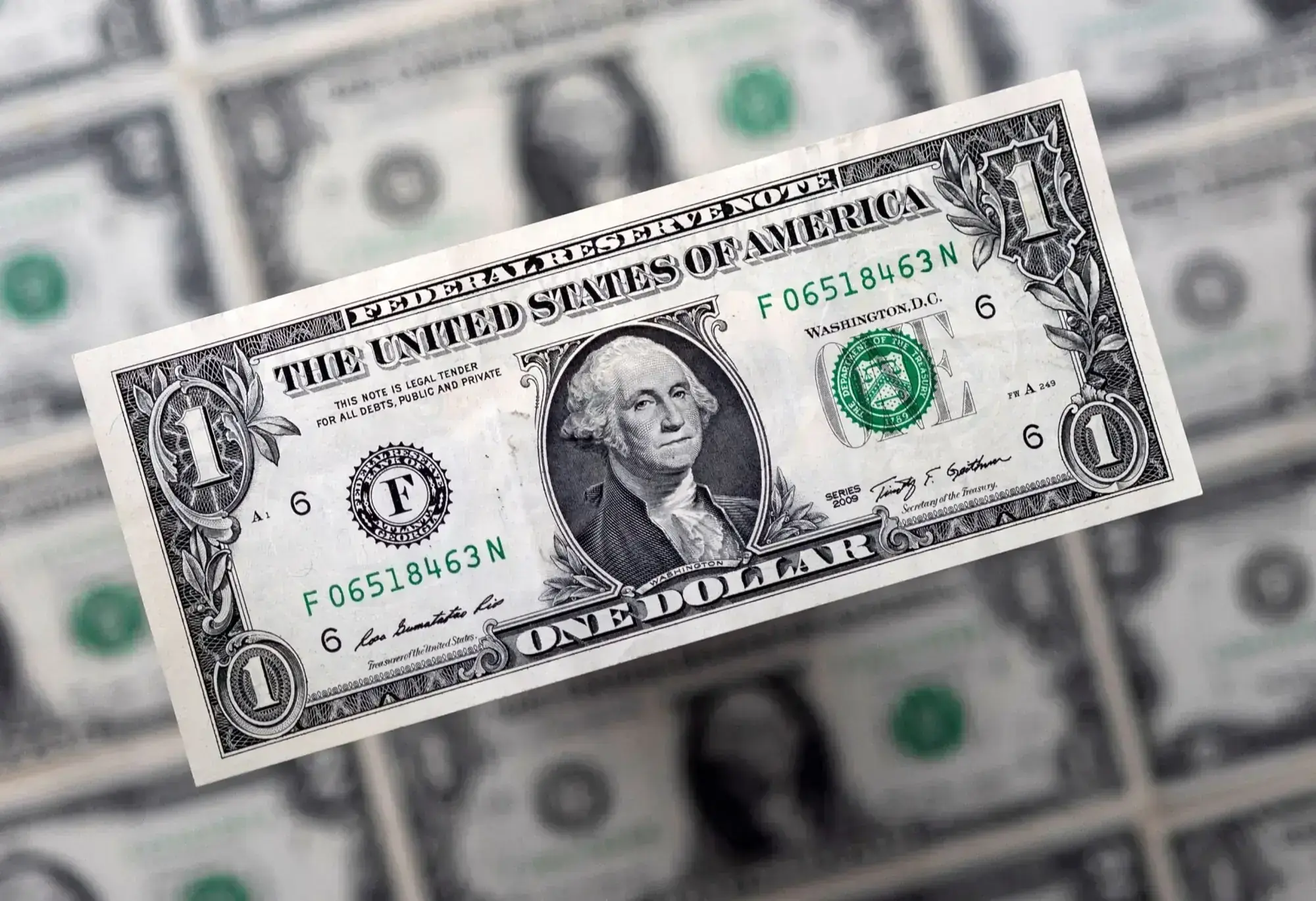

NEW YORK: The US dollar was mostly flat against major peers on Tuesday as markets continued pricing in a dovish response from the Federal Reserve in the wake of softer economic data.
The euro eased away from two-month highs of USD1.161 touched on Monday and was last up 0.07 percent at USD1.1587. Data in the past few weeks have pointed to a softer US economy, including unexpected job losses last month and mild inflation readings, leading investors to scale back expectations of an interest rate hike by the US Federal Reserve.
Market pricing for a September quarter-point hike flipped toward a near-70 percent chance of a hold, after recent news of unexpected job losses in July and other economic data.
“Current levels, particularly dollar-denominated pairs, are just reflecting the surprised dovishness we saw in the last Fed meeting or at least the interpretation of dovishness,” said Eugene Epstein, head of structured products for Moneycorp North America in Stamford, Connecticut.
The dollar was 0.15 percent higher against the Swiss franc to 0.812.
Sterling was up 0.01 percent against the dollar at USD1.35420, just shy of the three-month peak it hit in the previous session.
Joint US and Japanese intervention to strengthen the yen in late July has also weighed on the dollar more broadly.
Analysts remain cautious about where inflation may head, with the critical Strait of Hormuz remaining effectively shut and the US-Iran conflict simmering.
“Inflation has been above target for most of the past five years, and whilst a high 2 percent annual pace may prove acceptable to the Fed, it leaves the inflation process with little to no breathing room in a world of constant supply shocks,” said Nohshad Shah, head of EMEA fixed income sales at Citadel Securities.
Iran said it would shift to a “fully offensive” military posture because efforts to negotiate a permanent end to the war have stalled, a senior Iranian official told Reuters as Washington ruled out extending their June ceasefire agreement.
Bond yields around the world were on the rise again, partly due to traders’ concerns about the impact on energy prices of a prolonged closure of the Strait of Hormuz. US 30-year Treasury yields rose to their highest level since 2007, while yields around the world moved higher. Yields move inversely to prices.
Brent crude futures held steady around USD90.82 a barrel, after earlier touching their firmest levels since July 30.
The Japanese yen was 0.3 percent weaker at 159.51 per dollar, having erased nearly half of the gains from the joint US and Japan intervention at the end of July to lift the fragile yen away from a 40-year low of 163.99. Traders are focused on the threat of more intervention as well as the Bank of Japan meeting next month, where the central bank is set to raise interest rates.
The dollar index, which measures the greenback against a basket of currencies including the yen and the euro, rose 0.04 percent to 99.58.
The Australian dollar strengthened 0.06 percent versus the greenback to USD0.7107.
The dollar strengthened 0.04 percent to 6.745 versus the offshore Chinese yuan.




















Comments