


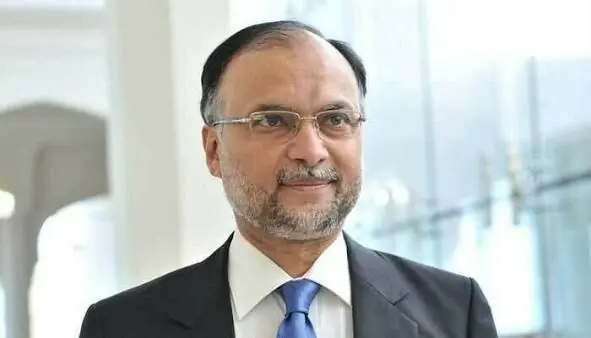

ISLAMABAD: Federal Minister for Planning, Development and Special Initiatives Professor Ahsan Iqbal has called for a sustained national effort to improve child nutrition, maternal health and early childhood development, warning that Pakistan needs to urgently invest in human development to deal with a rapidly growing population and a large youth demographic.
Addressing the closing ceremony of a multi-sectoral dialogue on accelerating nutrition and early childhood development in Pakistan on Wednesday, the minister said the country’s population had reached approximately 260 million, with around 60 percent young people.
He said the growing population was placing increasing pressure on nutrition, healthcare, education and early childhood development, making human resource development one of Pakistan’s major national challenges.
Iqbal said Pakistan’s future depended on how effectively the country invested in the health, education, skills and capabilities of its children and youth. He said nearly 40 percent of Pakistani children were affected by stunted growth, describing the situation as a serious national challenge requiring immediate and coordinated action.
The minister emphasised that the first five years of a child’s life were critical for building the foundation of a healthy and productive society. He said education and development began from birth, while nutrition, healthcare, upbringing and the surrounding environment during the early years had a lasting impact on an individual’s life and, ultimately, on the future of society.
He stressed that nutrition could not be addressed in isolation and was closely linked with maternal and child health, clean drinking water, sanitation and hygiene. The health and wellbeing of mothers and children, he said, were interconnected and required an integrated approach involving all relevant sectors.
Ahsan Iqbal said the government had a responsibility to place mothers and children at the centre of development planning and take effective measures to improve maternal and child healthcare. He also called for greater attention to early schooling, quality early childhood development and the availability of trained teachers for young children.
Referring to the 18th Constitutional Amendment, he said several important sectors had been devolved to the provinces in 2010, but the transfer of responsibilities had not produced the desired improvement in public service delivery in several areas. He stressed that devolution should ensure the effective transfer of authority, resources and service delivery mechanisms to the grassroots level.
The minister said the ultimate objective of devolution was to provide better public services to citizens at their doorstep. He called for stronger coordination between federal and provincial governments, institutions and other stakeholders to improve outcomes in health, education, nutrition and early childhood development.
He said the Ministry of Planning was taking up child development and nutrition as national priorities and working with all provinces to formulate coordinated responses.
Iqbal maintained that Pakistan did not lack plans or policies but needed effective implementation and continuity. He said timely implementation of measures could have helped the country overcome many challenges much earlier, emphasizing that policy continuity was essential for sustainable national development.
Under URAAN Pakistan, he announced a programme to enhance the capacity and potential of youth, under which 10 million young people would be mobilized as social awareness ambassadors. They would conduct awareness campaigns in their communities on child health, nutrition, early education and early childhood development.
The minister said Pakistan’s youth were its greatest strength and their energy should be channelled towards constructive social transformation.
The dialogue was attended by the UNICEF Country Director, members of the Planning Commission, officials from federal and provincial institutions and private-sector representatives. Participants discussed maternal and child nutrition needs and proposed measures to accelerate coordinated action for improved nutrition and early childhood development.
Copyright Business Recorder, 2026

























Comments