


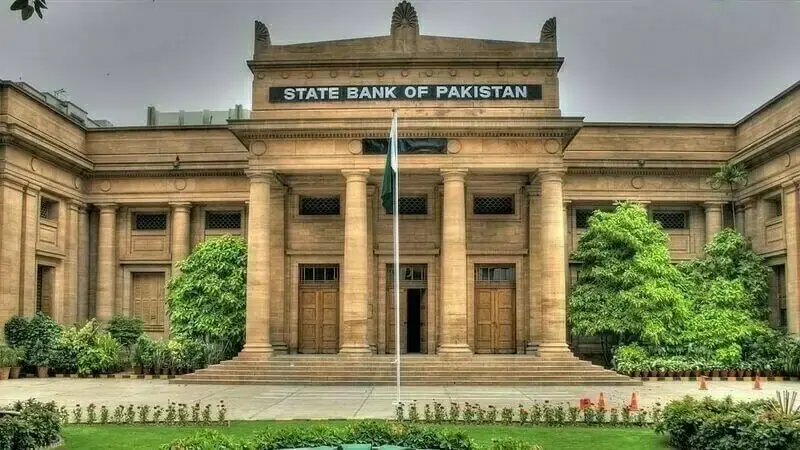

KARACHI: Although the State Bank of Pakistan (SBP) expects economic activity to pick up in FY27, it has identified several key risks, including uncertainty over the duration and intensity of the ongoing Middle East conflict, adverse climate events, global tariff policies and delays in implementing structural reforms.
According to the bi-annual Monetary Policy Report (MPR) issued by SBP, the evolving geopolitical developments in the Middle East, including a more prolonged and wider conflict in the region, can push up global energy and other commodity prices beyond the levels assumed in the July 2026 MPC meeting.
In line with the commitment to bring more transparency to monetary policy decision-making and the Monetary Policy Committee’s (MPC) reaction function, the SBP released its bi-annual Monetary Policy Report (MPR), which reviews the macroeconomic developments and outlook that underpinned the MPC’s decisions since the January 2026 MPC meeting.
READ MORE: SBP maintains status quo, cites Middle East risks
The report said that the macroeconomic conditions and outlook during the review period have been significantly influenced by the evolving geopolitical developments. The outbreak of the Middle East conflict in late February led to a sharp increase in global energy prices and freight and insurance costs, and supply chain disruptions.
Despite this significant shock, the macroeconomic outcomes in FY26 turned out broadly in line with the projection ranges announced after the January 2026 MPC meeting.
In this regard, the Report highlighted that the SBP’s prudent monetary policy tightening is helping contain second-round effects of the energy price shock, while keeping inflation expectations of stakeholders anchored.
Meanwhile, the government ensured fiscal discipline by timely passing through increases in global prices to domestic prices; and introducing targeted subsidies and austerity measures to conserve energy. These measures helped moderate aggregate demand and ensured that demand-side pressures stayed muted.
Going forward, the Report notes that inflation is assessed to ease and stabilize near the upper bound of the target range towards end-FY27. Economic growth is expected to pick up and remain in the range of 3.5-4.5 percent. In the external account, the current account deficit is projected to remain within 0-1 percent of GDP. This will support continued FX purchases by the SBP and help achieve the FX reserves target of USD 20.20 billion by December 2026. SBP’s FX reserves are projected to rise further by end-FY27.
The MPR also discusses multiple risks to the macroeconomic outlook. These included the evolving geopolitical developments in the Middle East, which can push up global energy and other commodity prices beyond the assumed levels and therefore impact the macroeconomic outlook.
Moreover, the Report highlighted climate-related risks, specifically the evolving El Niño conditions and floods, which could adversely affect the economy. Lastly, delays in implementation of structural reforms could further weaken exports, slow productivity gains, and reduce the economy’s capacity to sustain higher growth without generating inflationary and external account pressures.
Geopolitical developments may have adverse implications for the outlook for inflation, economic activity and external sector of many regional economies, including Pakistan. At the same time, climate-related risks, specifically the expected worsening in El Niño conditions and floods, could adversely affect agricultural production, food prices, economic activity and the current account deficit, while potentially necessitating additional fiscal spending.
“In addition, delays in the implementation of structural reforms could further weaken exports, slow productivity gains, and reduce the economy’s capacity to sustain higher growth without generating excessive inflationary and external account pressures”, the SBP projected.
Going forward, the report said that continued strengthening of buffers and timely implementation of structural reforms remain essential to strengthen the economy’s resilience to recurring adverse supply shocks, enhance productivity, and create conditions for higher and more sustainable economic growth”, the report said.
“Economic activity is expected to pick up in FY27, though at a slower pace than anticipated in January, amidst the ongoing elevated energy costs and supply disruptions”, SBP said.
According to SBP, this assessment is based on multiple factors. First, favorable tax measures, including rationalization of super tax for certain sectors and incentives for exporters, are expected to support manufacturing and services activity.
Second, under the National Tariff Policy 2025-30, the government has further reduced tariffs across a broad range of tariff lines, which is likely to support import-dependent manufacturing sectors, like automobiles, textiles, pharmaceuticals and edible oil.
Third, notably higher expected sugarcane production is likely to boost sugar production, which will, in turn, strengthen WRT services.
Fourth, there has been a strong and broad-based pickup in private sector credit in FY26, which will support economic activity in FY27.
Fifth, sentiment surveys indicate a rise in business confidence and purchasing managers index in June and July 2026, with favourable implications for economic outlook.
The MPR also features six box items that discuss key concepts related to inflation and monetary policy. They relate to an update on the monetary policy transmission mechanism; the central banks’ reaction function when faced with supply-side driven inflation; the use of different measures of inflation globally and within the SBP; the growing size of open market operations (OMOs) and its implications for monetary policy; and the use of various sentiment surveys to gauge stakeholders’ expectations about different aspects of the economy.
Copyright Business Recorder, 2026























Comments