


South Korea inflation cools, but back-to-back rate hike not ruled out
- The finance ministry estimated that nationwide fuel price caps reduced inflation last month by 0.3 percentage points
South Korea's consumer inflation softened to a three-month low of 2.8% in July, primarily due to falling oil prices, though policymakers remain cautious about future upward pressures and a potential rate hike.
- July's consumer inflation reaching a three-month low.
- Policymakers' ongoing concerns about future price pressures.
- The likelihood of another interest rate hike this month.
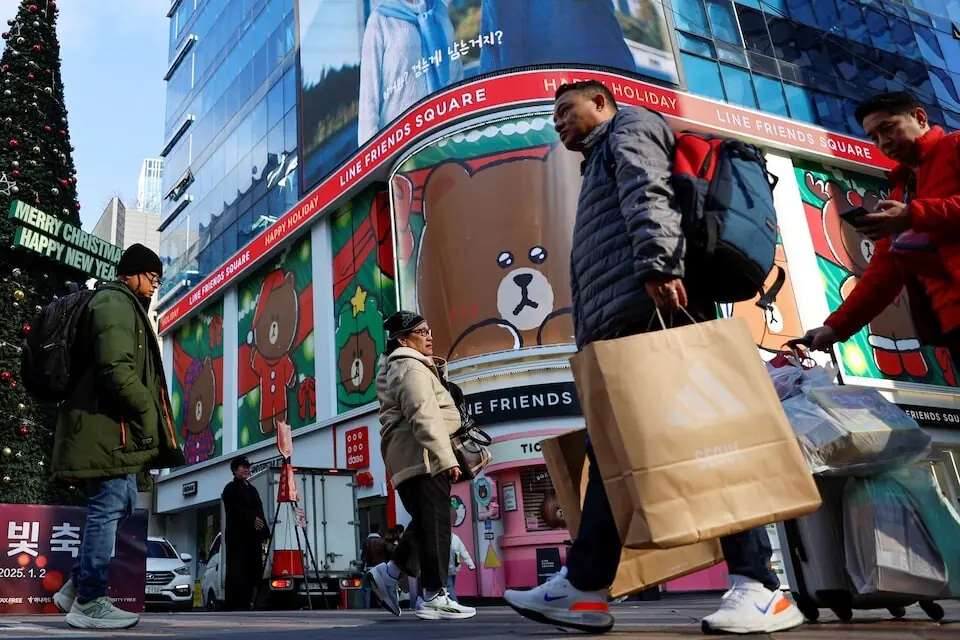

SEOUL: South Korea’s consumer inflation softened to a three-month low in July, coming in below market expectations on a fall in oil prices, though policymakers remained wary of upward pressures and markets did not rule out a possible back-to-back rate hike this month.
The consumer price index (CPI) rose 2.8% in July from a year earlier, after rising 3.2% in June, data from the Ministry of Data and Statistics showed on Tuesday. That was weaker than a median 3.0% increase tipped in a Reuters poll of economists.
Over the month, the index fell for the first time in eight months, down 0.2%, as prices of petroleum products dropped 5.5%. Economists had expected a rise of 0.1%, the same pace as in the previous month.
“Upward price pressures, including uncertainty over the Middle East war, persist,” Vice Finance Minister Lee Hyoung-il said.
The finance ministry estimated that nationwide fuel price caps reduced inflation last month by 0.3 percentage points.
In August, there also will be a one-off factor raising inflation by 0.8 percentage points due to the base effects of temporary mobile fee discounts last year, according to the ministry.
Oil prices fell to three-week lows on Monday after US President Donald Trump held off on a fresh attack on Iran in the hope of sealing a quick deal that could boost oil supplies from the Gulf.
South Korean stocks drag broader Asian markets down
The Bank of Korea, which has a 2% target for inflation in the medium term, said after the data release it would closely monitor price conditions, as core inflation was expected to remain high due to the spillover effects of high oil prices and growing domestic demand, spurred by record profits in the chip industry.
“It seems the market is pricing in a lower possibility of a rate hike in August, but it is still higher than 50%,” said Ahn Jae-kyun, an analyst at Korea Investment Securities, who maintained his call for a rate hike this month as the base case.
“Although it is not evident in data yet, we are seeing signs that there might be demand-push inflation going forward. The central bank could wait if inflation were stable around 2%, but now with inflation already around 3%, it can take a step ahead.”
The central bank raised interest rates last month for the first time in three-and-a-half years and flagged more to come, as brisk growth in Asia’s fourth-largest economy fanned inflation risks. It next meets on August 27.
South Korea’s policy-sensitive three-year benchmark bond yield fell 2.3 basis points to a one-month low of 3.719% in morning trade.
Core CPI, stripping out volatile food and energy prices, rose 2.6% in July from a year earlier, after rising 2.5% in June. It was the biggest rise since December 2023.















Comments