


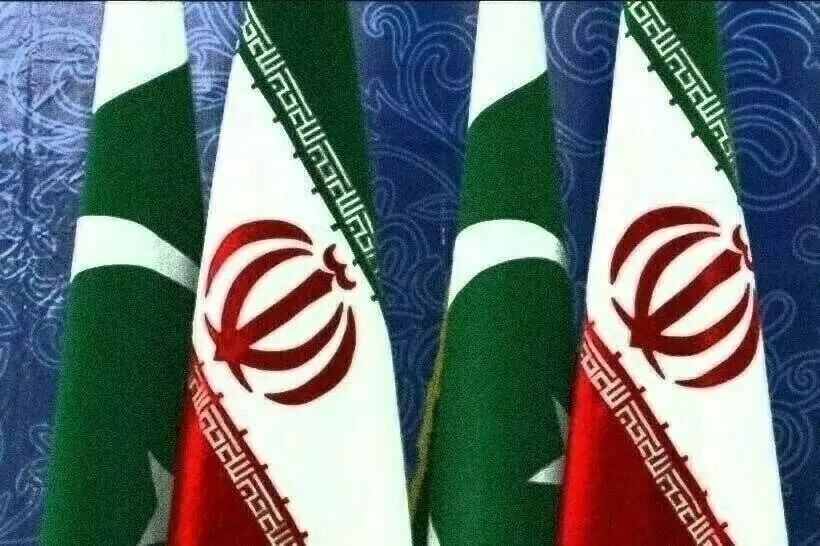

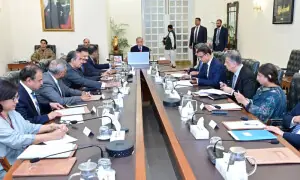
ISLAMABAD: The Ministry of Commerce will host the 10th Pakistan-Iran Joint Trade Committee (JTC) meeting on August 4, 2026 (today) in Islamabad to further strengthen bilateral trade, investment, and economic cooperation between the two neighbouring countries.
The meeting will be co-chaired by Federal Minister for Commerce Jam Kamal Khan and Iran’s Minister for Industry, Mine and Trade, Mohammad Atabak. Special Secretary Commerce Syed Hamid Ali and senior officials from both sides will also participate.
READ ALSO: Iran and trading partners: Transit trade at 6 points still not operational
A 22-member high-level Iranian official delegation, along with a 16-member business delegation led by the Iran Chamber of Commerce, Industries, Mines and Agriculture (ICCIMA), will attend the meeting.
The business delegation represents key sectors including food, agribusiness, logistics, shipping, transportation, energy, and manufacturing, providing an opportunity to enhance private-sector engagement and business linkages.
The JTC will review progress on bilateral trade initiatives and discuss measures to advance the Pakistan-Iran Free Trade Agreement (FTA), facilitate cross-border trade, strengthen customs and banking cooperation, improve transport and transit connectivity, and expand investment and commercial collaboration.
The 5th round of the Technical Negotiation Committee (TNC) was held at the Ministry of Commerce on August 2, 2025, where the text of the Pak-Iran FTA was finalised. A Joint Ministerial Statement on the intent to conclude the FTA was signed on August 3, 2025, during the visit of the Iranian President to Islamabad.
The meeting reflects the shared commitment of Pakistan and Iran to deepen economic partnership, enhance regional connectivity, and create new opportunities for trade and investment.
Pakistan’s customs data shows negligible exports to Iran. However, according to Iranian customs data, Pakistan’s exports to Iran mainly include rice, oilseeds, oleaginous fruits, fruits and dry fruits, and live animals.
Pakistan’s major imports from Iran include LPG, iron and steel products, fresh and dry fruits, milk and cream, petroleum oils, and polymers of ethylene.
So far, nine meetings of the Pakistan-Iran JTC have been held. The 9th meeting took place in Tehran from November 6–7, 2021.
Pakistan and Iran have a bilateral Preferential Trade Agreement (PTA), effective since September 1, 2006. Under the PTA, Pakistan has granted tariff concessions to Iran on 338 tariff lines, while Iran has extended concessions on 309 tariff lines. The average tariff concession is around 18 percent. However, due to Iran’s restrictive tariff regime, duties applied on Pakistani exports remain significantly higher than those on Iranian exports to Pakistan.
The Quetta Chamber of Commerce and Industry and the Zahedan Chamber of Commerce signed a barter trade agreement on November 7, 2021, during the 9th JTC session. The Ministry of Commerce later amended the Export Policy Order (EPO) and Import Policy Order (IPO) 2020 to regulate the barter trade framework, while Customs developed the required module in WeBOC. However, the arrangement has yet to be operationalised.
The Ministry also notified a B2B Barter Trade Mechanism through SRO 642 dated June 1, 2023, to facilitate trade with Afghanistan, Iran, and Russia—countries facing banking constraints due to Western sanctions. Only one transaction has been conducted so far, which subsequently led to an inquiry.
The Federal Board of Revenue (FBR) declared Gabd as an International Road Transport (TIR) border crossing point through SRO 622(I)/2021 dated May 26, 2021. The Iranian side recently notified Reemdan as a TIR-enabled customs station in April 2026. The operationalisation of the Gabd–Reemdan route is expected to facilitate smooth and secure transit trade.
According to the State Bank of Pakistan (SBP), although an MoU on a Banking Payment Arrangement was signed with the Central Bank of Iran (BMJII) on April 13, 2017, in Tehran, Pakistani banks remain reluctant to engage with Iranian counterparts due to compliance risks and sanctions concerns, including penalties previously imposed on Habib Bank Limited by the US Treasury. As a result, the arrangement has not been implemented.
The absence of formal banking channels remains the single largest obstacle to enhancing bilateral trade. Establishing such channels is crucial for meaningful trade expansion. A committee formed in 2018–19 under the chairmanship of the Minister of State for Revenue recommended barter trade as a viable alternative. However, in the absence of a government-level settlement mechanism, Iran has shown limited willingness to proceed with barter arrangements.
Copyright Business Recorder, 2026









Comments