



The good news is that Pakistan’s credit rating has been improved recently by the Standard and Poor’s from B- to B. Earlier, Moody’s had upgraded Pakistan to Caa1. Overall, now Pakistan’s score is 23 out of 100. Six months ago, it was 21.
This recognition of Pakistan’s enhanced stability and less risk in international transactions is due, first, to a relatively strong outcome of the balance of payments in 2025-26. Under the umbrella of an IMF program, there was success in raising the level of foreign exchange reserves to $18.4 billion, thereby providing a safe import cover of almost three months.
There has perhaps also not been enough recognition of the containment of external debt by Pakistan. The level of external debt in the first nine months of 2025-26 increased by only $1.5 billion to $137.5 billion.
The stability of the rupee has also implied a significant reduction in the level of external debt as a percentage of the GDP. It was 33.9 percent on the 30th of June 2025. As of end-March 2026 it is estimated at 30.5 percent.
There will, of course, be a need to sustain and improve this performance. It is one of the critical indicators of risks perceived by foreign lenders or investors in targeting of inflows into Pakistan.
We will look next on other international rankings of Pakistan especially from the viewpoint of relative attractiveness of investment in the economy and assessment of the incumbent government’s performance.
This includes different indicators like the Index of Economic Freedom, Governance. Ease of Doing Business and Level of Corruption. At the end, the article will also undertake an international comparison of POL and electricity prices. They are important in identifying the level of competitiveness.
Pakistan has an intermediate ranking in the Index of Economic Freedom, produced annually by the Heritage Foundation. The latest ranking is of 2026.
There are five components of the Index. These are performance by a country in respecting property rights, level of government integrity, judicial effectiveness, size of the tax burden and the impact of government spending. The overall rating of performance ranges from 0 to 100, in each component and overall.
Pakistan has an overall score of 48.9 in the Index of Economic Freedom. It has improved marginally from 48.8 in 2022. The individual scores are relatively high in
the tax burden and government spending. They are relatively low in property rights, government integrity and judicial effectiveness.
A comparison with some South Asian and East Asian countries reveals that Pakistan has a relatively low score in the Index. It is 54.8 of Bangladesh, 52.5 of India and 50.3 of Sri Lanka. Special efforts are needed especially to improve perceptions of government integrity and judicial effectiveness. This will enable Pakistan to catch up.
The next international ranking relates to the World Bank, Governance Matters. There are also five indicators of performance. These are voice and accountability, government effectiveness, regulatory quality, rule of law and control of corruption. Each indicator has a value ranging from 0 to 100.
Pakistan’s performance in the five indicators is the best in regulatory quality, with a score of 43.06, followed by voice and accountability with a score of 41.60. The lowest score is in control of corruption at 26.11. Overall, the country’s average score is 38.02.
A significant finding is that overall Pakistan does better than Bangladesh in overall governance, with an overall score of 37.14. In particular, the score of Bangladesh in control of corruption is low at 25.55.
This relative position of Pakistan with respect to Bangladesh is also confirmed by the Corruption Perceptions Index of Transparency International. Pakistan is ranked 136th out of 182 countries, while Bangladesh is placed at 150th. However, overall Pakistan has a very low ranking in this Index.
The other widely quoted index is the Index of Ease of Doing Business, prepared by the World Bank. This index ranks countries in starting a business, dealing with construction permits, getting electricity, registering property and accessing credit. A ranking is given in each of these measures along with the overall ranking. 190 countries are covered by this index as of 2025.
Pakistan has again an intermediate overall ranking in this index of 108, and it performs relatively well in the starting of a business and relatively poorly in registering a property.
The rankings of other South Asian countries like Bangladesh, India and Sri Lanka are 168, 63 and 99, respectively. Here again, Pakistan performs better than Bangladesh.
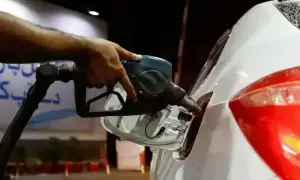
We turn finally to petroleum prices and electricity tariffs in different countries. The latest magnitudes are given in Global Petrol Prices.com. These prices play a key role in determining a country’s export competitiveness and cost of living of the population.
A comparison is made of prices in eight South Asian and East Asian countries. Pakistan has an intermediate ranking in the petrol price at USD 1.203 per litre. Sri Lanka, Thailand, Philippines and Nepal have higher prices in USD per litre. Indonesia, India and Bangladesh have lower prices.
A matter of some concern is that Pakistan and Sri Lanka have the highest prices in diesel at USD 1.392 and USD1.424 per litre, respectively. The prices are as low as USD 0.932 in Bangladesh and USD 1.026 in India.
Turning to the level of industrial tariffs of electricity, here the Philippines and Pakistan have the highest tariffs at USD 0.209 and USD 0.153 per kWh, respectively. Bangladesh and India here again have very low tariffs of USD 0.063 and USD0.077, respectively. Clearly, Pakistan’s relative competitive position has been negatively impacted by the very high prices of electricity and petroleum products.
Overall, while there is a case for some recognition of the recent improvement in credit-rating, more will have to be done in the areas of design and implementation of appropriate economic policies, governance, especially corruption, and administrative effectiveness. This is essential if the process of slow growth, decline in both private domestic and foreign investment in Pakistan are to be reversed.
Copyright Business Recorder, 2026
The writer is Professor Emeritus at BNU and former Federal Minister









Comments